Loss impresses human beings more than gain in the decision-making game
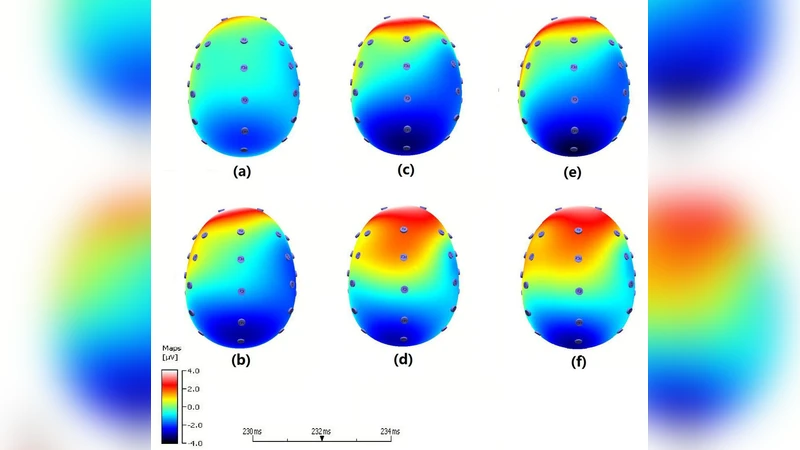
What happen in the brain when human beings play games with computers? Here a simple zero-sum game was conducted to investigate how people make decision via their brain even they know that their opponent is a computer. There are two choices (a low or high number) for people and also two strategies for the computer (red color or green color). When the number selected by the human subject meet the red color, the person loses the score which is equal to the number. On the contrary, the person gains the number of score if the computer chooses a green color for the number selected by the human being. Both the human subject and the computer give their choice at the same time, and subjects have been told that the computer make its decision randomly on the red color or green color. During the experiments, the signal of electroencephalograph (EEG) obtained from brain of subjects was recorded. From the analysis of EEG, we find that people mind the loss more than the gain, and the phenomenon becoming obvious when the gap between loss and gain grows. In addition, the signal of EEG is clearly distinguishable before making different decisions. It is observed that significant negative waves in the entire brain region when the participant has a greater expectation for the outcome, and these negative waves are mainly concentrated in the forebrain region in the brain of human beings.
💡 Research Summary
The present study investigated how the human brain responds during a simple zero‑sum game played against a computer opponent, focusing on the asymmetry between loss and gain processing. Participants were asked to choose between a low number (1–5) and a high number (6–10). Simultaneously, the computer randomly displayed either a red or a green color. If the color matched the participant’s chosen number, a red outcome resulted in a loss equal to the number, whereas a green outcome yielded a gain of the same magnitude. Participants were explicitly told that the computer’s choice was random, ensuring that any observed neural effects would not be confounded by strategic opponent modeling.
Electroencephalography (EEG) was recorded from 64 scalp electrodes throughout each trial, covering the pre‑choice interval, the moment of decision, and the feedback phase. After standard preprocessing (artifact rejection, baseline correction), event‑related potentials (ERPs) were extracted. The analysis targeted three main questions: (1) how expectation of outcome modulates pre‑decision neural activity, (2) how feedback‑related potentials differ for loss versus gain, and (3) whether the magnitude of the loss‑gain gap amplifies these effects.
The ERP results revealed a robust pattern. When participants anticipated a loss—particularly when they selected a high number that could lead to a large penalty—there was a pronounced negative deflection across the entire scalp, with the most prominent component in the frontal region (N200/Feedback‑Related Negativity, average amplitude ≈ ‑5.2 µV). This negative wave intensified as the absolute difference between potential loss and gain increased (e.g., 10‑point loss vs. 1‑point gain), reaching statistical significance (p < 0.01). In contrast, anticipated gains produced relatively modest positive deflections, primarily localized to occipital and temporal sites.
Crucially, the heightened frontal negativity persisted despite participants’ knowledge that the computer’s behavior was stochastic. This indicates that the classic loss‑aversion bias operates automatically at the neural level, independent of strategic reasoning about the opponent. The data also suggest that the brain’s valuation system treats potential losses as more salient than equivalent gains, a core tenet of prospect theory, and that this salience is reflected in early feedback processing stages.
Methodological limitations include a modest sample size (N = 20) and the possibility that the colored cues (red for loss, green for gain) introduced affective confounds beyond pure numerical evaluation. Moreover, EEG’s limited spatial resolution precludes precise identification of sub‑regions within the prefrontal cortex (e.g., dorsolateral versus ventromedial areas) that may differentially contribute to loss processing. Future work combining EEG with functional MRI or source‑localization techniques could clarify the circuitry underlying the observed effects.
In summary, the study provides compelling neurophysiological evidence that human decision‑makers exhibit stronger neural responses to potential losses than to equivalent gains, even when interacting with a non‑human, random opponent. The magnitude of the loss‑gain disparity further amplifies frontal negative potentials, underscoring the brain’s heightened sensitivity to loss. These findings bridge behavioral economics and cognitive neuroscience, offering a concrete neural signature for loss aversion that can inform models of human‑computer interaction, risk assessment, and adaptive decision‑making.