Parametric analysis of Cherenkov light LDF from EAS in the range 30-3000 TeV for primary gamma rays and nuclei
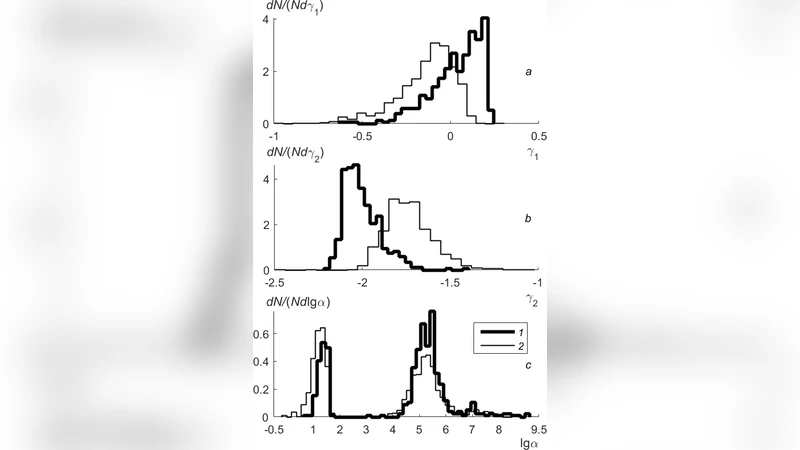
A simple ‘knee-like’ approximation of the Lateral Distribution Function (LDF) of Cherenkov light emitted by EAS (extensive air showers) in the atmosphere is proposed for solving various tasks of data analysis in HiSCORE and other wide angle ground-based experiments designed to detect gamma rays and cosmic rays with the energy above tens of TeV. Simulation-based parametric analysis of individual LDF curves revealed that on the radial distance 20-500 m the 5-parameter ‘knee-like’ approximation fits individual LDFs as well as the mean LDF with a very good accuracy. In this paper we demonstrate the efficiency and flexibility of the ‘knee-like’ LDF approximation for various primary particles and shower parameters and the advantages of its application to suppressing proton background and selecting primary gamma rays.
💡 Research Summary
The paper presents a new five‑parameter “knee‑like” analytical description of the lateral distribution function (LDF) of Cherenkov light produced by extensive air showers (EAS) in the energy range from 30 TeV to 3 PeV. The authors motivate the work by the needs of wide‑angle ground‑based experiments such as HiSCORE, TAIGA, and LHAASO, which must reconstruct shower parameters and discriminate gamma‑ray signals from the overwhelming proton background at multi‑tens‑TeV energies. Traditional LDF parametrisations (simple exponentials or low‑order polynomials) fail to capture the pronounced change of slope that occurs around a characteristic distance from the shower core, especially when the distance interval of interest (20 m – 500 m) is used for event reconstruction.
The proposed functional form is:
\
Comments & Academic Discussion
Loading comments...
Leave a Comment