Amplitude Stochastic Response of Rayleigh Beams to Randomly Moving Loads
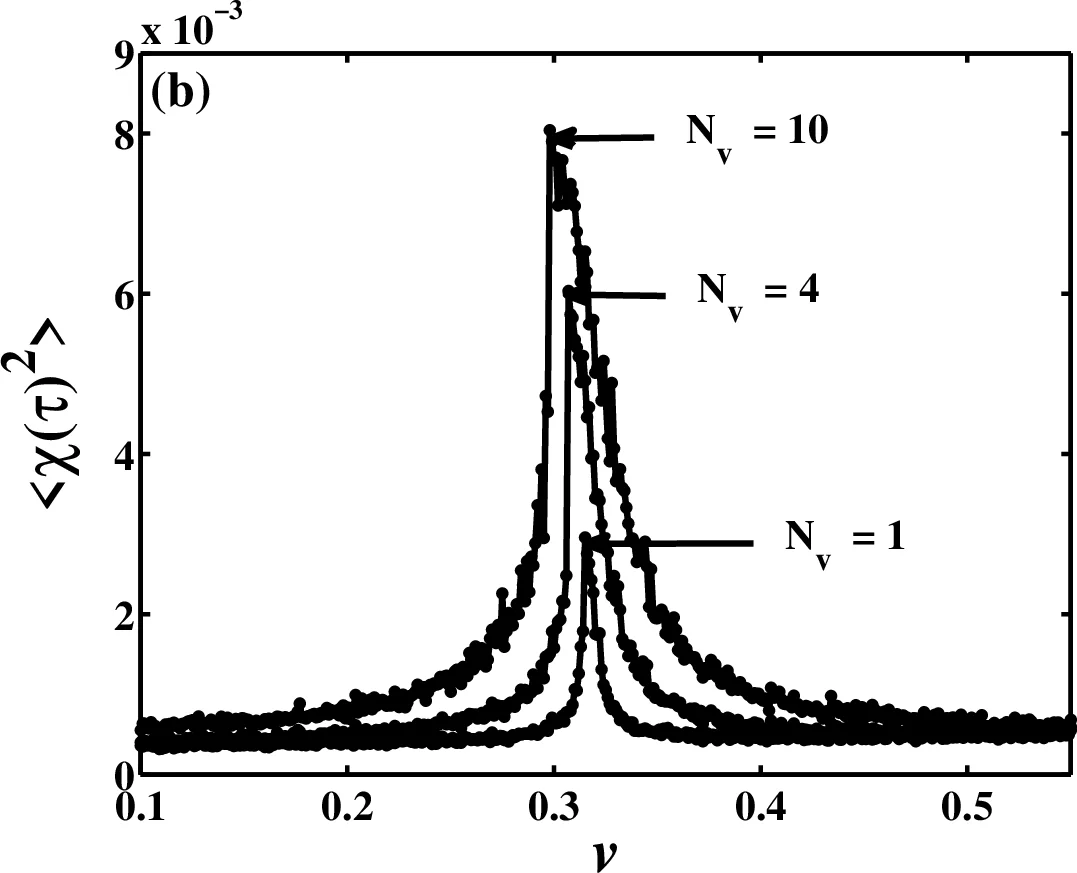
We consider the problem of the nonlinear response of a Rayleigh beam to the passage of a train of forces moving with stochastic velocity. The Fourier transform and the theory of residues is used to estimate the mean-square amplitude of the beam, while the stochastic averaging method gives the stationary probability density function of the oscillations amplitude. The analysis shows that the effect of the load random velocities is highly nonlinear, leading to a nonmonotonic behavior of the mean amplitude versus the intensity of the stochastic term and of the load weight. The analytic approach is also checked with numerical simulations. The effect of loads number on the system response is numerically investigated.
💡 Research Summary
The paper investigates the nonlinear dynamic response of a Rayleigh beam subjected to a train of point loads moving with stochastic velocities. Starting from the full partial differential equation that includes bending, shear, rotary inertia (Rayleigh term), and viscous damping, the authors model each load’s position as a deterministic progression perturbed by a Gaussian white‑noise component. By expanding the transverse displacement in the beam’s eigenfunctions and retaining only the first mode, the governing equation is reduced to a single‑degree‑of‑freedom stochastic Duff‑type oscillator:
\
Comments & Academic Discussion
Loading comments...
Leave a Comment