Title: Prediction of Muscle Activations for Reaching Movements using Deep Neural Networks
ArXiv ID: 1706.04145
Date: 2017-06-14
Authors: - Najeeb Khan (University of Saskatchewan, Canada) - Ian Stavness (University of Saskatchewan, Canada)
📝 Abstract
The motor control problem involves determining the time-varying muscle activation trajectories required to accomplish a given movement. Muscle redundancy makes motor control a challenging task: there are many possible activation trajectories that accomplish the same movement. Despite this redundancy, most movements are accomplished in highly stereotypical ways. For example, point-to-point reaching movements are almost universally performed with very similar smooth trajectories. Optimization methods are commonly used to predict muscle forces for measured movements. However, these approaches require computationally expensive simulations and are sensitive to the chosen optimality criteria and regularization. In this work, we investigate deep autoencoders for the prediction of muscle activation trajectories for point-to-point reaching movements. We evaluate our DNN predictions with simulated reaches and two methods to generate the muscle activations: inverse dynamics (ID) and optimal control (OC) criteria. We also investigate optimal network parameters and training criteria to improve the accuracy of the predictions.
💡 Deep Analysis
Deep Dive into Prediction of Muscle Activations for Reaching Movements using Deep Neural Networks.
The motor control problem involves determining the time-varying muscle activation trajectories required to accomplish a given movement. Muscle redundancy makes motor control a challenging task: there are many possible activation trajectories that accomplish the same movement. Despite this redundancy, most movements are accomplished in highly stereotypical ways. For example, point-to-point reaching movements are almost universally performed with very similar smooth trajectories. Optimization methods are commonly used to predict muscle forces for measured movements. However, these approaches require computationally expensive simulations and are sensitive to the chosen optimality criteria and regularization. In this work, we investigate deep autoencoders for the prediction of muscle activation trajectories for point-to-point reaching movements. We evaluate our DNN predictions with simulated reaches and two methods to generate the muscle activations: inverse dynamics (ID) and optimal contr
📄 Full Content
41st Annual Meeting of the American Society of Biomechanics, Boulder, CO, USA, August 8th – 11th, 2017
PREDICTION OF MUSCLE ACTIVATIONS FOR REACHING MOVEMENTS
USING DEEP NEURAL NETWORKS
The motor control problem involves determining
the time-varying muscle activation trajectories
required to accomplish a given movement. Muscle
redundancy makes motor control a challenging task:
there are many possible activation trajectories that
accomplish the same movement. Despite this
redundancy, most movements are accomplished in
highly stereotypical ways. For example, point-to-
point reaching movements are almost universally
performed with very similar smooth trajectories [1].
Optimization methods are commonly used to
predict muscle forces for measured movements [2].
However, these approaches require computationally
expensive simulations and are sensitive to the
chosen optimality criteria and regularization. Linear
dimensionality reduction has also been proposed to
identify low-dimensional motor modules that can
account for stereotyped movements [3]. However,
musculoskeletal systems are highly non-linear,
making linear methods less reliable.
Deep neural networks (DNNs) are biologically
inspired models that can be employed for non-linear
dimensionality reduction. Deep autoencoders are
DNN
models
that
can
automatically
learn
successively
low
dimensional
features
by
transforming the input data through different layers
of non-linearity. DNNs have been used to predict
torque trajectories from initial and final state
information in [4]. However, DNNs have yet to be
applied to predict time varying muscle activations,
in which the redundancy problem exists.
In this work, we investigate deep autoencoders for
the prediction of muscle activation trajectories for
point-to-point reaching movements. We evaluate
our DNN predictions with simulated reaches and
two methods to generate the muscle activations:
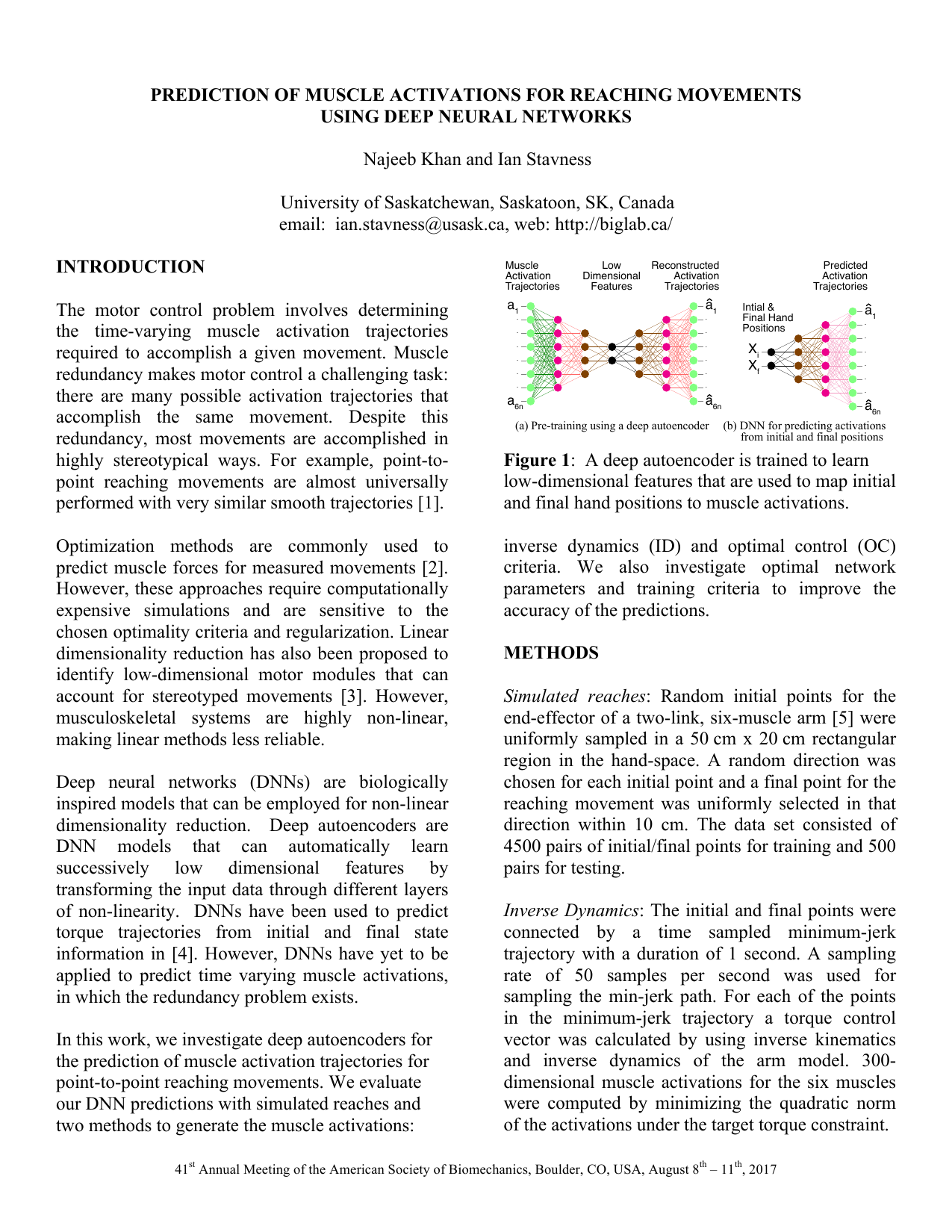
Figure 1: A deep autoencoder is trained to learn
low-dimensional features that are used to map initial
and final hand positions to muscle activations.
inverse dynamics (ID) and optimal control (OC)
criteria. We also investigate optimal network
parameters and training criteria to improve the
accuracy of the predictions.
METHODS
Simulated reaches: Random initial points for the
end-effector of a two-link, six-muscle arm [5] were
uniformly sampled in a 50 cm x 20 cm rectangular
region in the hand-space. A random direction was
chosen for each initial point and a final point for the
reaching movement was uniformly selected in that
direction within 10 cm. The data set consisted of
4500 pairs of initial/final points for training and 500
pairs for testing.
Inverse Dynamics: The initial and final points were
connected by a time sampled minimum-jerk
trajectory with a duration of 1 second. A sampling
rate of 50 samples per second was used for
sampling the min-jerk path. For each of the points
in the minimum-jerk trajectory a torque control
vector was calculated by using inverse kinematics
and inverse dynamics of the arm model. 300-
dimensional muscle activations for the six muscles
were computed by minimizing the quadratic norm
of the activations under the target torque constraint. .
.
.
.
.
.
.
.
.
.
.
.
.
.
.
.
.
.
Muscle
Activation
Trajectories
Reconstructed
Activation
Trajectories
Predicted
Activation
Trajectories
Intial &
Final Hand
Positions
Low
Dimensional
Features
a1
a6n
a1
a6n
a1
a6n
Xi
Xf
(a) Pre-training using a deep autoencoder
(b) DNN for predicting activations
from initial and final positions
41st Annual Meeting of the American Society of Biomechanics, Boulder, CO, USA, August 8th – 11th, 2017
Optimal Control: For each pair of initial/final
points, 50-dimensional torque control signals were
generated for each joint using the iterative Linear-
Quadratic-Gaussian (iLQG) method [5]. Muscle
activations were computed using static optimization
with a quadratic cost.
Network Training: For each control type, we trained
an autoencoder with layer dimensions 300-150-50-
4-50-150-300 (Figure 1a). Layer-wise pre-training
[6] was used to train the network with the muscle
activation trajectories as the inputs and outputs. The
decoder part of the autoencoder (Figure 1b) with
dimensions 4-50-150-300 was then retrained on the
inputs as the initial/final end-effector positions, and
outputs as the muscle activations. Both the networks
were trained by minimizing the cross-entropy loss
between predicted and desired output using the
conjugate gradient descent method.
RESULTS AND DISCUSSION
Muscle activations predicted with the DNN
matched well with the actual trajectories for both
the ID and OC conditions (Figure 2). RMS error in
the activation trajectories was 0.0048