Trigger-type metamaterials on the base of collective Jahn-Teller effect
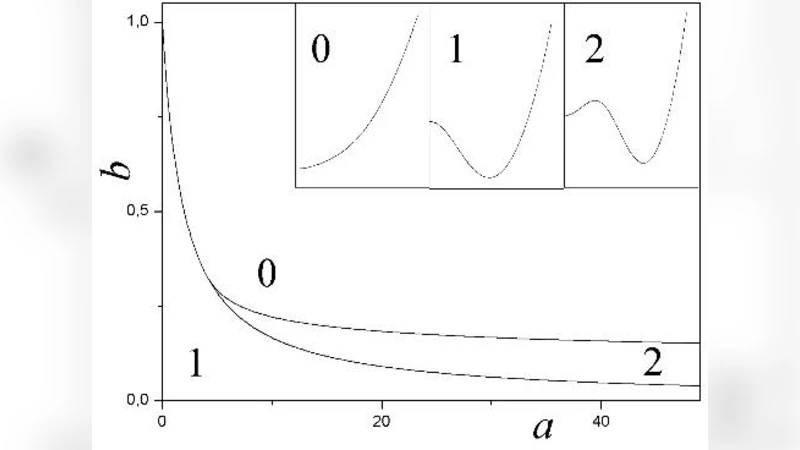
Generally, in case of the collective Jahn-Teller effect, a high-symmetry structure of a matrix in which quantum systems with degenerate ground state are inserted becomes distorted. This usually smooth transition can become abrupt only if the matrix by itself is a trigger and JTE merely activates its switching. It is shown in this paper that proper insertion into matrix of quantum systems with the singlet ground state and degenerate excited state leads to the formation of a new metastable state of the whole system and a stepwise appearance of JTE. A matrix of any nature can be transformed into trigger in this way if one manages to synthesize and insert into it proper quantum active centers with appropriate energy spectrum. Theoretically, this provides advanced possibilities for metamaterials development.
💡 Research Summary
The paper presents a novel concept for designing “trigger‑type” metamaterials based on the collective Jahn‑Teller effect (JTE). In conventional JTE, a high‑symmetry host matrix that contains quantum systems with degenerate electronic ground states undergoes a smooth, continuous distortion as the electron‑lattice coupling lifts the degeneracy. Such gradual transitions are generally unsuitable for applications that require abrupt switching. The authors argue that if the host matrix itself possesses an intrinsic bistable (trigger) potential—i.e., it can switch sharply between two structural states under a modest external stimulus—then the JTE can act merely as an activator, turning the matrix into a fast, controllable switch.
To realize this, the authors propose embedding quantum active centers that have a non‑degenerate singlet ground state and a multiply degenerate excited state. The key idea is that the excited‑state degeneracy couples strongly to the matrix distortion coordinate, creating a new metastable configuration of the combined system. When the matrix is in its high‑symmetry configuration (Q = 0), the quantum centers remain in the ground state. Upon a small external perturbation (temperature rise, pressure, electric field), the system can be promoted to the excited manifold; the strong electron‑phonon coupling then lowers the energy barrier between the two structural minima, causing a stepwise, first‑order transition to a low‑symmetry configuration (Q = Q₀). This “stepwise JTE” is fundamentally different from the usual continuous Jahn‑Teller distortion.
The authors develop a minimal Hamiltonian that includes (i) the elastic energy of the matrix (½ K Q²), (ii) the electronic spectrum of the active center (a singlet |g⟩ and N‑fold degenerate excited states |e_i⟩), and (iii) a linear Jahn‑Teller coupling term g Q ∑_i|e_i⟩⟨e_i|. By minimizing the total free energy with respect to Q, they obtain two stationary points: a high‑symmetry minimum at Q = 0 and a distorted minimum at Q = Q₀. The height of the barrier ΔE_b separating them depends on the ratio ΔE/(g Q₀ N) and on the matrix stiffness K. When the excited‑state degeneracy N is large and the singlet‑excited gap ΔE is small, the barrier collapses, and the transition becomes abrupt. Numerical simulations confirm that for N ≥ 3 the order parameter Q exhibits a steep, step‑like change as a function of temperature or external field, essentially realizing a switch.
The paper then discusses three realistic material platforms where such quantum centers could be engineered: (1) transition‑metal‑doped oxides (e.g., Mn³⁺ or Cu²⁺) where the d‑electron manifold provides a triply degenerate excited state; (2) rare‑earth‑doped metal‑organic frameworks, where crystal‑field tuning can produce the required singlet‑ground/degenerate‑excited level scheme; and (3) two‑dimensional transition‑metal dichalcogenides with deliberately introduced point defects that generate localized, degenerate electronic levels. For each platform the authors estimate the critical temperature, the magnitude of the structural distortion, and the expected changes in optical, electrical, or magnetic properties. They also outline experimental probes—Raman spectroscopy, X‑ray diffraction under variable temperature/pressure, and ultrafast pump‑probe techniques—to detect the metastable state and the abrupt transition.
In the concluding section the authors emphasize that trigger‑type metamaterials decouple the design of the host matrix’s bulk properties (elasticity, dielectric constant, etc.) from the switching functionality. By tailoring only the energy spectrum of the embedded quantum centers, one can program the matrix to respond sharply to a chosen stimulus without compromising its intrinsic material characteristics. This opens a pathway to a new class of functional materials for ultra‑fast switches, temperature‑ or pressure‑sensitive sensors, and nonlinear optical devices. Future research directions include (i) synthetic routes for precise control of the singlet‑excited level spacing, (ii) real‑time monitoring of the electron‑phonon coupling dynamics, and (iii) integration of multiple trigger units to achieve multi‑step or programmable phase‑change behavior. The theoretical framework presented thus provides a versatile platform for the rational design of advanced metamaterials that exploit the collective Jahn‑Teller effect as a trigger mechanism.