Stable Secretaries
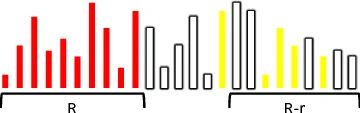
We define and study a new variant of the secretary problem. Whereas in the classic setting multiple secretaries compete for a single position, we study the case where the secretaries arrive one at a time and are assigned, in an on-line fashion, to one of multiple positions. Secretaries are ranked according to talent, as in the original formulation, and in addition positions are ranked according to attractiveness. To evaluate an online matching mechanism, we use the notion of blocking pairs from stable matching theory: our goal is to maximize the number of positions (or secretaries) that do not take part in a blocking pair. This is compared with a stable matching in which no blocking pair exists. We consider the case where secretaries arrive randomly, as well as that of an adversarial arrival order, and provide corresponding upper and lower bounds.
💡 Research Summary
The paper introduces a novel online matching model called “Stable Secretaries,” which extends the classic secretary problem to a many‑to‑many setting with heterogeneous positions. There are two finite totally ordered sets: a set G of “girls” (the positions) and a set B of “boys” (the applicants). The order of the positions is known in advance, while the applicants arrive one by one according to a permutation π. When an applicant arrives, the decision maker learns only the applicant’s relative rank among those seen so far and must irrevocably either assign the applicant to an as‑yet‑unfilled position or leave the applicant unmatched.
The quality of an online matching is measured using the concept of a blocking pair from stable‑matching theory. A pair (g, b) is a blocking pair if both g and b prefer each other to their current partners (or to being unmatched). An element (position or applicant) that does not belong to any blocking pair is called “satisfied.” Three objective functions are considered:
* C₍g₎ – the number of satisfied positions,
* C₍b₎ – the number of satisfied applicants,
* C₍p₎ – the number of satisfied matched pairs.
Weighted extensions are also studied, where each position and each applicant carries a positive weight w. The corresponding objectives C₍wg₎ and C₍wb₎ aim to maximize the total weight of satisfied positions or applicants.
The authors first define a class of “conservative” algorithms that never perform a “weak matching action” (matching a relatively weak position when more positions than remaining applicants exist). Lemma 2.1 shows that for C₍wb₎ and C₍p₎ there always exists an optimal conservative algorithm, regardless of the arrival distribution.
The main technical contributions are upper and lower bounds for the three objectives under two arrival models: (i) uniformly random order and (ii) adversarial order.
Random arrival.
- Theorem 3.1 proves that both C₍g₎ and C₍b₎ can be satisfied up to a constant fraction of the optimum (Ω(1) approximation), i.e., Θ(n) positions or applicants can be made satisfied. The algorithm uses a classic “sample‑then‑select” technique: it observes a fixed fraction of early arrivals to estimate the ranking distribution and then assigns later applicants to the best available positions.
- Theorem 3.3 establishes a matching‑size lower bound: no (randomized) algorithm can guarantee more than O(1/√n) of the optimal number of satisfied pairs. This matches the well‑known √n barrier for online bipartite matching.
Adversarial arrival.
- Theorem 4.3 shows that for C₍g₎ and C₍b₎ the best possible approximation drops to O(1/√n). Even with full knowledge of the position order, an adversary can force any algorithm to satisfy at most O(√n) positions or applicants.
- Theorem 4.4 is even stronger for C₍p₎: under adversarial order the expected number of satisfied pairs can be forced down to 1, i.e., essentially no non‑trivial matching can be guaranteed.
Weighted versions.
- Theorem 5.1 proves that the total weight of satisfied positions can be approximated within an Ω(1/ log n) factor of the optimum stable matching. The algorithm prioritizes the heaviest positions while preserving stability.
- Theorem 5.2 shows that the total weight of satisfied applicants can be approximated within a constant factor (Ω(1)).
The paper situates its contributions within the broader literature on online bipartite matching (Karp‑Vazirani‑Vazirani), matroid secretary problems, and dynamic matching markets. Unlike prior work that minimizes the number of blocking pairs (a quadratic measure) or maximizes matching size alone, this study focuses on the number of agents that are free of any blocking pair, which aligns more naturally with the original secretary problem’s “select the best” spirit when multiple heterogeneous positions exist.
Potential applications include sequential hiring for multiple job openings with different salaries, ride‑sharing platforms where passengers are matched to a heterogeneous fleet of drivers, and editorial assignment of manuscripts to reviewers with varying expertise levels. In all these settings, the decision maker must act online, cannot foresee future arrivals, and wishes to avoid any pair of agents that would mutually prefer to deviate from the assigned matching.
In summary, “Stable Secretaries” provides the first systematic treatment of online matching with heterogeneous positions under stability constraints, delivers tight bounds for both random and adversarial arrival models, and extends the analysis to weighted agents. The results deepen our understanding of the trade‑off between stability and online decision making and open avenues for further research on richer preference structures, dynamic arrivals, and incentive‑compatible mechanisms in many‑to‑many markets.
Comments & Academic Discussion
Loading comments...
Leave a Comment