Massive Binary Black Holes in the Cosmic Landscape
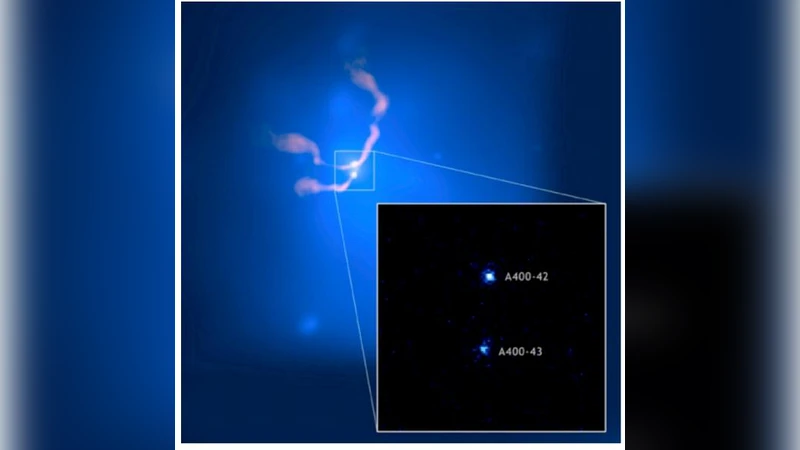
Binary black holes occupy a special place in our quest for understanding the evolution of galaxies along cosmic history. If massive black holes grow at the center of (pre-)galactic structures that experience a sequence of merger episodes, then dual black holes form as inescapable outcome of galaxy assembly. But, if the black holes reach coalescence, then they become the loudest sources of gravitational waves ever in the universe. Nature seems to provide a pathway for the formation of these exotic binaries, and a number of key questions need to be addressed: How do massive black holes pair in a merger? Depending on the properties of the underlying galaxies, do black holes always form a close Keplerian binary? If a binary forms, does hardening proceed down to the domain controlled by gravitational wave back reaction? What is the role played by gas and/or stars in braking the black holes, and on which timescale does coalescence occur? Can the black holes accrete on flight and shine during their pathway to coalescence? N-Body/hydrodynamical codes have proven to be vital tools for studying their evolution, and progress in this field is expected to grow rapidly in the effort to describe, in full realism, the physics of stars and gas around the black holes, starting from the cosmological large scale of a merger. If detected in the new window provided by the upcoming gravitational wave experiments, binary black holes will provide a deep view into the process of hierarchical clustering which is at the heart of the current paradigm of galaxy formation. They will also be exquisite probes for testing General Relativity, as the theory of gravity. The waveforms emitted during the inspiral, coalescence and ring-down phase carry in their shape the sign of a dynamically evolving space-time and the proof of the existence of an horizon.
💡 Research Summary
The paper provides a comprehensive review of the formation, evolution, and ultimate coalescence of massive binary black holes (MBHBs) within the hierarchical framework of galaxy assembly. It begins by outlining the theoretical expectation that every major galaxy merger should produce a pair of supermassive black holes (SMBHs) at the centers of the merging progenitors. The authors then pose the central astrophysical questions: how do these black holes pair, under what conditions do they form a bound Keplerian binary, and can they harden efficiently enough to reach the gravitational‑wave (GW) driven regime?
To address these issues, the study employs state‑of‑the‑art N‑body plus smoothed‑particle‑hydrodynamics (SPH) simulations. The numerical framework builds on the GADGET‑4 code, embedding high‑resolution stellar particles and gas particles within cosmologically motivated merger initial conditions. Black holes are treated as sink particles that accrete gas and feel dynamical friction from both stars and gas. A suite of simulations explores a range of mass ratios (1:1, 1:3, 1:10) and gas fractions (10 %–50 %). The authors also vary the effective viscosity (α‑parameter) of the circumbinary disk to assess its impact on angular‑momentum transport.
The results delineate four evolutionary phases. In the first “dynamical friction” phase, the two SMBHs sink toward the common potential minimum under the combined drag of stars and gas. The second “hardening” phase sees the binary separation shrink from tens of parsecs to ∼1 pc largely through three‑body stellar encounters; however, the classic “final‑parsec problem” emerges because stellar scattering alone becomes inefficient at sub‑parsec scales. The third phase is dominated by gas dynamics: a massive circumbinary disk forms, and non‑axisymmetric torques, spiral density waves, and viscous stresses extract angular momentum, driving the binary to separations of ≲0.01 pc on timescales of 10⁷–10⁸ yr. Finally, once the orbital frequency enters the GW band, radiation reaction rapidly brings the pair to coalescence within ∼10³–10⁴ yr.
A key insight is that the presence of a substantial gas reservoir (≥30 % of the baryonic mass) can bypass the final‑parsec bottleneck, reducing the total coalescence time to less than a few hundred million years. Conversely, gas‑poor mergers may stall for >1 Gyr, implying that not all MBHBs will be observable by upcoming space‑based GW detectors. The simulations also reveal that binaries can accrete “on‑flight” during the hardening stage, producing observable electromagnetic signatures (e.g., variable X‑ray or radio emission) that could be used for multi‑messenger identification.
The authors compute GW waveforms for the inspiral, merger, and ring‑down phases, showing sensitivity to binary mass ratio, spin alignment, and disk viscosity. These waveforms provide a direct probe of the astrophysical environment: deviations from vacuum templates could betray the presence of gas torques or eccentricities induced by stellar scattering. The paper argues that future missions such as LISA, TianQin, and DECIGO will be able to detect MBHBs out to redshift z≈5, offering a unique window onto the cosmic history of galaxy mergers and SMBH growth.
In conclusion, the study demonstrates that realistic treatments of both stellar dynamics and gas physics are essential to resolve the final‑parsec problem and to predict the observable properties of massive binary black holes. It highlights the synergy between high‑resolution cosmological simulations, electromagnetic observations, and space‑based GW astronomy as the path forward for unraveling the role of MBHBs in the cosmic landscape.
Comments & Academic Discussion
Loading comments...
Leave a Comment