Binary Prime Tableau Sequences
This paper proposes a new class of random sequences called binary primes tableau (PT) sequences that have potential applications in cryptography and communications. The PT sequence of rank p is obtained from numbers arranged in a tableau with p columns where primes are marked off until each column has at least one prime and where the column entries are added modulo 2. We also examine the dual to the PT sequences obtained by adding the rows of the tableau. It is shown that PT sequences have excellent autocorrelation properties.
💡 Research Summary
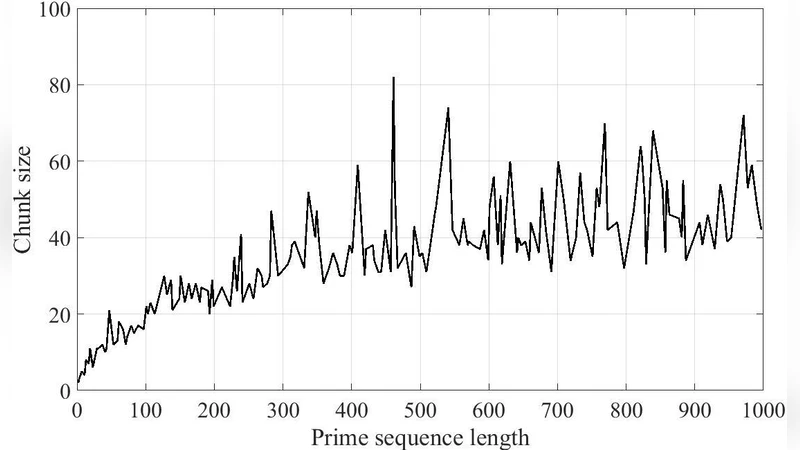
The paper introduces a novel class of pseudo‑random sequences called Binary Prime Tableau (BPT) sequences and investigates their statistical and cryptographic properties. The construction starts with a “Numbers Tableau” (NTP) in which the natural numbers are arranged in p columns. Each entry is then transformed into a binary value: 1 for a prime, 0 for a composite. This binary matrix is called the Binary Primes Tableau (BPT). The process is continued row by row until every column contains at least one ‘1’; the point at which this condition is first satisfied defines the termination index N_max. Two termination strategies are described, but the authors adopt the “Kind 1” rule, which pads the remaining cells of the final row with zeros.
From the completed binary tableau (CBPT) two sequences are derived. The primary BPT sequence is obtained by summing each column modulo 2, while the dual sequence (DT) results from summing each row modulo 2. The authors prove that, as p grows, both sequences exhibit randomness from an information‑theoretic perspective. The proof relies on the prime number theorem and the computational complexity of a sieve‑based search for the first prime in each column, showing that the number of operations grows without bound as N_max → ∞, making prediction infeasible.
The paper also defines a “balance ratio” k/n, where k is the number of ones in a sequence of length n. Empirical data for several values of p (13, 199, 461, 971, 997) demonstrate that the balance ratio for both BPT and DT converges toward 0.5 as p increases, indicating near‑perfect statistical balance between zeros and ones. Table 1 in the manuscript presents these ratios, confirming the trend.
A central contribution is the analysis of correlation properties. The authors compute the mean‑square periodic autocorrelation (MSP‑AC) and mean‑square periodic cross‑correlation (MSP‑CC) for BPT sequences of length 199 and compare them with well‑known families: Gold, small Kasami, and large Kasami sequences. The BPT autocorrelation peak is 0.1161 and the cross‑correlation peak is 0.2052, substantially lower than the corresponding values for the benchmark sequences (Gold: 0.646/0.828; Kasami: 0.547‑0.832). Figures 3 and 4 illustrate the autocorrelation functions, showing that the BPT’s side‑lobes are close to zero, confirming low periodic structure.
Additional properties are highlighted: the BPT sequence has a single cycle whose length is determined solely by the tableau dimensions (p × k). Consequently, designers can select p and the number of rows k to achieve a desired period. The unpredictability of N_max, which depends on the irregular distribution of primes, adds a layer of security because an adversary cannot easily infer where the tableau terminates. While the dual sequence shares the information‑complexity argument, its balance is poorer for small p, making it less suitable for cryptographic use in those cases.
In the conclusion, the authors argue that BPT sequences combine number‑theoretic hardness (prime distribution) with simple binary operations to produce pseudo‑random streams that outperform traditional maximal‑length, Gold, and Kasami sequences in both autocorrelation and cross‑correlation metrics. They suggest applications in stream‑cipher keystream generation, spread‑spectrum communication, and radar waveform design, where low correlation and high unpredictability are critical. The paper also outlines future work, including efficient real‑time generation algorithms, deeper statistical analysis for larger p, and performance evaluation in practical communication channels. Overall, the study provides a compelling new tool for cryptographers and signal designers seeking sequences with provable randomness and superior correlation characteristics.
Comments & Academic Discussion
Loading comments...
Leave a Comment