Francesco Fontana and his "astronomical" Telescope
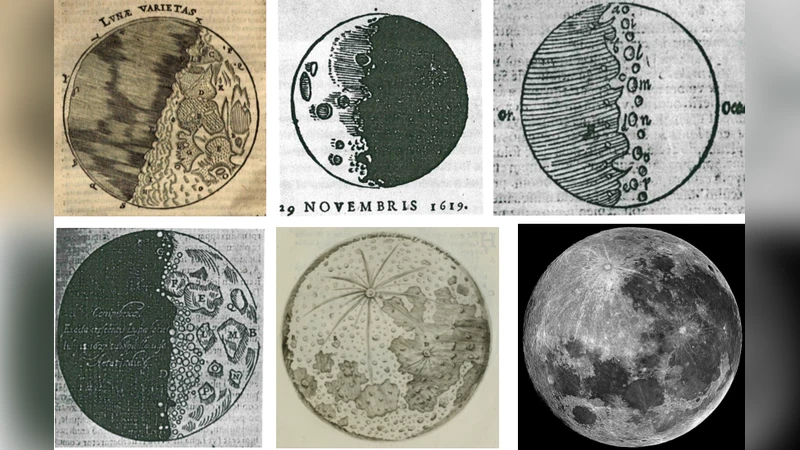
In the late 1620s the Neapolitan telescope maker Francesco Fontana was the first to observe the sky using a telescope with two convex lenses, which he had manufactured himself. Fontana succeeded in drawing the most accurate maps of the Moon’s surface of his time, which were to become popular through a number of publications spread all over Europe but without acknowledging the author. At the end of 1645, in a state of declining health and pressed by the need to defend his authorship, Fontana carried out an intense observational campaign, whose results he hurriedly collected in his Novae Coelestium Terrestriumque rerum Observationis (1646), the only book he left to posterity. Fontana observed the Moon’s main craters, as the crater Tycho which he named Fons Major, their radial patterns and the change in their positions due to the Moon’s motions. He observed the gibbosity of Mars at quadrature and, together with the Jesuit G.B. Zupus, he described the phases of Mercury. Fontana observed the two - and occasionally three - major bands of Jupiter, and inferred the rotation movement of the major planets Mars, Jupiter and Saturn, arguing that they could not be attached to an Aristotelian sky. He came close to revealing the ring structure of Saturn. He also suggested the presence of additional moons around Jupiter, Venus and Saturn, which prompted a debate that lasted more than a hundred years. In several places of his book Fontana repeatedly claimed to have conceived the first positive eyepiece in 1608, providing a declaration by Zupus to have used his telescope since 1614. This declaration is still the oldest record mentioning such a device. We finally suggest that the telescopes depicted in the two Allegory of Sight by J. Brueghel the Elder belonging to Albert VII might have been made by Fontana, and that he might have inspired the Sight by Jusepe Ribera (c. 1616).
💡 Research Summary
Francesco Fontana, a Neapolitan optician and astronomer active in the early seventeenth century, is credited with being the first to construct and use a telescope that employed two convex lenses only—a true astronomical refractor—around the late 1620s. Unlike the Galilean design, which combined a convex objective with an concave eyepiece, Fontana’s “positive eyepiece” (two convex lenses) reduced chromatic and spherical aberrations while delivering higher magnification and sharper images. This optical breakthrough enabled him to produce the most accurate lunar maps of his era, depicting major craters such as Tycho (which he called Fons Major), their radial patterns, and the subtle positional shifts caused by lunar libration.
In late 1645, faced with deteriorating health and a pressing need to assert his priority, Fontana launched an intensive observational campaign. The results were compiled in his sole surviving work, Novae Coelestium Terrestriumque rerum Observationis (1646). The book contains a wealth of observations: (1) detailed lunar topography, including crater morphology and the evolution of the terminator; (2) the “gibbosity” of Mars at quadrature, confirming the planet’s phase‑dependent appearance; (3) joint observations with Jesuit G.B. Zupus of Mercury’s phases, providing one of the earliest systematic records of this elusive inner planet; (4) the identification of two, occasionally three, distinct bands on Jupiter, together with a clear description of their rotation, thereby challenging the Aristotelian notion of an immutable heavens; (5) a near‑recognition of Saturn’s ring structure, though he could not fully resolve the rings; and (6) speculative reports of additional satellites orbiting Jupiter, Venus, and Saturn. The latter claim sparked a debate that persisted for more than a century, illustrating Fontana’s willingness to extend observational data beyond the limits of his instrument.
Fontana also asserted that he had invented the first positive eyepiece in 1608. A contemporaneous declaration by Zupus, stating that he had been using Fontana’s telescope since 1614, constitutes the earliest known documentary evidence of such a device. This record underscores the rapid diffusion of advanced telescopic technology among scholars and artisans in the early 1600s.
Beyond the scientific sphere, Fontana’s instruments appear to have influenced contemporary visual culture. The author proposes that the telescopes depicted in Jan Brueghel the Elder’s two “Allegory of Sight” paintings (commissioned by Albert VII) were likely Fontana’s creations, and that his work may have inspired Jusepe Ribera’s “Sight” (c. 1616). If correct, these connections demonstrate how Fontana’s technical achievements resonated within the artistic milieu of the Baroque period, further cementing his legacy as a bridge between emerging scientific practice and visual representation.
Overall, Fontana’s contributions can be grouped into four interrelated domains: (i) the technical innovation of a pure refracting telescope with a positive eyepiece; (ii) the production of highly accurate lunar and planetary observations that pre‑figured later Keplerian and Newtonian insights; (iii) the earliest documentary claim of the positive eyepiece, providing a crucial datum for the historiography of telescope development; and (iv) the cultural imprint of his instruments in major works of art. His 1646 volume, though hastily assembled, remains a vital primary source for historians of early modern astronomy, illustrating how an artisan‑scientist could push the boundaries of observational capability and shape the discourse on celestial mechanics at a pivotal moment in the Scientific Revolution.
Comments & Academic Discussion
Loading comments...
Leave a Comment