Asteroid Impact Effects And Their Immediate Hazards For Human Populations
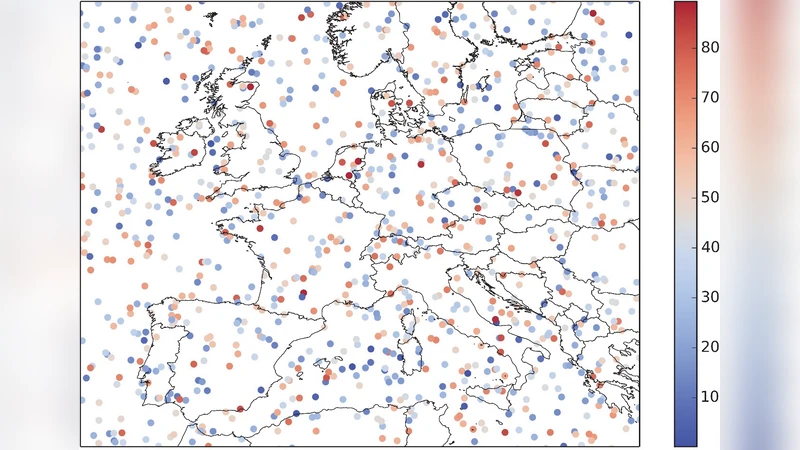
A set of 50,000 artificial Earth impacting asteroids was used to obtain, for the first time, information about the dominance of individual impact effects such as wind blast, overpressure shock, thermal radiation, cratering, seismic shaking, ejecta deposition and tsunami for the loss of human life during an impact event for impactor sizes between 15 to 400 m and how the dominance of impact effects changes over size. Information about the dominance of each impact effect can enable disaster managers to plan for the most relevant effects in the event of an asteroid impact. Furthermore, the analysis of average casualty numbers per impactor shows that there is a significant difference in expected loss for airburst and surface impacts and that the average impact over land is an order of magnitude more dangerous than one over water.
💡 Research Summary
The paper presents a comprehensive quantitative assessment of human casualty risks from asteroid impacts by simulating 50,000 artificial Earth‑impacting asteroids ranging from 15 m to 400 m in diameter. For each simulated event the authors modelled seven physical impact effects—wind blast (dynamic pressure and wind speed), over‑pressure shock, thermal radiation, crater formation, seismic shaking, ejecta (fall‑out) deposition, and tsunami generation—and combined these with high‑resolution global population data and building vulnerability functions to estimate fatalities.
Key findings are as follows. First, the dominant casualty‑causing effect changes systematically with impactor size. Small bodies (15–50 m) almost always explode in the atmosphere (airbursts). In this regime, wind blast and thermal radiation together account for roughly 70 % of all deaths, with casualties concentrated within a few tens of kilometres of the burst epicentre. Mid‑size bodies (50–150 m) still produce airbursts, but the contribution of wind and heat declines while crater formation and ground shaking become increasingly important; for objects larger than about 100 m the crater itself can be several hundred metres across, causing direct burial and widespread structural collapse. Large bodies (>150 m) reach the surface, and the bulk of fatalities (over 50 %) arise from the crater and associated seismic shaking. When such an impact occurs over the ocean, a tsunami adds a secondary but potentially catastrophic hazard, especially for densely populated coastal zones.
Second, the location of impact dramatically alters risk. For a given size, a land impact produces on average an order of magnitude more deaths than an ocean impact. This disparity stems from higher population density on land, the presence of built‑up infrastructure that is vulnerable to blast, heat, and seismic loads, and the fact that land impacts generate craters and ground motion directly affecting people. Ocean impacts, by contrast, primarily threaten coastal populations through tsunami and ejecta, which are more geographically limited.
Third, the analysis highlights a stark contrast between airburst and surface impacts. Airbursts disperse energy over a large atmospheric volume, leading to widespread but relatively shallow damage; surface impacts concentrate energy at the ground, producing deep, localized destruction that translates into higher per‑event casualty counts.
The authors argue that these quantitative effect‑dominance maps can guide disaster‑risk planners in prioritising mitigation measures. For sub‑30 m threats, early‑warning systems, public evacuation, and protective shelters against wind and heat are paramount. For 30–150 m events, strengthening building codes to resist over‑pressure and seismic loads, and designating crater‑impact exclusion zones become critical. For impacts exceeding 150 m, large‑scale emergency‑response frameworks, tsunami early‑warning networks, and coastal defence structures are essential.
Finally, the paper calls for future work to refine casualty estimates by incorporating more detailed structural vulnerability models, socioeconomic vulnerability indices, and real‑time warning integration. Such enhancements would improve the fidelity of risk assessments and support the development of globally coordinated response strategies for the low‑probability but high‑consequence threat of asteroid impacts.
Comments & Academic Discussion
Loading comments...
Leave a Comment