Applicability of Educational Data Mining in Afghanistan: Opportunities and Challenges
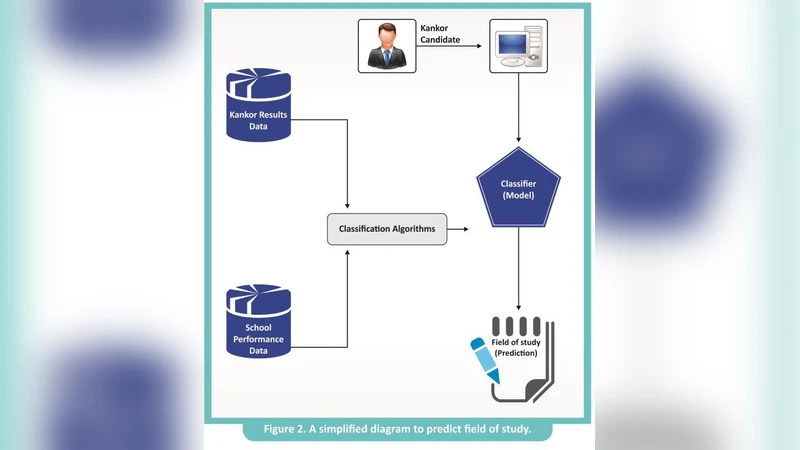
The author’s own experience as a student and later as a lecturer in Afghanistan has shown that the methods used in the educational system are not only flawed, but also do not provide the minimum guidance to students to select proper course of study before they enter the national university entrance (Kankor) exam. Thus, it often results in high attrition rates and poor performance in higher education. Based on the studies done in other countries, and by the author of this paper through online questionnaires distributed to university students in Afghanistan - it was found that proper procedures and specialized studies in high schools can help students in selecting their major field of study more systematically. Additionally, it has come to be known that there are large amounts of data available for mining purposes, but the methods that the Ministry of Education and Ministry of Higher Education use to store and produce their data, only enable them to achieve simple facts and figures. Furthermore, from the results it can be concluded that there are potential opportunities for educational data mining application in the domain of Afghanistan’s education systems. Finally, this study will provide the readers with approaches for using Educational Data Mining to improve the educational business processes. For instance, predict proper field of study for high school graduates, or, identify first year university students who are at high risk of attrition.
💡 Research Summary
The paper “Applicability of Educational Data Mining in Afghanistan: Opportunities and Challenges” investigates how educational data mining (EDM) techniques can be leveraged to address two persistent problems in Afghanistan’s higher‑education system: the lack of systematic guidance for high‑school students in selecting a field of study before the national university entrance exam (Kankor) and the high attrition rates among first‑year university students. Drawing on a review of international EDM applications and an original online questionnaire administered to 350 university students across several Afghan institutions, the author demonstrates that inadequate career counseling at the secondary‑school level correlates strongly with students’ dissatisfaction with their chosen majors and with a heightened risk of dropping out.
The study first maps the current data landscape. The Ministry of Education and the Ministry of Higher Education each maintain separate databases containing student grades, attendance records, exam scores, and demographic information. However, these databases are stored in heterogeneous formats, lack standardized metadata, and are accessed primarily for simple descriptive statistics (e.g., average scores, enrollment counts). Consequently, the ministries are unable to perform the pattern‑discovery, predictive analytics, or longitudinal analyses that underpin modern EDM.
Through the questionnaire, the author uncovers that 68 % of respondents felt they received insufficient information about possible majors during high school, and 54 % expressed low satisfaction with their current field of study. Moreover, students who reported uncertainty about major selection were 2.3 times more likely to indicate an intention to leave university. These findings echo evidence from other developing contexts where data‑driven career guidance has been shown to improve retention and academic performance.
Based on these insights, the paper outlines four primary EDM opportunities for Afghanistan:
-
Major‑Fit Prediction – Using supervised learning (decision trees, random forests, logistic regression, neural networks) to predict the most suitable field of study for each high‑school graduate based on academic performance, subject preferences, and socio‑economic background. Such a system could be integrated into the Kankor preparation process, providing personalized recommendations that reduce mismatches.
-
Early‑Warning Attrition Models – Applying classification or survival‑analysis techniques to attendance, assignment submission rates, grade trajectories, and demographic variables to flag first‑year students at high risk of dropping out, enabling timely counseling or remedial support.
-
Learning‑Path Clustering – Employing unsupervised methods (k‑means, hierarchical clustering) to segment students into groups with similar learning styles or achievement patterns, allowing institutions to tailor instructional resources, tutoring programs, and scholarship allocations.
-
Policy Simulation and Impact Assessment – Building simulation models that evaluate the prospective effects of new counseling policies, scholarship schemes, or curriculum reforms before they are rolled out, thereby supporting evidence‑based decision‑making.
The author also identifies significant challenges that must be addressed before EDM can be operationalized:
- Data Quality and Integration – Missing values, erroneous entries, and non‑standard coding hinder model accuracy; a concerted effort to clean, harmonize, and document data is required.
- Technical Infrastructure – Limited server capacity, unreliable internet connectivity, and the absence of a centralized data warehouse restrict large‑scale analytics and real‑time monitoring.
- Human Capital – A shortage of data scientists, statisticians, and educators trained in EDM hampers model development, validation, and maintenance.
- Privacy and Ethics – Student records contain sensitive personal information; robust legal frameworks and ethical guidelines are essential to protect confidentiality and gain public trust.
- Cultural and Institutional Resistance – Decision‑makers are accustomed to anecdotal or politically driven policies; fostering a culture that values data‑driven insights will require sustained advocacy and demonstrable pilot successes.
To navigate these obstacles, the paper proposes a phased implementation roadmap:
- Data Standardization Phase – Create a unified metadata dictionary, convert existing databases to a common schema, and establish data‑governance protocols.
- Pilot Phase – Develop a prototype major‑fit prediction model and an attrition‑risk early‑warning system, test them in a limited number of schools and universities, and refine algorithms based on feedback.
- Scale‑Up Phase – Deploy the validated models across the national education system, integrate them into existing student‑information systems, and provide dashboards for policymakers, counselors, and administrators.
- Sustainability Phase – Invest in capacity‑building programs (e.g., scholarships for data‑science training, workshops for teachers), secure funding for infrastructure upgrades, and institutionalize privacy safeguards and continuous model monitoring.
In conclusion, while Afghanistan’s current educational data infrastructure is rudimentary and its policy environment is not yet data‑centric, the abundance of untapped student data presents a compelling opportunity for EDM to improve major selection guidance and reduce first‑year attrition. Realizing this potential will require coordinated action among the ministries of education, higher‑education institutions, international development partners, and the private sector to address technical, human‑resource, ethical, and cultural challenges. If these steps are taken, Afghanistan could establish a more efficient, student‑centered education system that better aligns individual aspirations with national development goals.
Comments & Academic Discussion
Loading comments...
Leave a Comment