Decentralized, Robust and Efficient Services for an Autonomous and Real-time Urban Crisis Management
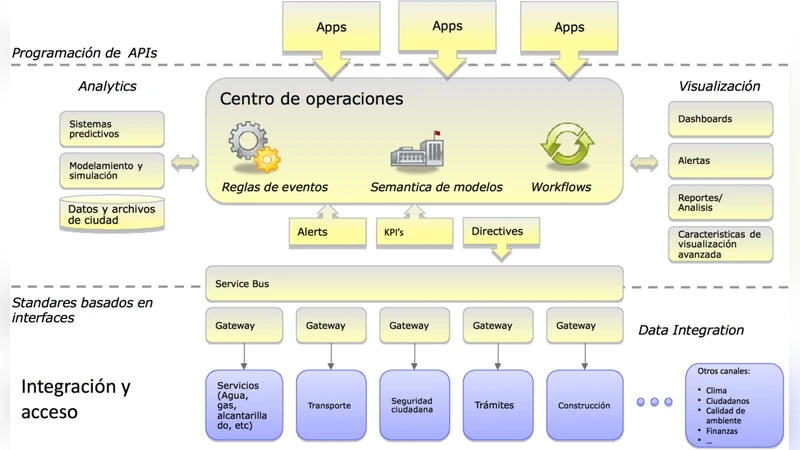
The globalization of trade and the organization of work are currently causing a large migratory flow towards the cities. This growth of cities requires new urban planning where digital tools take a preponderant place to capture data and understand and decide in face of changes. These tools however hardly resist to natural disasters, terrorism, accidents, etc. Based on the expertise of the CITI laboratory of INSA Lyon and SC3 of the Industrial University of Santander, we propose to create the ALERT project - Autonomous Liable Emergency service in Real Time - with decentralized, reliable and efficient services, physically close to the citizens, taking decisions locally, in a relevant manner without risk of disconnection with a central authority. These information gathering and decision-making will involve the population with participatory and social approaches.
💡 Research Summary
The paper presents the ALERT (Autonomous Liable Emergency service in Real‑Time) project, a joint effort between the CITI laboratory at INSA‑Lyon (France) and the SC3 group at the Industrial University of Santander (UIS, Colombia), aimed at delivering decentralized, robust, and efficient emergency management services for smart cities. The authors begin by highlighting the rapid urbanization driven by global trade and labor mobility, which creates a pressing need for digital infrastructures capable of real‑time data acquisition, analysis, and decision‑making. However, conventional centralized platforms are vulnerable to network failures, power outages, and other disruptions that commonly accompany natural disasters, terrorist attacks, or large‑scale accidents.
To address these challenges, the authors define three hard problems that must be solved: (1) a reliable service architecture that is real‑time, multi‑scale distributed, fault‑tolerant, and persistent; (2) intelligent citizen‑oriented services that are autonomous, contextually relevant, socially aware, and participatory; and (3) a pragmatic deployment roadmap that moves from laboratory simulations to city‑wide pilots.
The technical core of the proposal is a “Spontaneous Proximity Cloud” (Figure 2), a peer‑to‑peer edge‑cloud hybrid where mobile devices, roadside units, and local servers collaboratively host service instances. This architecture eliminates a single point of failure: when a node or communication link fails, the service state is replicated across neighboring nodes, enabling seamless failover and continuous operation. Data consistency is maintained through lightweight synchronization protocols, while service discovery is handled dynamically, allowing new nodes to join the network without manual configuration.
A second major contribution is the use of bio‑inspired swarm intelligence for traffic management. Vehicles are modeled as ants that exchange local knowledge of the road network with nearby peers (Figures 3‑4). Each vehicle computes its route based on partial, locally‑available information, continuously updating its path as new data arrives. In normal traffic conditions, this approach yields significant reductions in travel time (the KPP scenario). In simulated disaster conditions, such as a post‑earthquake environment, the algorithm adapts its parameters on‑the‑fly, improving the probability of emergency vehicles reaching their destinations (the PPE scenario). The authors argue that this decentralized routing outperforms traditional centralized traffic control, especially when the central controller is compromised or overloaded.
The third pillar of ALERT is citizen participation through crowdsensing and crowdsourcing. In the event of an emergency—illustrated by a simulated explosive attack—the system ingests real‑time streams of photos, GPS coordinates, and crowd flow data from citizens’ smartphones. These data feed a simulation engine that predicts crowd dynamics, identifies bottlenecks, and suggests optimal evacuation routes. By integrating participatory data, the system enhances situational awareness, reduces latency between field observations and command decisions, and mitigates the risk of misinformation.
Implementation proceeds in two phases. Phase 1 uses the UIS campus as a testbed to validate the distributed architecture, swarm‑based routing, and participatory data pipelines. Performance metrics such as latency, fault‑recovery time, and prediction accuracy are collected. Phase 2 scales the solution to the city of Bucaramanga, Colombia—a rapidly expanding urban area with a strong local digital ecosystem and the presence of the SC3 laboratory. Collaboration with municipal authorities will enable a city‑wide pilot, providing real‑world feedback on deployment logistics, regulatory compliance, and user acceptance.
In the discussion, the authors emphasize that the combination of edge‑centric service distribution, swarm intelligence, and citizen‑driven data collection creates a resilient emergency management ecosystem that can operate independently of a central authority. They acknowledge open challenges, including privacy preservation, secure communication, and the need for standardized APIs to integrate heterogeneous city services. Future work will explore advanced cryptographic techniques for data anonymization, machine‑learning models for predictive analytics, and policy frameworks to support cross‑jurisdictional coordination.
Overall, the paper offers a compelling vision for next‑generation smart‑city crisis response: a self‑organizing, fault‑tolerant network that leverages local computation, collective intelligence, and active citizen involvement to deliver timely, reliable decisions when they matter most.
Comments & Academic Discussion
Loading comments...
Leave a Comment