Structured Peer Learning Program - An Innovative Approach to Computer Science Education
Structured Peer Learning (SPL) is a form of peer-based supplemental instruction that focuses on mentoring, guidance, and development of technical, communication, and social skills in both the students receiving assistance and the students in teaching roles. This paper explores the methodology, efficacy, and reasoning behind the practical realization of a SPL program designed to increase student knowledge and success in undergraduate Computer Science courses. Students expressed an increased level of comfort when asking for help from student teachers versus traditional educational resources, historically showed an increased average grade in lower-level courses, and felt that the program positively impacted their desire to continue in or switch to a Computer major. Additionally, results indicated that advances in programming, analytical thinking, and abstract analysis skills were evident in not only the students but also the student teachers, suggesting a strong bidirectional flow of knowledge.
💡 Research Summary
The paper presents a comprehensive case study of the Structured Peer Learning (SPL) program implemented by the Department of Computer Science and Engineering (CSE) at Texas A&M University. SPL is positioned as a formalized, peer‑based supplemental instruction model that differs from traditional peer tutoring by hiring high‑performing undergraduate students as part-time “student teachers.” These student teachers are matched to courses based on recent successful completion and academic excellence, receive departmental compensation, and must complete mandatory training each semester. Their responsibilities include real‑time lab assistance, scheduled one‑on‑one tutoring sessions, and supplemental review classes that reinforce lecture material. Crucially, they are prohibited from grading, assigning coursework, or delivering formal instruction, preserving a peer relationship that lowers affective barriers to help‑seeking.
The authors first contextualize the need for SPL within computer science education, noting that CS demands abstract reasoning, extensive problem solving, and fluency in a strict programming syntax. Traditional lecture‑homework models often place students in passive roles, leading to misconceptions and reduced engagement, especially for novices who may have never written code before. SPL is proposed as an active‑learning complement that offers a relaxed environment where students feel comfortable asking questions.
Historical data from an earlier (2007‑2008) internal study of roughly 1,100 students (≈500 respondents) is revisited. Students who consulted student teachers in freshman and sophomore courses achieved significantly higher GPAs (2.77 vs. 2.09 for freshmen; 2.95 vs. 2.36 for sophomores), representing improvements of 0.68 and 0.59 grade points respectively. Upper‑level students showed negligible differences, suggesting the program’s strongest impact is on early‑career learners. Moreover, 65.48 % of question‑askers earned an A or B, compared with 58.34 % of non‑askers. Comfort surveys revealed that 87 % of freshmen and 91 % of sophomores felt most comfortable asking student teachers, surpassing comfort with teaching assistants (TAs) and instructors.
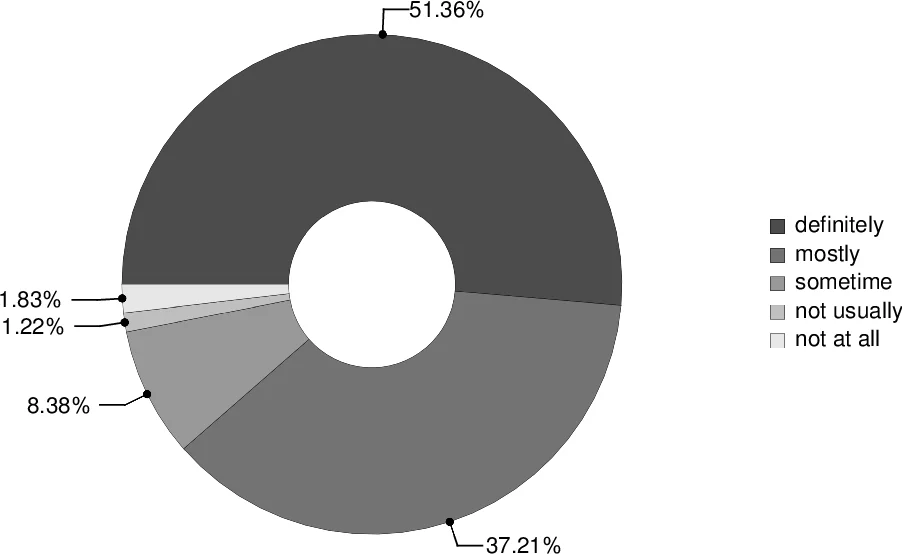
Building on this foundation, the authors collected extensive data from 2009‑2016: 4,709 student responses and 33 former student‑teacher responses. Students rated their comfort with student teachers at an average of 3.63/4 (SD 0.54), higher than with TAs (3.36) or instructors (3.32). 70.8 % selected “strongly agree” for maximum comfort with student teachers, versus 52.4 % (TAs) and 48.4 % (instructors). 92 % agreed that SPL improved their understanding of course material, and 89 % felt it positively affected their grades.
The paper also details the bidirectional benefits for student teachers. Repeatedly teaching complex concepts consolidates their own knowledge, exposes them to multiple solution strategies, and broadens their perspective across different faculty teaching styles. Beyond academic gains, student teachers engage in program administration—scheduling, hiring, website maintenance, and development of instructional tools—thereby acquiring project management, teamwork, and technical communication skills. These experiences enhance résumés, expand professional networks, and prepare participants for graduate studies or industry roles.
Methodologically, the study relies on self‑reported surveys and GPA conversion to a four‑point scale, lacking a randomized control group. The authors acknowledge potential self‑selection bias (students who seek help may already be more motivated) and the simplification inherent in GPA averaging. Nonetheless, the large sample size and consistent positive trends across multiple years lend credibility to the claim that SPL meaningfully improves early‑year academic performance and overall learning climate.
In conclusion, SPL’s core design principles—expertise‑based matching, formal employment with training, and preservation of a peer dynamic—create a learning ecosystem where novices feel safe to ask questions, leading to measurable GPA gains and higher success rates in introductory courses. Simultaneously, student teachers experience reinforced technical mastery and valuable soft‑skill development, embodying a true bidirectional learning model. The authors recommend future work employing randomized controlled trials, longitudinal tracking of participants, and exploration of SPL’s applicability in other STEM disciplines to validate and generalize the model’s efficacy.
Comments & Academic Discussion
Loading comments...
Leave a Comment