Urban association rules: uncovering linked trips for shopping behavior
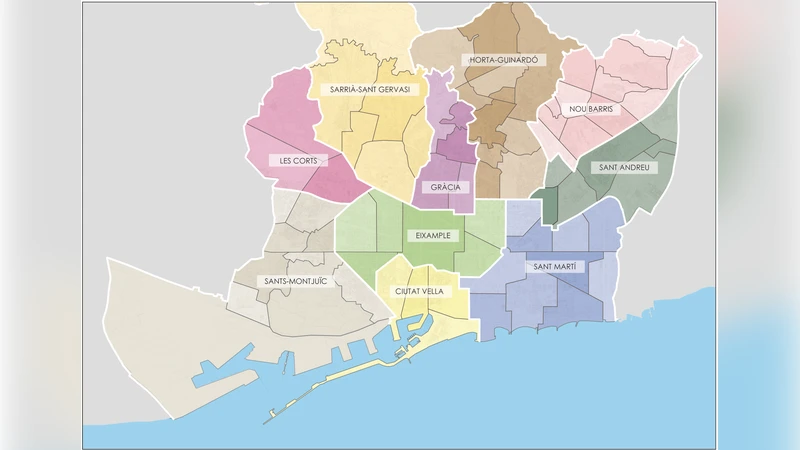
In this article, we introduce the method of urban association rules and its uses for extracting frequently appearing combinations of stores that are visited together to characterize shoppers’ behaviors. The Apriori algorithm is used to extract the association rules (i.e., if -> result) from customer transaction datasets in a market-basket analysis. An application to our large-scale and anonymized bank card transaction dataset enables us to output linked trips for shopping all over the city: the method enables us to predict the other shops most likely to be visited by a customer given a particular shop that was already visited as an input. In addition, our methodology can consider all transaction activities conducted by customers for a whole city in addition to the location of stores dispersed in the city. This approach enables us to uncover not only simple linked trips such as transition movements between stores but also the edge weight for each linked trip in the specific district. Thus, the proposed methodology can complement conventional research methods. Enhancing understanding of people’s shopping behaviors could be useful for city authorities and urban practitioners for effective urban management. The results also help individual retailers to rearrange their services by accommodating the needs of their customers’ habits to enhance their shopping experience.
💡 Research Summary
The paper introduces “urban association rules,” a methodological extension of classic market‑basket analysis to the city‑wide scale, and demonstrates its utility for uncovering linked shopping trips across an entire metropolitan area. Using a large, anonymized bank‑card transaction dataset, the authors treat every customer’s sequence of store visits as a single transaction basket. They first preprocess the raw data by grouping consecutive purchases made by the same cardholder within a short time window (e.g., 30 minutes) into a “session,” thereby approximating a real‑world movement from one shop to the next. Each store is geocoded, and its administrative district (city‑district‑neighborhood) is attached as spatial metadata.
The core analytical engine is the Apriori algorithm. After setting minimum support and confidence thresholds, the algorithm extracts frequent itemsets—here, sets of stores that co‑occur in the same session. From these itemsets, the authors generate if‑then association rules of the form “If a customer visits Store A, then they will visit Store B with confidence X and lift Y.” Confidence measures the conditional probability, while lift quantifies how much more likely the consequent is compared to random chance, thus filtering out spurious correlations.
Once the rule set is obtained, the authors aggregate rules by administrative district to construct a directed weighted network of linked trips. Nodes represent individual stores; directed edges represent the association rules, and edge weights combine rule frequency, confidence, and lift. Network‑analysis metrics (degree centrality, betweenness, clustering coefficient) identify “core stores” that attract many inbound trips and “bridge stores” that connect otherwise separate shopping clusters. The paper provides concrete examples: a high‑lift rule linking a large supermarket to a nearby café, a pattern of fashion‑store visits followed by sports‑equipment stores, and district‑level clusters where convenience stores act as hubs for subsequent visits to pharmacies or bakeries.
From a policy perspective, the methodology offers city planners a data‑driven map of pedestrian shopping flows. By visualizing the weighted network, planners can pinpoint corridors where additional pedestrian infrastructure (wider sidewalks, bike lanes, public seating) would most effectively support observed demand. The approach also enables scenario analysis: if a new transit stop is introduced near a high‑traffic node, the model can predict how linked trips might re‑route.
For retailers, the rules provide actionable insights for cross‑promotion and site selection. Knowing that customers who shop at Store A frequently proceed to Store B suggests opportunities for joint coupons, co‑location of complementary services, or synchronized inventory planning to reduce stock‑outs during peak linked‑trip periods. The temporal dimension of the data (time‑of‑day stamps) further allows businesses to align staffing and marketing pushes with the most probable linked‑trip windows.
The authors acknowledge several limitations. First, the dataset excludes cash transactions and online purchases, potentially biasing the observed patterns toward card‑based, in‑store behavior. Second, the reliance on transaction timestamps as a proxy for movement does not capture the actual physical path; validation with GPS or mobile‑location data would strengthen the inference. Third, Apriori’s combinatorial explosion becomes computationally intensive for very large itemsets, suggesting that more scalable alternatives (e.g., FP‑Growth, parallel implementations) may be needed for real‑time applications.
Future research directions outlined include (1) integrating multimodal data sources such as mobile GPS traces, social‑media check‑ins, and IoT sensor streams to improve the fidelity of linked‑trip detection; (2) extending the static association framework to sequential pattern mining or time‑aware models that capture the order and timing of visits more precisely; and (3) employing the derived networks in agent‑based simulations to evaluate the impact of urban interventions (new pedestrian zones, zoning changes) on shopping behavior.
In sum, the paper demonstrates that urban association rules can transform city‑wide transaction logs into a rich, spatially explicit representation of shopping mobility. By quantifying not only which stores are frequently visited together but also the strength of those connections, the method bridges the gap between traditional consumer‑behavior research and urban planning, offering both scholars and practitioners a powerful tool for designing more responsive, efficient, and shopper‑friendly cities.
Comments & Academic Discussion
Loading comments...
Leave a Comment