Systems, Resilience, and Organization: Analogies and Points of Contact with Hierarchy Theory
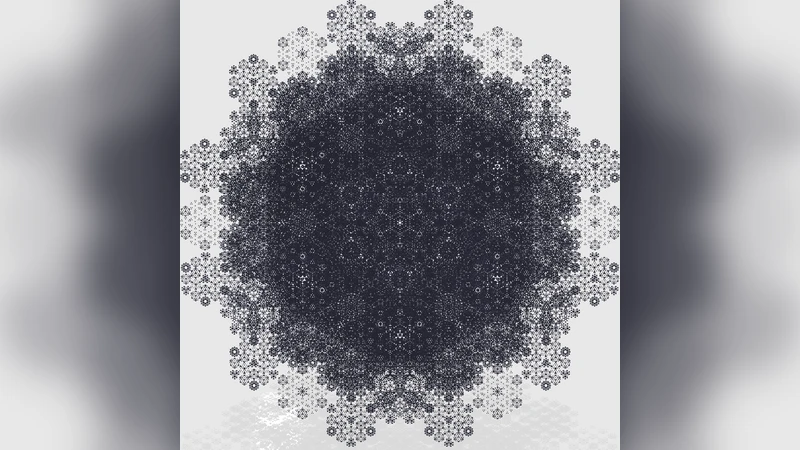
Aim of this paper is to provide preliminary elements for discussion about the implications of the Hierarchy Theory of Evolution on the design and evolution of artificial systems and socio-technical organizations. In order to achieve this goal, a number of analogies are drawn between the System of Leibniz; the socio-technical architecture known as Fractal Social Organization; resilience and related disciplines; and Hierarchy Theory. In so doing we hope to provide elements for reflection and, hopefully, enrich the discussion on the above topics with considerations pertaining to related fields and disciplines, including computer science, management science, cybernetics, social systems, and general systems theory.
💡 Research Summary
**
The paper sets out to explore how concepts from Leibniz’s philosophy, fractal social organization, resilience and antifragility can be mapped onto the two‑level hierarchy theory that underlies evolutionary biology and complex systems. It begins by unpacking Leibniz’s monad as an entity that possesses a static, intrinsic quality (the “genotype” or systemic class) and a dynamic, extrinsic quality (the “phenotype” that interacts with a concrete world). The author argues that the static component corresponds to the genealogical hierarchy (GH) of Hierarchy Theory, which guarantees faithful transmission of hereditary information across generations, while the dynamic component maps onto the economic hierarchy (EH), which deals with material realization, resource constraints, and environmental interaction.
Leibniz’s universal language, Characteristica Universalis (C∪), is presented as a precursor to modern programming languages and component‑based software engineering. In this view, a monad’s “code” is a formal description that must be interpreted by a hardware substrate – Leibniz’s Calculus Ratiocinator (CR) – analogous to a compiler or runtime environment that turns genotype into phenotype. The paper supplies a pseudo‑code sketch of a “Universal Sort” that evaluates both quality dimensions and decides which monads persist in the “mind of God,” echoing a selection mechanism akin to natural selection.
The third section introduces the author’s own Fractal Social Organization (FSO) model. FSO is a system‑of‑systems architecture in which the same design principles repeat at multiple scales, yielding modularity, autonomy, and self‑repair. This fractal repetition mirrors the hierarchical nesting found in biological evolution and provides a concrete engineering template for building resilient socio‑technical systems.
Section four draws explicit analogies between the two hierarchies of HT and Leibniz’s dual qualities. The genealogical hierarchy is linked to the intrinsic quality of monads: faithful replication (high fidelity) is required for the persistence of a class. The economic hierarchy is linked to extrinsic quality: each instantiated monad must cope with finite resources, energy budgets, and competition with other agents. The paper discusses “replicators” as the carriers of genotype, and introduces the notion of fidelity as a mathematical condition ensuring that each successive copy remains isomorphic to its predecessor.
Resilience is treated as the ability of a system to maintain its functional identity while operating under changing conditions; this is achieved when GH preserves the genotype and EH manages the phenotype’s interaction with the environment. Antifragility is taken a step further: exposure to stressors leads to performance improvement. The author connects this to the diversity‑disparity principle of HT, arguing that a wide exploration of morphospace (the space of possible forms) creates a buffer against catastrophic, correlated failures such as the Permian‑Triassic extinction, which was exacerbated by excessive morphological uniformity (e.g., universal mineralized skeletons).
Finally, the paper interprets Leibniz’s claim that God selects “the best of all possible worlds” as a metaphor for an evolutionary process that maximizes the occupied area of morphospace, thereby increasing the system’s repertoire of adaptive strategies. By linking philosophical metaphysics, formal language theory, and modern complexity science, the author provides a multi‑disciplinary framework for designing artificial systems and socio‑technical organizations that are both evolvable and robust. The work suggests concrete design guidelines: evaluate static and dynamic quality separately, implement a universal sorting/selection mechanism, ensure high‑fidelity replication of core models, and embed fractal modularity to enable self‑organization and antifragile response to disturbances. This synthesis offers researchers and practitioners in computer science, management, cybernetics, and systems engineering a fresh perspective on how to engineer systems that can survive, adapt, and even thrive in the face of uncertainty.
Comments & Academic Discussion
Loading comments...
Leave a Comment