Local Helioseismology of Sunspots: Current Status and Perspectives (Invited Review)
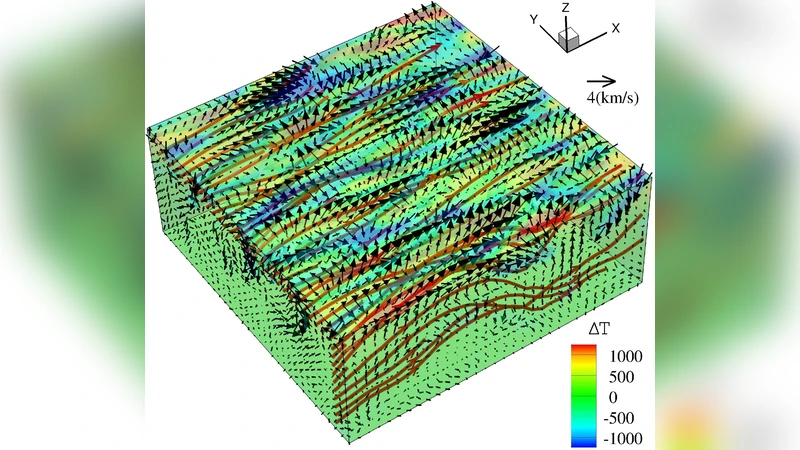
Mechanisms of the formation and stability of sunspots are among the longest-standing and intriguing puzzles of solar physics and astrophysics. Sunspots are controlled by subsurface dynamics hidden from direct observations. Recently, substantial progress in our understanding of the physics of the turbulent magnetized plasma in strong-field regions has been made by using numerical simulations and local helioseismology. Both the simulations and helioseismic measurements are extremely challenging, but it becomes clear that the key to understanding the enigma of sunspots is a synergy between models and observations. Recent observations and radiative MHD numerical models have provided a convincing explanation to the Evershed flows in sunspot penumbrae. Also, they lead to the understanding of sunspots as self-organized magnetic structures in the turbulent plasma of the upper convection zone, which are maintained by a large-scale dynamics. Local helioseismic diagnostics of sunspots still have many uncertainties, some of which are discussed in this review. However, there have been significant achievements in resolving these uncertainties, verifying the basic results by new high-resolution observations, testing the helioseismic techniques by numerical simulations, and comparing results obtained by different methods. For instance, a recent analysis of helioseismology data from the Hinode space mission has successfully resolved several uncertainties and concerns (such as the inclined-field and phase-speed filtering effects) that might affect the inferences of the subsurface wave-speed structure of sunspots and the flow pattern. It becomes clear that for the understanding of the phenomenon of sunspots it is important to further improve the helioseismology methods and investigate the whole life cycle of active regions, from magnetic-flux emergence to dissipation.
💡 Research Summary
The review “Local Helioseismology of Sunspots: Current Status and Perspectives” provides a comprehensive assessment of how modern helioseismic techniques, together with state‑of‑the‑art radiative magnetohydrodynamic (MHD) simulations, are reshaping our understanding of sunspot formation, stability, and subsurface dynamics. The authors begin by emphasizing that sunspots are the visible manifestation of magnetic flux concentrations that emerge from the turbulent convection zone, yet their internal structure remains hidden from direct observation. Consequently, local helioseismology—encompassing time‑distance analysis, ring‑diagram methods, and helioseismic holography—has become the primary tool for probing the three‑dimensional wave‑speed and flow fields beneath sunspots.
A central theme of the paper is the identification and mitigation of systematic errors that have historically plagued helioseismic inversions in strong‑field regions. The so‑called “inclined‑field effect” arises because magnetic field lines are not vertical in penumbral and peripheral zones; this inclination distorts the phase and amplitude of acoustic waves, leading to biased travel‑time measurements. Likewise, conventional phase‑speed filtering, while useful for isolating specific wave packets, can inadvertently suppress or amplify signals in magnetized plasma, further contaminating the inferred subsurface structure. The authors discuss how recent high‑resolution observations from the Hinode spacecraft, combined with refined multi‑phase‑speed filters, have quantitatively corrected these biases. The corrected inversions reveal a robust pattern: a shallow (≈2–3 Mm) region of reduced acoustic speed beneath the umbra, surrounded by a near‑surface (≈1 Mm) layer of enhanced speed. This “negative‑to‑positive” transition had been hinted at in earlier studies but is now confirmed with greater statistical confidence.
On the modeling side, the review highlights breakthroughs achieved with radiative MHD codes such as MURaM and STAGGER. These simulations resolve the interaction between convective flows and magnetic fields at scales down to a few kilometers, reproducing the self‑organized magnetic structures that resemble observed sunspots. In particular, the simulations naturally generate the Evershed flow—high‑speed, nearly horizontal outflows in the penumbra—through overturning convection within inclined magnetic filaments. Moreover, the models demonstrate that sunspots are not static monoliths; they are sustained by large‑scale circulations (often termed a “global dynamo” or “large‑scale flow”) that transport magnetic flux and energy across the upper convection zone. The simulated subsurface velocity and wave‑speed fields match the helioseismic inversions, lending credence to the notion that sunspots are emergent, self‑organized structures in turbulent magnetized plasma rather than isolated flux tubes.
The authors devote a substantial portion of the review to assessing the remaining uncertainties and outlining future directions. They argue that progress hinges on three intertwined pillars: (1) the development of fully coupled electromagnetic‑fluid wave‑propagation models that can accurately capture mode conversion, absorption, and scattering in strong magnetic fields; (2) systematic cross‑validation of different helioseismic techniques using synthetic data from realistic MHD simulations, thereby quantifying method‑specific biases; and (3) the integration of multi‑instrument observations—SDO/HMI, Hinode, and the upcoming DKIST—into a unified data‑assimilation framework that can track the entire life cycle of active regions, from flux emergence through sunspot decay. The review also stresses the importance of long‑duration, high‑cadence observations to capture the temporal evolution of subsurface flows and to test whether the large‑scale dynamics inferred from simulations are indeed present in the Sun.
In conclusion, the paper posits that the synergy between advanced numerical modeling and refined helioseismic diagnostics is the key to unlocking the long‑standing mystery of sunspot physics. By addressing systematic observational errors, validating inversion results against realistic simulations, and expanding the observational baseline to cover full active‑region lifetimes, the solar physics community is poised to achieve a comprehensive, physics‑based picture of how magnetic flux concentrations form, persist, and ultimately dissipate in the solar interior. This integrated approach will not only deepen our knowledge of sunspots but also improve our ability to forecast solar magnetic activity and its space‑weather impacts.
Comments & Academic Discussion
Loading comments...
Leave a Comment