Low frequency QPO spectra and Lense-Thirring precession
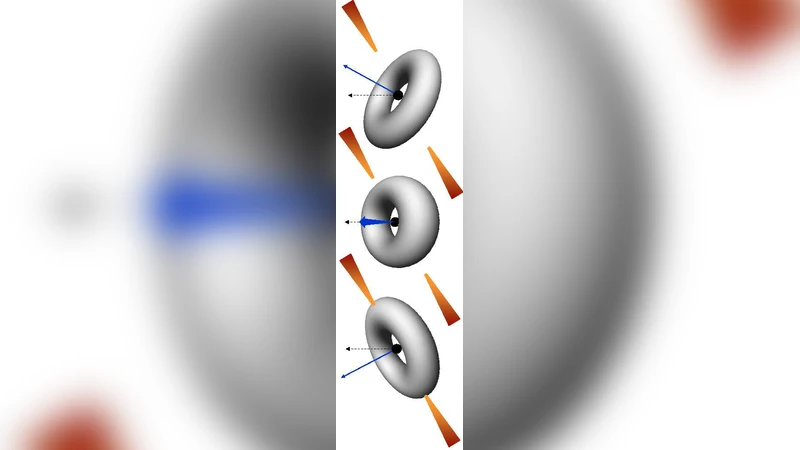
We show that the low frequency QPO seen in the power density spectra of black hole binaries (and neutron stars) can be explained by Lense-Thirring precession. This has been proposed many times in the past, and simple, single radius models can qualitatively match the observed increase in QPO frequency by decreasing a characteristic radius, as predicted by the truncated disc models. However, this also predicts that the frequency is strongly dependent on spin, and gives a maximum frequency at the last stable orbit which is generally much higher than the remarkably constant maximum frequency at ~10Hz observed in all black hole binaries. The key aspect of our model which makes it match these observations is that the precession is of a radially extended region of the hot inner flow. The outer radius is set by the truncation radius of the disc as above, but the inner radius lies well outside of the last stable orbit at the point where numerical simulations show that the density drops off sharply for a misaligned flow. Physically motivated analytic estimates for this inner radius show that it increases with a_, decreasing the expected frequency in a way which almost completely cancels the expected increase with spin. This ties the maximum predicted frequency to around 10Hz irrespective of a_, as observed. This is the first QPO model which explains both frequencies and spectrum in the context of a well established geometry for the accretion flow.
💡 Research Summary
The paper addresses the long‑standing problem of the low‑frequency quasi‑periodic oscillations (LF‑QPOs) observed in the power density spectra of black‑hole binaries (and neutron‑star systems) by invoking Lense‑Thirring (LT) precession of the hot inner accretion flow. Earlier LT‑precession models assumed a single characteristic radius—typically the truncation radius of the cool outer disc—at which the entire inner flow precesses. While such models can qualitatively reproduce the observed increase in QPO frequency as the truncation radius moves inward, they predict a strong dependence of the QPO frequency on the black‑hole spin parameter (a_*). In particular, the maximum frequency is set by the precession at the innermost stable circular orbit (ISCO) and would be far higher than the remarkably constant ≈10 Hz ceiling seen in all black‑hole binaries, regardless of spin.
The authors resolve this discrepancy by proposing that the precessing region is radially extended. The outer boundary remains the disc truncation radius, but the inner boundary is not the ISCO; instead it is located at the radius where numerical simulations of a misaligned flow show a sharp drop in density. Analytic estimates indicate that this inner radius, R_in, grows with increasing spin because the centrifugal barrier and Coriolis forces push the low‑density transition outward. Consequently, the spin‑induced increase in LT precession frequency is largely cancelled by the spin‑dependent outward shift of R_in. The net result is a precession frequency that is almost independent of a_* and naturally caps at ~10 Hz, matching observations across a wide range of black‑hole spins.
The model also retains the successful aspect of truncated‑disc geometry: as the truncation radius decreases (higher accretion rates), the entire precessing region contracts, leading to a higher QPO frequency, exactly as observed during spectral state transitions. By coupling the timing behaviour (QPO frequency) with the spectral evolution (hardening of the Comptonised component and weakening of the disc blackbody), the authors present the first comprehensive QPO framework that simultaneously explains both the frequency–luminosity correlation and the spectral changes within a well‑established accretion flow geometry. The paper concludes with suggestions for future observational tests—such as spin‑dependent measurements of the inner flow’s density profile—and calls for high‑resolution GRMHD simulations to refine the location of the density drop and verify the analytic scaling of R_in with spin.
Comments & Academic Discussion
Loading comments...
Leave a Comment