Exploring the relationship between the Engineering and Physical Sciences and the Health and Life Sciences by advanced bibliometric methods
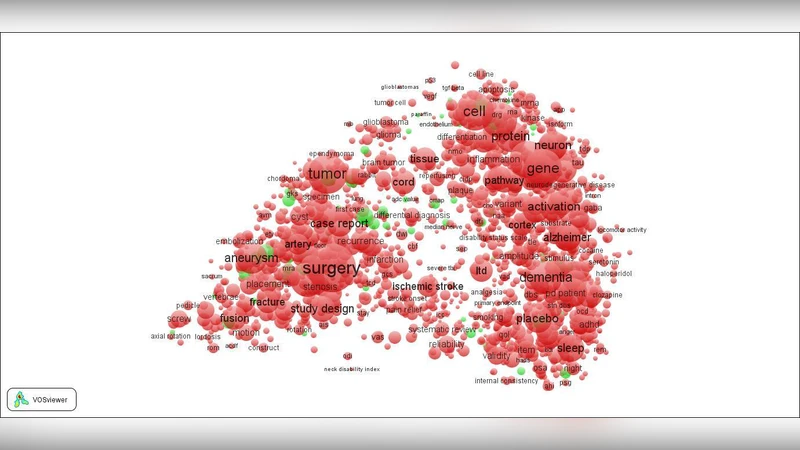
We investigate the extent to which advances in the health and life sciences (HLS) are dependent on research in the engineering and physical sciences (EPS), particularly physics, chemistry, mathematics, and engineering. The analysis combines two different bibliometric approaches. The first approach to analyze the ‘EPS-HLS interface’ is based on term map visualizations of HLS research fields. We consider 16 clinical fields and five life science fields. On the basis of expert judgment, EPS research in these fields is studied by identifying EPS-related terms in the term maps. In the second approach, a large-scale citation-based network analysis is applied to publications from all fields of science. We work with about 22,000 clusters of publications, each representing a topic in the scientific literature. Citation relations are used to identify topics at the EPS-HLS interface. The two approaches complement each other. The advantages of working with textual data compensate for the limitations of working with citation relations and the other way around. An important advantage of working with textual data is in the in-depth qualitative insights it provides. Working with citation relations, on the other hand, yields many relevant quantitative statistics. We find that EPS research contributes to HLS developments mainly in the following five ways: new materials and their properties; chemical methods for analysis and molecular synthesis; imaging of parts of the body as well as of biomaterial surfaces; medical engineering mainly related to imaging, radiation therapy, signal processing technology, and other medical instrumentation; mathematical and statistical methods for data analysis. In our analysis, about 10% of all EPS and HLS publications are classified as being at the EPS-HLS interface. This percentage has remained more or less constant during the past decade.
💡 Research Summary
The paper investigates how advances in health and life sciences (HLS) depend on research in engineering and the physical sciences (EPS), focusing on physics, chemistry, mathematics, and engineering. To map the EPS‑HLS interface, the authors combine two complementary bibliometric approaches: a text‑based term‑map analysis and a citation‑based network analysis.
In the first approach, the authors select sixteen clinical fields (e.g., cardiology, oncology, neurology) and five life‑science domains (e.g., molecular biology, genomics). For each field they extract the most frequently cited publications and apply text‑mining to generate co‑occurrence networks of key terms. Expert judgment is then used to identify EPS‑related terms such as “nanoparticle,” “MRI,” “spectroscopy,” or “finite element.” By visualising these terms on a map, the study obtains qualitative insight into how EPS concepts permeate HLS research, revealing the specific technologies and methods that are most frequently referenced.
The second approach works at a much larger scale. Using a comprehensive dataset covering roughly 200 million papers published between 1990 and 2020, the authors construct a citation network and cluster the papers into about 22 000 topics. Each cluster represents a coherent research theme. By analysing the direction and intensity of citation flows, clusters that receive citations from both EPS and HLS literature—or that cite both domains—are flagged as “EPS‑HLS interface” topics. This method yields quantitative statistics such as the proportion of interface clusters, their growth over time, and the most influential journals and institutions.
The two methods complement each other: term‑maps provide fine‑grained, qualitative detail that compensates for the citation‑based method’s reliance on citation counts, while the citation network supplies robust, large‑scale quantitative measures that offset the subjectivity inherent in expert term selection.
The analysis identifies five principal ways in which EPS contributes to HLS: (1) development of new materials and characterization of their properties; (2) chemical techniques for analysis and molecular synthesis; (3) imaging technologies for visualising body parts and biomaterial surfaces; (4) medical engineering, especially imaging, radiation therapy, signal‑processing, and instrumentation; and (5) mathematical and statistical methods for data analysis, including machine learning and network modeling.
Quantitatively, about 10 % of all publications in EPS and HLS fall at the EPS‑HLS interface. This share has remained remarkably stable over the past decade, suggesting a persistent and balanced interdisciplinary relationship rather than a rapidly expanding or contracting one. The stability also indicates that the identified pathways of interaction are well‑established and continue to underpin biomedical innovation.
The authors acknowledge several limitations. The term‑map approach depends on expert judgment, which may introduce bias and affect reproducibility. The citation‑based analysis can under‑represent very recent work because of limited citation accumulation, and citation behavior does not always perfectly reflect intellectual influence. Moreover, the classification of EPS versus HLS fields is somewhat arbitrary, potentially blurring the boundaries of the interface.
Despite these caveats, the study offers valuable evidence for policymakers, funding agencies, and research managers. By pinpointing the specific EPS domains that most strongly support HLS progress, the findings can guide strategic investment in interdisciplinary infrastructure, training programs, and collaborative initiatives. The combined methodological framework also provides a template for exploring other interdisciplinary interfaces across the scientific landscape.
In summary, the paper demonstrates that EPS and HLS are tightly linked through material science, analytical chemistry, imaging, medical engineering, and quantitative methods, with roughly one‑tenth of the literature occupying this shared space—a proportion that has remained constant over the last ten years. This insight underscores the importance of sustained cross‑disciplinary collaboration and offers a data‑driven basis for shaping future science policy.
Comments & Academic Discussion
Loading comments...
Leave a Comment