Is there any polynomial upper bound for the universal labeling of graphs?
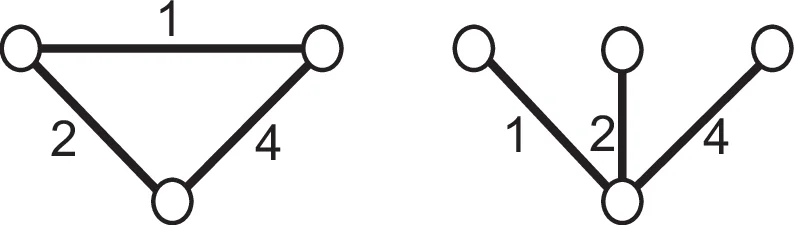
A {\it universal labeling} of a graph $G$ is a labeling of the edge set in $G$ such that in every orientation $\ell$ of $G$ for every two adjacent vertices $v$ and $u$, the sum of incoming edges of $v$ and $u$ in the oriented graph are different from each other. The {\it universal labeling number} of a graph $G$ is the minimum number $k$ such that $G$ has {\it universal labeling} from ${1,2,\ldots, k}$ denoted it by $\overrightarrow{\chi_{u}}(G) $. We have $2\Delta(G)-2 \leq \overrightarrow{\chi_{u}} (G)\leq 2^{\Delta(G)}$, where $\Delta(G)$ denotes the maximum degree of $G$. In this work, we offer a provocative question that is:" Is there any polynomial function $f$ such that for every graph $G$, $\overrightarrow{\chi_{u}} (G)\leq f(\Delta(G))$?". Towards this question, we introduce some lower and upper bounds on their parameter of interest. Also, we prove that for every tree $T$, $\overrightarrow{\chi_{u}}(T)=\mathcal{O}(\Delta^3) $. Next, we show that for a given 3-regular graph $G$, the universal labeling number of $G$ is 4 if and only if $G$ belongs to Class 1. Therefore, for a given 3-regular graph $G$, it is an $ \mathbf{NP} $-complete to determine whether the universal labeling number of $G$ is 4. Finally, using probabilistic methods, we almost confirm a weaker version of the problem.
💡 Research Summary
The paper introduces the concept of a universal labeling of a graph G: an assignment of positive integers to the edges such that for every possible orientation of G, any two adjacent vertices v and u receive distinct sums of the labels on the edges oriented toward them. The universal labeling number χ⃗_u(G) is the smallest integer k for which a labeling using only the set {1,…,k} exists. It is known that 2Δ−2 ≤ χ⃗_u(G) ≤ 2^Δ, where Δ is the maximum degree of G. The authors pose the central question: does there exist a polynomial function f such that χ⃗_u(G) ≤ f(Δ(G)) for every graph G?
The paper provides several partial answers:
-
Trees – For any tree T with maximum degree Δ, the authors construct a universal labeling using at most O(Δ³) distinct labels, proving χ⃗_u(T)=O(Δ³). The construction relies on a breadth‑first layering of the tree, distinguishing even‑level and odd‑level edges, and scaling the labels of odd‑level edges by a large factor K. This guarantees that at each vertex the set of incident labels is sum‑free, preventing equal incoming‑sum collisions under any orientation.
-
Regular graphs and computational hardness – For 3‑regular graphs, they show χ⃗_u(G)=4 if and only if G belongs to Class 1 (i.e., its edge‑chromatic number equals Δ). Since determining Class 1 for 3‑regular graphs is NP‑hard, deciding whether χ⃗_u(G)=4 is NP‑complete. An analogous result holds for 4‑regular graphs: χ⃗_u(G)=7 exactly when the graph is Class 1, and the corresponding decision problem is also NP‑complete. These results link universal labeling directly to the classic edge‑coloring problem.
-
Almost‑everywhere universal labeling – Using probabilistic methods, the authors prove that for any graph with n vertices there exists a labeling from the set {1,…,n·log n·log log n} that is “almost everywhere” universal: for a random orientation, the probability that any edge’s endpoints have equal incoming sums is O(1/n²). The construction separates edges incident to low‑degree vertices (colored with powers of two) from the remaining edges, which receive labels formed by distinct primes multiplied by a large power of two. The prime‑based encoding ensures that equality of incoming sums would require an unlikely coincidence of prime exponent counts.
-
Universal labeling game – The authors define a two‑player perfect‑information game where players alternately label an unlabelled edge and then choose its orientation. The game number χ⃗_gu(G) is the smallest k for which the first player has a winning strategy on (G,k). They prove χ⃗_gu(G) ≤ 2Δ for all graphs, χ⃗_gu(G)=2 for paths and even cycles, and for trees χ⃗_gu(T)∈{Δ,Δ+1}. This shows that even under adversarial orientation choices, a relatively small label set suffices for a guaranteed win. The computational complexity of determining χ⃗_gu(G) remains open.
-
Overall contribution and open problems – The work establishes that a polynomial bound in Δ exists for trees and for “almost all” graphs (quasi‑polynomial bound), while for regular graphs the problem is computationally intractable, suggesting that a universal polynomial bound for all graphs is unlikely without further breakthroughs. Open directions include tightening the Δ‑dependence for general graphs, classifying the complexity of the universal labeling game, and exploring connections with other graph parameters such as treewidth or chromatic index.
In summary, the paper advances the theory of universal labelings by providing concrete bounds, hardness results, and probabilistic constructions, and it frames a compelling open question about polynomial upper bounds relative to maximum degree.
Comments & Academic Discussion
Loading comments...
Leave a Comment