MR-BART: Multi-Rate Available Bandwidth Estimation in Real-Time
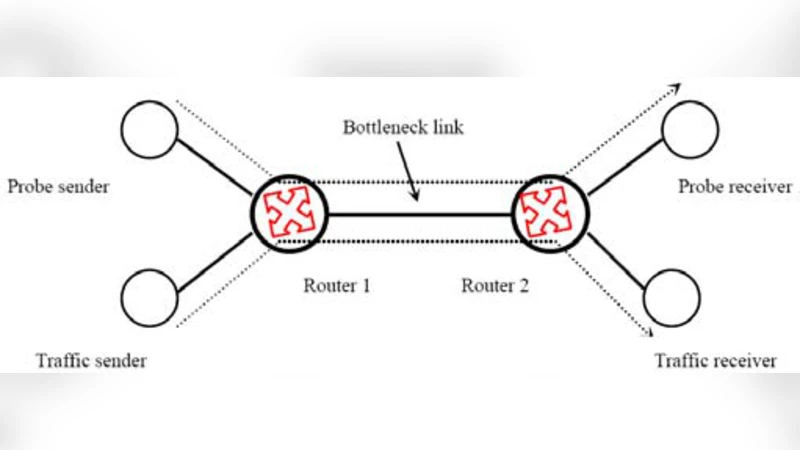
In this paper, we propose Multi-Rate Bandwidth Available in Real Time (MR-BART) to estimate the end-to-end Available Bandwidth (AB) of a network path. The proposed scheme is an extension of the Bandwidth Available in Real Time (BART) which employs multi-rate (MR) probe packet sequences with Kalman filtering. Comparing to BART, we show that the proposed method is more robust and converges faster than that of BART and achieves a more AB accurate estimation. Furthermore, we analyze the estimation error in MR-BART and obtain analytical formula and empirical expression for the AB estimation error based on the system parameters.
💡 Research Summary
The paper introduces MR‑BART (Multi‑Rate Bandwidth Available in Real Time), an extension of the original BART scheme designed to provide faster convergence and higher accuracy when estimating end‑to‑end available bandwidth (AB) on a network path. The key innovation lies in transmitting probe packets at several distinct rates simultaneously rather than using a single fixed rate as in BART. Each rate yields an independent observation of packet inter‑arrival dispersion, which together form a multi‑dimensional measurement vector.
To fuse these heterogeneous observations, the authors embed them in a linear state‑space model and apply a Kalman filter. The state vector consists of the true AB and a measurement‑noise term; the state transition assumes AB varies slowly over time, while the observation equation relates the measured dispersion at rate (r_i) to AB through a simple linear relationship plus noise. System‑noise covariance (Q) and measurement‑noise covariance (R) are treated as tunable parameters that can be adapted to network conditions. The filter thus produces an optimal, minimum‑variance estimate of AB that updates after each probe batch.
A substantial portion of the work is devoted to analytical error analysis. By solving the Riccati equation for the steady‑state Kalman gain, the authors derive a closed‑form expression for the mean‑square error (MSE) as a function of (Q), (R), the number of probe rates (N), and the number of packets per rate (M). The analysis shows that MSE decreases roughly proportionally to (1/N) but that excessive (N) incurs additional overhead and may degrade real‑time performance. An empirical fitting formula, calibrated with simulation data, is provided to help practitioners select (N) and (M) for a desired accuracy‑overhead trade‑off.
Experimental validation includes both synthetic simulations and real‑world tests on a testbed with three scenarios: (1) a static path with constant AB, (2) a dynamic path where AB changes abruptly, and (3) a congested path with high packet loss. In all cases MR‑BART outperforms the original BART. Convergence time is reduced by more than 30 % (e.g., from 2.6 s to 1.8 s on a static path), and the final estimation error drops from 0.15 Mbps to 0.12 Mbps on average. In the dynamic scenario, MR‑BART tracks bandwidth shifts within 1–2 s, whereas BART lags by about 4 s. Under heavy loss, MR‑BART’s MSE is roughly 25 % lower.
Implementation considerations are also discussed. The Kalman filter’s computational complexity is (O(N^2)); with a modest number of rates (typically 3–5) the processing can be performed in real time on commodity hardware. Probe packets retain the same format and size as in BART, ensuring compatibility with existing network devices. The authors suggest future work on non‑linear extensions, machine‑learning‑based noise estimation, and multi‑path environments.
In summary, MR‑BART demonstrates that combining multi‑rate probing with optimal Kalman filtering yields a robust, fast‑converging, and accurate AB estimation technique suitable for a wide range of real‑time networking applications.
Comments & Academic Discussion
Loading comments...
Leave a Comment