Visualization of Jacques Lacans Registers of the Psychoanalytic Field, and Discovery of Metaphor and of Metonymy. Analytical Case Study of Edgar Allan Poes "The Purloined Letter"
We start with a description of Lacan's work that we then take into our analytics methodology. In a first investigation, a Lacan-motivated template of the Poe story is fitted to the data. A segmentation of the storyline is used in order to map out the…
Authors: Fionn Murtagh, Giuseppe Iurato
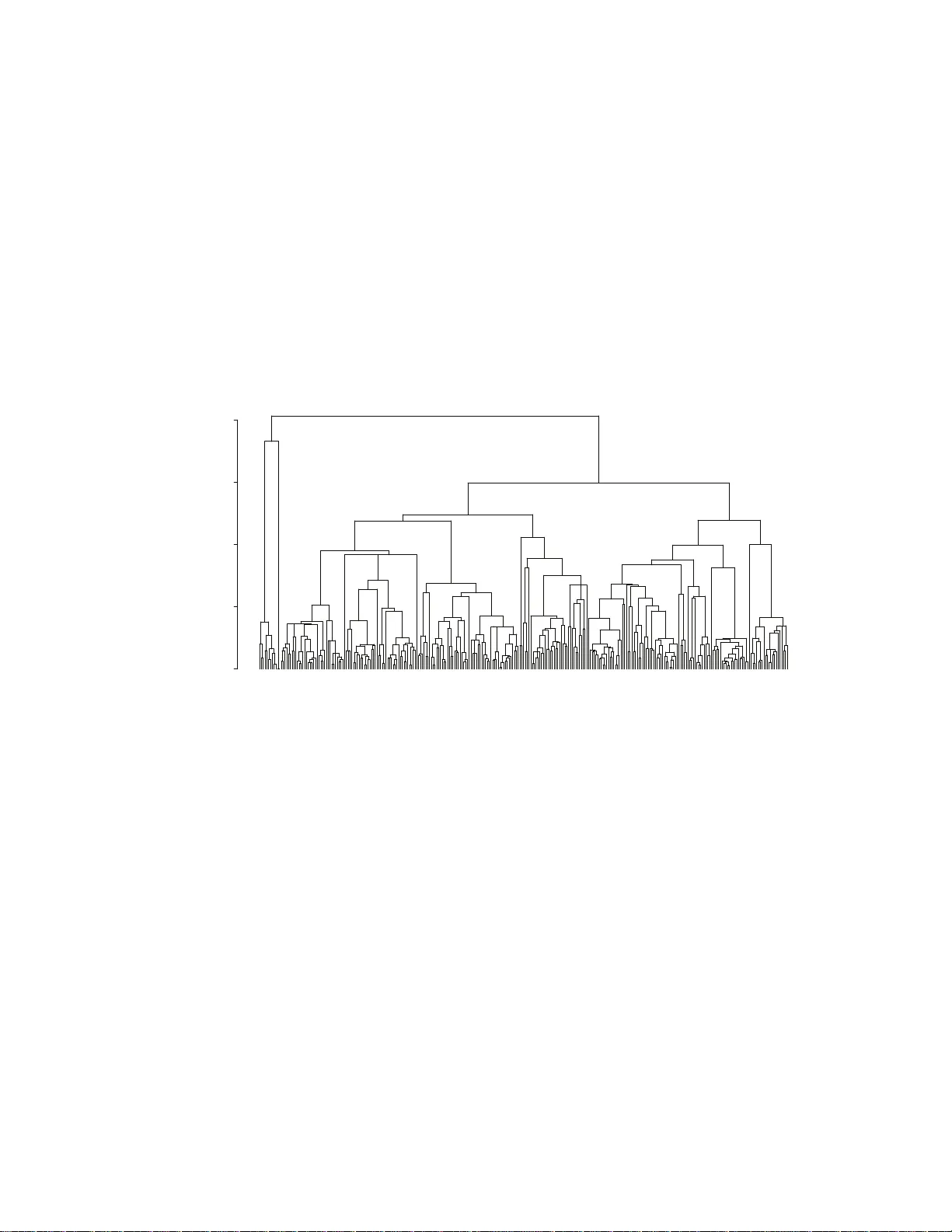
Visualization of Jacques Lacan’s Registers of the Psyc hoanalytic Field, and Disco v ery of Metaphor and of Meton ym y . Analytical Case Study of Edgar Allan P o e’s “The Purloined Letter” Fionn Murtagh, Giusepp e Iurato Email: fm urtagh@acm.org Octob er 12, 2018 Abstract W e start with a description of Lacan’s wo rk t hat w e t hen take into our analytics metho dolog y . In a fi rst inv estigation, a Lacan-motiv ated template of the Poe story is fitted to the data. A segmentation of th e storyline is used in order to map out the diac hrony . Based on this, it will b e sho wn how synchronous asp ects, p otentia lly related to Lacanian reg- isters, can b e sought. This demonstrates the effectiveness of an approac h based on a mo del template of the storyline narrative. In a second and more comprehen si ve investi gation, we develop an approach for revealing, that is, uncov ering, Lacanian register relationships. Ob jectives of th is w ork includ e th e wide and general application of our metho dolog y . This metho d olo gy is strongly based on the “letting the data speak” Corre- sp on d ence Analysis a nalytics platform of Jean-P aul Benz´ ecri, that is also the geometric data analysis, b oth qu al itative an d quantitativ e analytics, developed by Pierre Bourdieu. Keyw ords: T ext mining , na rrative, Lacan reg is ters, r eal, imag inary , sym- bo lic, Corr espondence Analysis. 1 General Ob jectiv es and Outline Narrative analysis is at issue here, using what has b een a highly profiled text in literary studies. Our approach is unsup ervised, relative to sup ervised learning. It inv olves vis ualization of our data, using sema n tic conten t, in such a wa y that there is r ev ealing o f r elationships in the data. This can b e taken further, if so desired, in the dir ection of statistical modelling and sup ervised machine learning. Our desire though is to dea l with dynamic and fluid expr e s sion, and flow a nd e v olution in our da ta conten t. Ther efore o ur analysis metho dology is motiv ated very muc h by the visua lization a nd the verbalization of our da ta 1 (Blasius and Greena cre, 2014). W e can even state (see subsection 2.5) that our metho dology is data analysis int egr ated with informa tion synthesis. A pr ime ob jective in this work is the intro ducing of innov ative p otent ial, as b oth language studies a nd psychoanalysis still tend to re ject quantifying ap- proaches to text and psyche re s pectively . Howev er, this is more due to historical differentiation within the sciences than to ultimate scientific justification. La - can’s further dev elopment of psychoanalysis and the symbolic is affected by L´ evi-Strauss’ structuralist rea soning, th us nec e ssitating s ystematic a pproac hes of visualizing these very structures. Structuralism and geometr ic data a nalysis share a common epistemolog y as bo th are g en uinely relational or top ological in their wa ys of conceptualizing entities. As a matter of fa c t, the first-ever pre- sentation of corres pondence analysis by Jea n-P aul Benz´ ecri dealt with textual data a nd the visualiz a tion of the struc tur es that are hidden in texts. Thus, the main orientation of this pap er is both innov ativ e in a metho dological sense and ortho dox in an epistemolog ical sense. In doing so , and due to the trace- ability of the metho dic steps, it might invite scholars from la nguage studies and psychoanalysis to apply simila r strategies to their own resear c h fields. (Cf. Ac knowledgements.) Our metho dology is a lso highly cr oss-disciplinary . W e aim to demonstra te how an imp ortant se t of per spectives, dev elop ed by Laca n, are generally a nd broadly applicable, to literar y theory . But a n even greater ob jective is to apply Lacan’s work to practical inv e stigativ e pro blem-solving, including ps yc hoana- lytical inv estigative work. Suc h is our ultimate aim and ambition. In section 2, comprehensive background discussion is provided o n Laca n’s revealing and relev ant metho dology . An initial study that is ex ploratory is ca rried out in s ection 3. Geometric data analy s is is our metho dology , based on the work of e minent so cial scientist, Pierre Bourdieu, who follow ed in his work, eminent data s cien tist, Jean- Paul Benz´ ecri, whose ea rliest work em brace d mathematics a nd linguis tics. In s ection 4, w e show how Lacanian r egisters can b e visualize d in the context of narrative flow. The culmination of such visualization is in s ubsection 4.5 . Then in section 5 we seek ana lytical pe r spectives that will b e revealing in regar d to discovering metaphor and meton ymy . Synonyms in a semantic frame- work are of p otential relev anc e . W ord asso ciations are ana lysed through cluster s determined from the sema n tic ma pping. In the Conclusions, s e c tion 6, a link is provided to the Poe sto r y following our pr eproces sing of it with each successive sentence on a new line. F urthermor e a go od par t of the R softw are used in this work is provided. 2 2 In tro duction to Lacan’s Registers and Analyt- ical F ramew ork 2.1 Jacques Lacan’s Language and Unconscious: Observ- ing an d T rackin g the Imagin ary and the Symbolic, Dynamically Engaged with the Real Lacan’s reading of Po e’s story is c losely bas ed (although not e x plicitly indicated by Lacan) on Ma r ie Bonapar te’s rea ding of the s ame Poe’s story , a ccording to which the letter Dupin finds hanging in a letterholder betw een the “cheeks” of the firepla c e represents the “rephalliza tion” o f the mother (i.e., the queen, with the letter as the phallus lacking to the queen). This has bee n just the main remark due to Derrida in the 198 0s (Derr ida 1980 ). See also T o dd (199 0, Part V, Ch. VII I, pp. 166 -171). Jacques Lacan’s seminar on this story by Edg ar Allan Poe (Laca n, 1956 ) includes interpretation that is “sufficient for us to discer n [...] so p e rfect a verisimilitude that it may be said that tr uth here reveals its fictive ar rangement ”. A dialogue in the tale by Poe “pres en ts the real co mplexit y of what is or dinarily simplified, with the mos t co nfused results, in the notion of communication”. Complexity results from: “... communication is not transmissible in symbolic form. It may b e maintained only in the relation with the ob ject.” What is int egr a l to this: “Languag e delivers its judgement to who ever knows how to hear it”. Then: “What F reud teaches us in the text we are commenting o n is that the sub ject m ust pa ss thr o ugh the channels o f the symbolic, but what is illustrated here is more gripping still: it is not only the sub ject, but the sub jects, gras ped in their intersub jectivity , [...] who [...] model their very b eing on the moment of the signifying chain which trav erses them.” The context, that w e are dealing with, is simple if we just lo ok at even ts from afar. Consider the following, in Lacan’s seminar. The signifier related to this purloined le tt er: “It rema ins for it now o nly to answer that very question, of what remains of a signifier w hen it ha s no more significa tio n.” This is our int eres t too , even if: “wha t the ‘purloined letter ’ nay , the ‘letter in suffer ance,’ means is that a letter alwa ys a rriv es at its destination” . W e now turn to the fol- lowing work, Ragland (20 15), in order to p oint o ut motiv a tio n and justification for what follows in this article, i.e ., the gene r al and po tentially very b eneficial and rewarding applica tion. Ragland (201 5) pres en ts a compr ehensiv e account o f La can’s work. Let us summarize the impo rtan t pe rspectives for us in this w ork . All citatio ns in the following part of this s ubsection a r e from Ragland (201 5). A t issue is how Lacan provides a “conceptualiza tio n of mind structure” (p. 107), and that (p. 112) “ Lacan g iv es us a mea ns to go b eyond biologica l o r c ultur al materialis ms .” Therefore (p. 137 ) “Lac a n was concerned with structure [...] – not with the c onten t of the unconsc io us.” Language is b oth repr esen tation a nd also a n instr ument: “Language itself 3 merely represents des ire at one r emo ve” (p. 3). “langua g e promotes jouissance, not just comm unication, or infor mation” (p. 2). Thus (p. 62), “sp eec h (or writing) carry desire [...] ‘discourse’ is not grammar ”. In this p erspective, then (p. 5 ), “for Laca n [...] languag e is imp o sed from the outside. It is no t innate or hardwired int o the brain.” F undamental to Lacan is that langua ge’s wa y of b e ing a n infrastruc tur e for desire, is manifested vis ually and by s hape, a s summariz e d in the following terms (p. 5 1). “W e hav e left b ehind the linear lo gic of linguistics and phenomenolog y and walk ed into the universe of multiform, cont ra dictory logic that Laca n calls a wa y of ‘top ologizing’.” F o r Laca n, one’s mind is r e lated to o ne’s bo dy , and the top ology of the bo dy a re in particular what comprise hole s, input and o utpu t, and the b ody surface (cf. p. 21). Impo rtan t then for the mind is when b ody parts, and o b jects later , are p erceived as missing, or are gaps. W e hav e (p. 10 6): “the surface of the b o dy marked b y holes and rims (mouth, ear, nose, etc.)” “F or psy c hoanalysis, top ology [...] is not a metaphor, but confirms the pres- ence o f the real ... T op ology is an active showing of the real of struc tur e.” (p. 120). “T op ology [...] is not a meta phor. Not an allegory . It do es not r epresen t the sub ject. [...] T op ology pres e n ts ‘the foundations of the sub ject’s po s ition.’ The sub ject co m bines its e lf in the Bor romean unit (pp. 12 4 –125). There follows how imp ortan t the sub ject’s gaze, and “visual str uctur e” ar e here. F or La can, “lang uage is duplicitous”, and it ex presses “a ffective knowledge”, and justification for this is how languag e is not a set, fixed (gr a mmatical or taxo- nomic) s tructure, but is dyna mical, a nd fluid (p. 1 1 4): “langua ge is duplicitous, not o nly b e cause it is an a gen t of r epr ession , but also b ecause it do es not suc- ceed in repr essing the ma terial o f identifications that aim the drives towards lures, tow ards the go al of rep eating the familia r .” “By br inging the dr iv es int o language as an affective knowledge – a montage of the r eal and the imag inary , the symbo lic and ima ginary , the real and s y m bolic – conflict or torsion can be prop osed as a prop ert y of lang uage whose referent is the concre te nature o f the drives.” (pp. 115–1 16). “In co ns ideration of the predilection among intellectuals to think of langua ge in purely abstr act logica l terms, it is vital tha t we b ecome aw are that there is a dynamics of lang uage.” (pp. 116– 1 17). Ultimately , at is s ue (p. 127) is how we hav e “la nguage as sig nifying something other tha n what it says.” Regarding “ geometric” written in the following ma nner, it is stated tha t: “thought and b ody ar e geo-metric” (p. 12), “top ological structure is a k nowledge of be ing, not an aca demic knowledge (p. 4), and (p. 108) “top ology is not [...] a knowledge to b e taught by concepts or fundamental texts: ‘It is a pra ctice of the hole and its edge’ ” “As a mathematical knowledge of the real, top ology itself draws ‘pictures’ of how b ody , la nguage, a nd world co-exist, int ertwined in contradictory ways, that can b e ex plained logically a ll the sa me.” (p. 45 ). At issue is “Lac an’s theor y of a top ological str ucturing of the unconscio us” (p. 4 6). “L acan’s top ological forms [...] introduces the r eal int o language, as a set of affective, alb eit emo tio nally ungraspable , meanings.” (p. 11 2 ). Metaphor and metonym y are quite central issues here: “each of Lacan’s 4 discourse structures has [...] the do uble, substitutive structure of metaphor” (p. 5 7 ), and “ in terpretation works as a metaphor which a llo ws substitution of one thing for another”(p. 5), with this persp ectiv e (p. 88): “the dialectical link betw een metaphor a nd metonym y as p oetic tro pes that make the bra in function”, “ He describ ed condensation a s metaphor s (substitutes) linked to the ob ject that causes desir e [...] by the concre te meto nymous displa cemen ts a nd contiguities of desire.” F or Lacan, “structur e is Bor romean. By B o rromean he means the kno tting together o f the symbolic, imaginar y , a nd real dimens io ns b ound tog ether b y the symptom/ sinthome .” (p. 24 ). There are: “the three different dimensions o f knowledge – the rea l, the symbolic , the imagina ry” (p. 2). So there is the following, with a ma jor role in o ur work that will follow: “the signifying chain is not [...] gramma r, lang uage, or wr iting , but, r ather, a chain o f dimens io ns — Real, Symbolic, Ima ginary” (p. 63 ). Thus “the real o f the (partial) drives [...] what is repr essed in the real returns, a nywa y , into the symbolic o rder of languag e and so cial conv ent ions.” (p. 106). “The drive [...] designates the pr ev a lence of an ‘o rganic’ dimension of symbolic a nd ima ginary traits that coalesce with the r eal of the flesh a s a mapping in langua ge” (p. 106). While fully separate from wha t will follow in our a nalyses of Poe’s “The purloined letter”, it is nice to note, in the par agraph to follow, how Lacan als o used the term “letter ” ! “Ancient cav e pa intings were a wr iting b efore wr iting, a wa y to mak e a meaningness Lacan called the letter.” (p. 12). This express es a role for this term, letter : “every truth has the structure of the fictio n and that truth a nd fiction ar e linked by the letter . The function o f the letter is top ological. ... it indicates the plac e wher e lang uage and the unconscious are linked.” (p. 1 2). Here, there is : “ a ‘letter’ o r visual r e presen tation” (p. 12 7 ). “Lacan des cribed the lettre as a plac e where being ( l’ˆ etr e ) r esides betw een the uncons cious and language, calling the lettr e a lo calized signifier tha t one c an recognize as la nguage conv erging with the unconscious.” (p. 136). 2.2 Psyc hoanalytical Use of Edgar Allan Po e Story Edgar Allan Poe’s “The Pur loined Le tter ” (Po e, 1845a , 18 45b, 18 45c) is a story that is investigativ e and elab orative. It is not just explana tory , reducing the case study in this stor y to facts and as sertions that are o rdered. Rather, it is also elucidatory , and po sitioning in a lar ger, bro ader, contextual picture . Also this allows to identify b e tt er where truth lies by means of simple psychoanalytic to ols. Positioning is done through co n textualization. W e hypo thesize that a n y and a ll such elucidation, a nd contextual p ositioning, is p otent ially r elev ant for v ar ious domains such as theatre and drama, legends and mythology , and m u tatis mutandis , for p oetr y and music. Therefore, Po e’s story is no t simply the inv estiga tion of illeg al b ehaviour. There are parallels and analo gies drawn with schoolb oys playing with marbles and str angely enough with mathematical reaso ning. These strange connections are just p ossible in the unconscious realm. A lot o f foremost thinkers hav e 5 discov ered, o r a t least viewed, very interesting mappings o f Po e ’s story into the most interesting co n texts. See Department o f Englis h a t FJU (2 0 10) for discussion with gr aphical p ortray al o f Michel F ouca ult, Jac q ues Lacan, J acques Derrida and others. Description follows of the psychoanalytical a pproach develop ed by Lacan, encompassing ana lysis o f synchrony and of diachrony . Diachrony can be bas ed on the inducing of a segmentation of the narra tiv e or storyline into a sequence of main scenes or acts . The synchronous e le men ts decomp ose any ac t by means of the three Lacania n regis ter s or o rders of the so-ca lled psycho analytic field in which every human even t p erforms at the unconscious level. The three Laca- nian register s, comprising the psy choanalytic field, ar e the rea l, the ima ginary and the symbolic. Laca nian psychoanalysis seeks to outline the co -participation of these three regis ters in each even t and sub ject of the sto ry , but with a syn- chronic pr edominance of one over the others, which will then b e the one that is diachronically iden tifiable. How ever this is only under the surfa ce o f symbolic, the only register that represe n ts the other r emaining t wo (Recalcati 20 12–16, V ol. I I, pp. 54 9–550). Our study ha s the following ob jective. Firstly we seek to reveal or to deter - mine Lacan’s register s in a highly rea lis tic case study . Our ma pping of Lacan’s register s in the Poe story leads to v isualization, to repre s en t vis ua lly these registers , in the context of their ro les. Sp ecifically seeking metaphor and metonym y is at iss ue in a later s ection. 2.3 Source of Data and Preparation In this subsection, and throughout this pa p er, we detail the data pr ocessing carried out, firstly for repr oducibility of this study , and seco ndly for a ll as- pec ts relating to ge ne r alization of this work, and application to other textually expressed conten t. The E dgar Allan Poe text of “The Pur loined Letter” was taken from Po e (1845a ). Accen ted characters req uired c orrection, fo llo wing the 18 45 editions in Poe (1845 a, 1 845b, 184 5 c). A pr o gram was r un on this text that determined sentence b oundary (using a full stop), and also to ok into acco unt blank lines that indicated paragr aph bo unda ry . So me cas es o f rep eated dashes, rep eated dots, exclama tion marks a nd question mar ks were mo dified manually in the input text. The pro cessing allows the sp ecification of standar d co n tractions that are no t to b e taken as sentence bo unda ries. (The following were at issue in regard to b eing ended with a full stop or p erio d but this did not connote the end of a sentence: no , No , C , G , St .) A CSV (comma separa ted v a lues) formatted file was crea ted, with the sentence sequence num be r , the parag raph sequence num ber , and the sent ence conten t. This le d to 321 sentences and 123 paragr aphs. F or ea c h pa r agraph, the sp eaker was als o noted: the Nar rator, Dupin and the Prefect. In section 2.4, some further ba ckground description on the Poe story will b e provided. 6 2.4 Dramatis P ersonae The c har a cters in this shor t stor y are as follows: (1) C. Auguste Dupin (young priv a te detective); (2) Mo nsieur “G – –”, or G. or P refect (p olice chief ); (3) the narrato r (Dupin’s friend and ro ommate); (4 ) the Minister “ D – – ”, or “ the D – –”, or the minister (the villain); (5 and 6) the p ersonag e [in the roy al b oudoir], or other unna med roy al p erson (often considere d as Q ue e n, King ); and (7) “ S –”, sender of the letter (only one o ccurrence of this name). Examples follow o f the first and the last sentences. • First: “At Paris, just after dar k one gusty evening in the autumn of 18 – , I was enjoying the tw ofold luxur y of meditation and a meerschaum, in company with my friend, C. Auguste Dupin, in his little back libr ary , or bo ok-clo set, au troisi` eme, No. 33 Rue Dunˆ ot, F a ubourg St. Germain.” • Last: “They are to b e found in Cr´ ebillo n’s ’Atr ´ ee” 2.5 Brief Backgroun d on the Geometric Data Analysis Metho dology Our approach is influenced by how the lea ding so cial s cien tist, Pier re Bourdieu, used the most effectiv e inductive analytics developed by Jean- P aul Benz´ ecri. See Le Roux a nd Rouanet (2004), Gr enfell and Lebaron (2014), Lebaron and Roux (2015). This family of ge ometric data analysis metho dologies, centrally based on Corres pondence Ana ly sis e nc o mpassing hier arc hical clustering , and statistical mo delling, not only orga nises the analysis metho dology and do main of application, but even in tegra tes them. The second in a set of principles for data analytics, listed in Benz´ ec r i (1973 , pa ge 6 ), included the following: “The mo del should follow the data, and not the reverse. ... What we need is a rigoro us method that extr acts s tructures fro m data.” Closely coupled to this is that (Benz´ ecr i, 198 3) “data sy nthesis” could b e considered as equally if not more imp ortant r elativ e to “data analysis”. Analy s is and synthesis of da ta and information obviously g o hand in hand. The work of Andreas Schmitz, dealing with Angst and fear (Sc hmitz, 2015, Schm itz and Bayer, 20 14), links together F re ud and Bourdieu, for example, in r e g ard to “libido within habitus-field theory ” . Among the conclusio ns in Schm itz (20 15) are how we hav e: 1. “ Libido cons titutive for the foundationa l concepts of habitus a nd fields ”. 2. J an us-faced character of libido: int eres t and Angst as c onstitutiv e mo - men ts of (i) Habitus and practice, (ii) So cial s pace and so cial fields, and (iii) Symbolic dominatio n. In Schmitz and Bay er (20 14), also presented in Schmitz (201 5), the limits are noted of sta tistical linea r mo delling for rela ting p ersonality fa ctors in so cial space. Moving b ey ond that metho dology , ther e is categor ical interest a nd p er- sonality types, a ccompan ying the so cio-structural information for the geometric 7 construction of so cial space. The aim is to demonstrate in genera l, whether psy- chological characteris tics will corres pond with the structure o f so cial spa c e in a discontin uous wa y . (This summarizes p ersp ectiv es in Schmitz a nd Bay er, 2 014, p. 11. The following is from p. 14.) Habitus defines the nexus be tw een struc- ture a nd sub ject, whereby the corr e spondence o f so cial po sition and “psychic” disp o sition are understo o d as c lass-spec ific, and thus discontin uous. Psychiatric indicators are used in a discontin uous way (as b e fits such c ategorical v a riables). F rom a psychoanalytic viewp oin t, the habitus roug hly cor responds to F reudian sup e r-ego ag ency , hence it b elongs to the Laca nian symbolic register . So, study- ing the latter, we migh t infer features o f habitus, hence a nsw er to the ab ov e issue regar ding links b et ween psychological c har a cteristics and so cial structure. W e shall fo cus on the linguistic. 3 First Exploratory Study: Analysis Using Sim- ple Diac hronic Mo del Below, in this pa p er, most o f the set of words in the Poe text are used. This is so as to take account o f emotion and sentimen t, expre ssed language-wis e through adjectives a nd adverbs, and so on. Also b elow, text-based, i.e. data-based, story or narrative flows a re consider e d. In this first study , a somewhat simplified diachronic model of the Poe story is used. Tha t is, a mo del of the evolution or flow of the story is used. This is strongly based on a Laca nian interpretation. Also in this first study , from the text o f the Poe stor y , nouns are used. This is in or der to hav e a r e lativ ely quick, first view of the re la tionship b et ween key ter ms. W e cons ide r now, the Lacania n motiv atio n, and indeed justification, for this work. Lacan’s psychoanalytic field is structured in to three dimensions or order s , termed the Lacan r e gisters , which may be considered as co mponents of this field, closely linked to each other (Bo rromean k no t). These ar e the symb olic r e gister , the imaginary r e gister and the r e al or der . The Lacan psychoanalytic field relies on the unco nscious realm. The symb olic r e gister is that field comp onent in which signifiers act, op erate and combine a c cording to laws and rules o f struc tur al linguistics, ab o ve all the negation. T he main law of this field comp onen t is the so -called Name-of-the- F ather , which trigger s the forma tion of the signifier’s chain . This r egister is the most prominent one in acting on the individual, thro ugh the interv ention o f imaginary register . The imaginary r e gister is th at field comp onent which springs out o f the unconscious a pprehension of one’s own b odily imag e of the c hild ( mirr or stage ) on the basis of the pr imary dual rela tionship o f identification with one’s own mother. It is the basis for the growth, b y alterity , of the Ego ag ency and the narcissistic pushes , when mother, through Na me-of-the-F ather law, cas ts the child into the sym b olic register, naming her or him. 8 The r e al or der is that field comp onen t which is defined only in r elation to symbolic a nd imaginary r egisters, where there is all tha t impo s sible, unbearable or inexpressible conten t exp elled or rejected by these latter tw o re gisters. The symbolic and imaginar y reg isters, together with the real or der, are in relation- ship to each other , mostly in o pp osition. A simple exa mple of the a ction of the three registers is as follows. This is a go od example of Imaginary - Sym bo lic interconnection. This is the case of V enice with its renowned car niv al. Indeed, this car nev a l was instituted ar ound 1090 and as ear ly a s that date, many tide phenomena flo oded V enice. I.e., the unconscious-Ima ginary impregna ting V enice meant the coming ab out of this institution of the Sym b olic to quite p opular malconten ts due to so cial s tatus differences (just featuring the Symbolic), levelling these for instance with ma s ks which made po ssible the anonymit y , the indistinctness, that are mo st typical of such unconscious relationship as the mother-child relationship of the Imagina ry . All the artistic creativity t ypical of V enice carniv a l is due, we can claim, to the irruption of the Imaginar y (tide and flo oding) in the Symbolic. T his a grees with the well-known interest of Laca n toward surrealism! In this cas e, we mig h t claim further that the fear of death due to the flo oding of sea water, just b elonging to the Rea l, is such that we have a pra ctical example of Bor romean interconnection W e o bs erv e the Real-Imaginar y-Sym b olic relata tionship. Lacan registers Persona Act 1 Real Queen aw are of the letter’s conten t (just b elonging to Real register ). Inconceiv a ble conten t of the letter, bes ides, unknown. Imaginary Queen worried ab out letter and its conten t. This was then hidden. The Queen b elongs to this register as she has hidden the letter; this is a behaviour just b elonging to Imaginary regis ter . Symbolic Minister seizes letter using apparent substitution with own letter. The King, as main sig nifier giving rise to the sy m b olic chain to which he is insc ribed. Act 2 Real Police also unsucces sful. Police were o n Queen’s reques t. Hence unaw are. [Required solution: link b et ween real (the Queen, the o nly p ersona to know letter’s conten t) and symbolic (Police interviews b ecause of it 9 being inscrib ed in a symbolic order).] Imaginary This Imagina r y r egister, in which op erates Minister (as a robb er), then seen as a p o et (b elonging to imaginary register , the one related to mere crea tivit y and art), thanks to which prefect didn’t catch him. Indeed, Poe says to o that prefect (belo nging to symbolic, i.e., the blind p erson w ho do es not see the letter) would have c a ugh t him if he had had a mathematician’s behaviour (symbolic – se e nex t Act 3), as Minister was bo th a p o e t (imaginary) and a mathematicia n (symbolic). Symbolic Dupin, having his aim disguised, sees probable letter; re tur ns; seizes letter using a pparen t substitution with own letter . Prefect and Police in terven tion bec ause of their nature and behaviour which make them belo nging to sy m b olic register . Act 3 Real Minister unaw are, could b e threatened also by this affair. Letter with its conten t now known to Dupin and which migh t b e revealed. Imaginary Dupin repla c emen t letter ha d sinister sentence. Dupin’s revenge in rega rd to Minister, left to b e presaged or descr ibed or guessed by the Crebillon sentence written by Dupin. Symbolic Here: the letter, the signifier , in its circuit. [It was/is rea l; the imag ina ry was asso ciated with it; symbolic related to a pparen tly similar letters, and also b eing r elated to v arious asso ciated contexts.] 10 Minister seen not as a po et (Act 2) but as a mathematician with according ly a b eha viour b elonging to symbolic re g ister. T able 1 : V e ry s umma r ized rendition o f the Poe story . Summary of participant ro les, relative to La canian r e gisters. The main mess age of this Lacan semina r is to stress the predominace of symbolic order in constituting human being as such, illustrating this b y mea ns of a Poe story in which Laca n emphasizes how a simple s ignifier (the letter, which reifes o r mater ializes, acc ording to Laca n, the death ag ency) and its pathw ay , determines the whole sc e ne s , in particular , it determines the succes sion o f the three p ersonages inv olved there, with their role, each of whom o ccupies that po sition just deter mined by the letter (signifier ) and its mov ements, which is never where it is as it is the symbo l (in that, signifier ) o f an a bsence. On its turn, the seminar also s ta nds out the imagina ry’s impregnations owned by symbolic chain, which mark the una voidable insistence of the de a th drive by means of the compulsion to rep eat mec hanism. Lacan undersco res the precedence o f s ignifier (letter) o n s ignified (letter’s conten t), which is be s ides unknown. What is imp ortant is that there is con- tained in this letter, whatever is its effective conten t which, nevertheless, can- not b e r ev ealed (real order) b ecause it is a le tter addres s ed to the queen who is inscrib ed into a precise symbolic register that, as such, surely warrants, in the symbolic chain in which it is inser ted, the symbo lic imp osing, a priori, o f the (unknown) sig nified just vehiculated by the (known) signifier. This latter will mould the disp osition of the other v ar ious signifiers (p ersonages ) along a chain which will give r ise to symbolic order. So, it will b e the v a rious p ersonag es of the scenes to b e placed a long a well-determined chain (of signifier s) of the symbolic order, a nd only this chain will b e given, signified, to every s ub ject (pe r sonage) so inv o lv ed: the queen and the king a re place d nea r rea l r egister b ecause of the not revealable conten t of the letter (which is ineffable just b ecause it b elongs to the real register); the minister is ma inly placed in the imag ina ry register (bec a use of his feminine curiosity , in tricac y and narcissis tic push which led him to b ecome even a thief ), as well as Dupin, but with touches also with re al register, which constantly provides the r igh t fear to the int repid actio ns which they p erform; while p olice and prefect are lo cated in the symbolic register be cause they repre- sent the law and a re in search of what belong s to s ym bo lic, i.e., the letter, but without results b ecause fully immers e d in it, without the r ig h t amo un t of imag - inary needs to se e . Thus, sig nified (meaning) springs out only once the chain o f signifiers (words) is es tablished int o the symbolic o rder. So, the sy m bolic order with the pre do minance o f signifier on s ignified, mo ulds , in a well-determined chain, the v ar ious p ersonages and their intersub jectivity: there cannot exis t a sing le , isola ted sub jectivity but rather an inter-sub jectivity provided by the recipro cal oppo sition b et ween the elements existing in the chain along which they a re placed, inserted just b y s y m bolic or der. Hence, it is the symbolic or der 11 of signifiers that give a precise disp osition to the per sonages in actio n in the scenes, giving them to o an intersub jectivity which exists only within this chain that determines them. The conseq uences of the (bes ides unknown) conten t of the letter belo ng to the real register. The chain of signifiers that it emits, b elongs to the symbo lic register, while it is the imagina ry which glues tog ether the rings of such a chain, the register that can spring o ut only thanks the interven tion o f a woman (indeed, only the queen knows the rea l conten t of the letter) during the relation child- mother. In T able 1, there is a useful, very summarized, rendition of the Edga r Allan Poe stor y . It is structured as what we lab el her e as the succession o f Acts 1, 2, 3. One re gister will dominate others synchronically , i.e. at a ny given time-po in t. The symbolic register will win o ut, in that ther e is a fa irly natural pro gression from the real, to the imaginary , thereby resulting in the symbolic. The real register is o ccupied by what the symbolic ejects from reality , and that cannot by formalized by la nguage. In this fir st study , the Poe story consis ts of 32 1 sentences, and a corpus of 1741 words. These words are of length at lea st 1, all punctuation has b een remov ed, and upp er c a se has b een set to low er case. Then we require a word to b e present at lea st 5 times, and used in at lea st 5 sentences. Next, words in a stopw ord list were r e moved. These are (definite, indefinite) articles and common parts o f verbs, and such words (using the t m , text mining, pack age in the R softw are pack age). Single letter words were also dele ted (e.g. “s” resulting from “it’s”, or “d” resulting fr om “didn’t”, when the ap ostrophe here was repla ced by a blank ). Then just no uns alo ne were selected. There were 48 nouns at this stage. Some o f the 321 sentences beca me empty . There were 2 13 non-empty sentences, as no ted, cro ssed by 48 nouns. In the 213 sentences, there were 424 o ccurrences of these words. The sentence set, characterized b y words used, endow ed with the chi squar ed metric is mapped, us ing Corres pondence Analysis, into a Euclidean metr ic - endow ed factor spa ce. In order just to retain the mos t s alien t informa tion fro m this semantic, factor space , we us e the topmost 5 ax es or facto rs. These 5 axes account for 17 .75% of the iner tia of the s en tences cloud, or identically o f the nouns cloud. Figure 1 displays the hierar c hical clustering of the sentences, that are in their 5- dimensional semantic or factor space embedding. The complete link ag glomerative clustering criterio n permits adherence to the sequential order of the sentences (Murtagh, Ganz and McKie, 2 009; B´ ecue-B e rtaut et al., 2 014, Legendre and Legendr e, 2012). T o follow our template of three acts, we take the three lar gest clusters. In the dendro gram in Figure 1 we ther efore hav e the pa rtition, co n taining three clusters, close to the ro ot no de. These cluster s relate to sentences 1 to 53 , sentences 54 to 151, and sentences 15 2 to 213 . These ar e to b e now our acts 1, 2, 3, following the template set out descr iptiv ely in T a ble 1 . The nu mber of sentences in each of these acts is, resp ectiv ely , 53 , 98, 62. Next for analysis, we create a table cros sing 3 acts by the noun set of 48 nouns. The co mplete factor spa ce mapping is just in 2 dimensio ns. W e may just 12 0 2 4 6 8 Figure 1: Hierar chical clustering of sentence by sentence, based on the stor y’s sequential structure. There a re 213 sentences here, being the terminal (o r leaf ) no des, o rdered from left to rig h t. Each sent ence contains so me o ccurrences from the cor pus of 4 8 nouns that are used. The vertical axis, for such a dendrogra m, records the cluster cr iterion agglo meration v alues a nd levels. 13 note the vis ualization b enefits that follow the relating o f nouns to what we term the acts, rather than the individual sentences. Figure 2 displays the words that hav e the hig hest contribution to the inertia of this pla ne. T o see the re lationship betw een the words tha t ar e close to the origin, thus essential to the whole of the narrative line, to all acts, Figure 3 displays the region of the plane that is close to the orig in. W e see “letter ” and other words. W e can try to inv estigate the internal str ucture of our “template” acts. Fig- ure 4 displays the hierar c h y (using the appr opriate a gglomerative cr iterion of W ard’s minimum v ar iance) co nstructed in the 5 - axis or 5-factor embedding o f this data. F rom left to rig h t her e, the three cluster s resulting from the dendro - gram cutting, o r slicing into a partition, as displayed, corr espond mapping-wise to act 2, act 3, act 1. Cf. what is dis pla yed in Figure 2 . With the p ersp ectiv e of Lacans re gisters we could lo ok a t a set of three clusters in each of these acts. Let us lo ok at the leftmost cluster her e. W e can read off the following three clusters: first cluster , “reward, b o y , case, school, furniture, micr oscope” ; s econd c luster, “secre t, cours e , thing ” ; third c luster, “chair, individual, bo ok”. This ha s just be e n reading off three fair ly clearly determined clusters. Of cours e we can see that the second cluster a nd the third cluster are merg ed fairly early on in this agglomer ations. Rather than attempting to relate these clusters with L a can’s r e g isters, let us instead just draw the following co nclusion. In this first s tudy , it has b een shown how a template of segmentation can b e easily consider ed. So the diachrony can be inv estigated. In our opinio n, the r etained words consisting of no uns are a go od w ay to fo cus our study , and also while we succeeded well in impos ing our templa te of the segmentation o f the Po e sto ry int o three acts. How ever while they certainly lead to in teresting p erspectives, for general-pur pose use of this metho dology , it would b e prefera ble to allow for a somewhat more op en per spective on the data. This we do next, analysis of diachrony and of s ync hrony , bo th newly inv estiga ted. 4 Visualizing Lacanian Registers in the Narra- tiv e Flo w 4.1 Lacanian F r amework F undamental asp ects of Lacanian metho dology e ncompass the fo llowing (Richard- son, 1985 ). • Metonym y , e.g . the name of the cause is use d for deno ting the effect o r the ob ject; it is asso ciated with, and expressed b y , diachronicit y . Diachronicit y horizontally com bines patterns into meton ymy . Fina lly , metonym y is to b e asso ciated with (F reudian) unconscious displacement, shifting and moving, under the pushes or dr iv es of desir e, the v arious signifier s, without an end but ra ther aimed always a t seek ing the lo st ob ject (lacking for the hu man) which esca pes every significa tion. 14 −1.0 −0.5 0.0 0.5 1.0 −1.0 −0.5 0.0 0.5 1.0 CA factor map Dim 1 (63.57%) Dim 2 (36.43%) 1 2 3 appearance book bo y case document dupin friend furnitur e man mathematician microscope minister per sonage poet point possession power reason rew ard school ● ● ● minis te r man Figure 2 : Co rresp o ndence Analysis, top contributing 2 0 words. W o rds with high contribution, somewhat ov erlapping in this display , with pro jections on the po sitiv e factor 1 are: case, microscop e, school, re ward, boy , furniture; a nd bo ok, p oet. Also display ed are the three acts, 1, 2, 3. 15 −0.3 −0.2 −0.1 0.0 0.1 0.2 0.3 −0.2 −0.1 0.0 0.1 0.2 Dim 1 (63.57%) Dim 2 (36.43%) con v ersation co urse f act hand impor tance length letter matter minister paper person police pref ect search secret tab le th ing will Figure 3: F rom Figure 2 , here a re shown the words that are near the or igin. 16 0.00 0.06 Hierarchical Clustering iner tia g ain rew ard bo y case school furniture microscope secret course thing chair individual book reason appearance point minister good man hotel will hand search pref ect matter conv ersation length paper letter principle poet mathematician e xample description power personage table f act document pur pose design doubt possession friend question dupin police impor tance person 0.00 0.02 0.04 0.06 0.08 0.10 0.12 Click to cut the tree Figure 4: Hier arc hical clustering o f the word set, from the 2-axes, corresp on- dence factor space, s eman tic mapping of this data. Here the hierar c hy structure is visually display ed. 17 Metaphor, e.g. a word or term is r eplaced with another similar or analo - gous term; through selection, metaphor is enable d by s ync hronicity . Syn- chronicit y vertically selects pa tter ns into metaphor . Finally , metaphor corres p onds to (F r eudian) unconscio us condensa tio n, whic h disguises and upsets meanings, until reaching the deep est unconscious levels. Metonym y and metaphor are the tw o main (F reudian) pathw ays of seman- tic action. • Signifiers will constitute the symbo lic re g ister. These s ignifiers co m bine like the basic str uctural elements o f a la ng uage. The signifiers of the symbolic register undergo the rules of metonym y and metaphor. F or Lacan, the s ignifier dominates the sig nified, and not vice versa (a s for F er dinand de Saussure ), thro ugh certa in structura l rules (simila r to the linguistic one s ) in which the former (sig nifiers) link to gether to give rise to sig nifier chains. Sig nifier c hains ar e diachronic co m bination of sig- nifiers synchronically selec ted, in which the signifier s follow each o ther opp ositionally , like the words of a phrase . Indeed, (synchronic) selection includes the ca se where a signifier excludes another one but remains in rela tio nship with that o ther signifier , at least negatively , accor ding to Aristo telia n log ic . These signifier chains will a c- quire then a co nscious meaning following usual grammatica l rules. • The Imaginary is a regis ter complemen tary to the Symbolic one. Gener - ally , it is the r e a lm of imag es and of the sensible repr esen tations (mostly , the visual ones) which mar k our own lived exp erience. Imag inary fan- tasies a nd repr esen tations (thing represe ntations) b e long to the imag inary register as w ell, which will prepar e the gr ound for the subsequent word representation. • The Rea l is not r ealit y as this is usually meant, that is to s a y , the world of everyda y exp erience, which is a lready c hara cterized by image s and sym- bo lic lang uage, but it r ather deals with the pr imary , rough ex perience of what is s till not symbolized o r imagined, with the impo ssible, that is to say , what is impos sible to inscrib e in e very symbolic system, or howev er represented in any p ossible ima g ing form. 4.2 Narrativ e Flo ws All disco urses, happe nings, his to ry , etc. are narratives, with o ne or mor e, and often ma n y , narra tiv e flows. In the narr ativ e, there are v ar ious chronologies that may b e inv estigated as s ub-narratives. These include the sequence result- ing from: (i) sections, (ii) sp eaker o r a gen t, (iii) time o r date or lo cation, (iv) statistical segmentation into sections. The latter may b e thr o ugh syntax a nd style bas e d clustering since to ol words (function words) predo minate. T o the ab o ve can b e added: (v) sen tences, (vi) pa ragraphs. All this, is the result of the diachronic nature of the discourse, which, therefor e, is explainable throug h 18 Lacanian theo ry . In particular , Lac a n po in ts o ut tha t, in the s ym bo lic register, the diachronic s e lection axis of discourse is closely r elated with synchronic com- bination of sig nifiers which gives ris e to the diachronic meaning, or signified, of the discourse . These c o m bination and selectio n pro cesses, taking pla ce in the symbolic re gister, a re greatly influenced by the rea l r egister and, esp ecially , by the imaginar y register. Thes e la tter b oth push on the fo r mer. W e see k the most enlightening or the most illustrative of these narr ativ e flows. By enlightening, we intend: s e eking or determining sp ecific outcomes . By illustra tiv e, we intend: de tec ting or obser ving dialec tical mov ement, or Aris- totelian logic, or uncons cious mind pro cesses. W e ar e most in terested in (i) metaphor, b eing an indicator of unco nscious mind pro cesses, for its synchronic nature, a nd (ii) metonym y , i.e. a term in- dicating diachronic employmen t (or us e), that can b e, therefore, tra nsfer and handov er. F ollowing the mapping o f the text story into a sema n tic spa ce, in regar d to combinations of signifiers according to Lacan, fo r (i) metaphor, due to its sy n- chronic nature, w e use clustering. While, for (ii) metonym y , due to its diachronic nature, we us e sequence constrained, i.e. chronolog ically constrained clustering . In (i) our aim is close asso ciation, ex pressed by highly compact clusters, while in (ii), we may c o nsider v aried chronologica l flows. Our semantic analysis starting po in t is the set of all int err elations be t ween narrative flow s egmen ts, belonging to the diac hronic selection a xis, and the words selec ted and retained, b elonging to synchronic combin ation a xis. W e hav e that: “O ne ter ms the distr ibutio n of a w or d the set o f its p ossible environments” (Benz´ ecri, 1982). 4.3 T ext Narr ative Analysis: Initial Pro cessing Stages The Poe story , in our text forma tting, co ns ists of 3 21 sentences, arrang ed a s 123 paragr aphs. As noted a bov e, parag raph her e is defined as text segments that are separated by bla nk lines. That includes vo cal expressio ns, p erhaps with some additional explanatory text, and a lso it may b e noted that a few of the vocal expressions can be quite short. Nonetheles s it is clear ly the case that the paragr aphs fo r m useful text, a nd narr a tiv e, seg men ts. Next we als o considered a segmentation in to 8 sections, based o n a reading of the Po e story . The intro duction part of the story had 19 pa ragraphs. The initial outlining of the essential story , relating to the purloined letter, told by the Prefect with dialog ue elements from the narra tor and from Dupin, cons ti- tuted sec tio n 2, with 2 6 par agraphs. Sec tio n 3 , with 28 paragr aphs recounted the Prefect’s search of the Ministers hotel ro om. Section 4 , with 14 par agraphs, takes place o ne month later, detailing the revelation that Dupin could pr o vide the letter to the Pre fect. Then section 5, with 6 paragr a phs, s ta rts off the back- ground explana tion b y Dupin to the narra tor. Sectio n 6, with 16 parag raphs, contin ues in great detail as Dupin provides explana tion to the na rrator. Section 7, with 8 par agraphs, is the core of the storyline, wher e Dupin explains how he fo und the letter, how this was verified b y him, and how he to ok hold of it 19 in the following mor ning, putting what is refer red to as a facsimile in its place. Finally section 8, with 6 paragr aphs, is the expla nation of, and justification for, the replacement of the le tter by a facsimile. Because o f the consolida ted and in tegr a ted descr iption, with mo tiv a tion a nd explanation, Dupin’s explana tion of all of this, in sections 5, 6, 7 , 8, may b e additionally consider ed in our ana lysis. W e hav e just noted the par agraphs tha t corres p ond to these sections. Section 5 b egins with sentence 172 (in the set of 321 sentences). So the Dupin explana to ry s ub- narrative, in dialogue with the narrato r, embraces sentences 172 to 321, tha t is, par agraphs 88 to 123. So the Dupin sub-narra tiv e here co mprises 151 sentences, that are in 36 para g raphs. Our next step in data prepr ocessing is to select the word cor pus that will b e used. This star ts with remov al of all punctuation, num eric characters, a nd the setting of upp er case to low er case. It is reaso nable here to remove to ol words, als o referred to a s function words. In Murtagh (200 5, ch apter 5 ), and in Murta gh and Ganz (2 015), the case is made for these function words in mapping emotional narr ativ e or stylistics (e.g. to deter mine author ship), but these a re not of direct and immediate relev ance here. Instead, as outlined in section 2.1, metaphor and metonym y are the forensic indicator s , or p erhaps e ven the forensic highlights, for us. Sufficien t usag e of the word in the storyline is impo rtan t. While very clea rly the ca se that one-off (isola ted, unique) use o f a word can b e very r ev ealing, nonetheless we leav e s uc h a n investigation to an alternative co mparativ e study of s toryline texts. Sufficiently frequent word usage b oth supp orts comparability betw een the text units we are studying, a nd a lso p ermits the focus of the analysis to b e o n inter-relationships, and not on uniqueness o f word usag e. Therefo re we require the following fo r our word corpus: that a word b e used at least 3 times in the ov erall storyline , and that this word b e use d in at least 3 of the text units (sentence, parag raph, section) that we a re dealing w ith. F or the 321 s e n tences, we sta rt with 1 742 words. There ar e, in total, 7 089 o ccurrences of these words. Then, having r emo ved stop words, and requir ing that a word app ear in 3 s en tences and b e used at least 3 times, we find tha t our 321 sentences are characterized b y 2 76 words. Ther e ar e 1 546 oc c urrences, in total, of the co rpus of 27 6 words. F or the pa ragraphs, pro ceeding along the same lines, the 12 3-paragra ph set is character ized by the 2 76 word set, and there are, as fo r the sentence set, 1 5 46 o ccurrences, in total, of the cor pus of 276 words. F or the sectio ns, once ag ain pro ceeding alo ng the same lines, the 8-se ction set is characterized by the 27 6 word set, and, ag ain clearly , there are 154 6 o ccurrences, in total, of the cor pus of 276 words. This data prepr ocessing and selection is car ried out for the following ob jec- tives. Firstly , we will hav e o ne or more levels of text (hence, story line ) unit aggr e- gation so that the principal factor spa ce a xes account fo r most of the informa- tion co n ten t. (W e r e it the case of having ra re words in the analysis, then a x es would b e formed in the factor spac e to account for them.) W e rec all that for n text units, characterized by m terms, the factor space dimens ionalit y will b e 20 min( n − 1 , m − 1). T his first p oin t relates to the use o f parag r aphs and sections. (Let us note that in B´ ecue- Bertaut et al. (2014 ), wher e the flow a nd evolution of narr ativ e is the aim, our aim is a little differe nt here, b ecause the tex t units that enco mpass the most basic text units, the sentences, ca n b e themselv es int erpr e table. Cf., e.g. voca l expr ession on a theme b eing a ll in one pa ragraph.) Secondly , o ur selection o f words directly impacts the interpretation o f the data. 4.4 A Preliminary Visualization of the Narrative Struc- ture W e have here the success ive sent ences characterized b y their c o nstituen t w or ds, from the reta ined cor pus . W e firstly map the cloud of sentences, 321 sentence cloud in a 276-dimens io nal w ord se t space, into a Corresp ondence Analysis factor space. Since the word set ha s b een reduced fr om the original set o f 1742 words, some se ntences bec ome empty . Non- e mpty s e n tences a ccoun t for 31 0 of these 321 sentences. In Figure 5 we required words to be at least 5 characters long . This led to a co r pus of 205 words, with 2 93 se n tences not b ecoming empty . In Figure 5, sen tences 11 and 12 ar e merged very ea rly in the sequence of agglomer ations, and thes e sen tences ar e found to b e q uite exceptional. They are as follows: Na rrator: “No thing more in the as sassination wa y I hop e?”, P refect: “Oh, no; nothing of that nature.” The tw o large cluster s that are merged at the 3rd la s t a gglomeration level have the las t sentence of the fir st larg e cluster , and the first sentence of the s econd larg e cluster as follows. Se ntence 182: “But he p erp etually errs by being to o deep or too shallow for the matter in hand; and many a school- b oy is a better reasoner than he.” Sentence 193: “I knew one ab out eight years of age, whose succes s at guessing in the g ame of even and o dd attracted universal admiratio n.” This is ear ly in what has b een taken as the Dupin explanatory section of the narrative. The se cond very large cluster constitutes the ma jo r par t of this Dupin explanator y part of the storyline. In B ´ ecue-Ber ta ut et al. (2014 ), it is describ ed how the tex t units, tak- ing acco un t of the chronological order, can b e statistically assess ed (using a per m utation-based s tatistical significa nce testing) at each agglo meration, for the agglomer ation to be ba sed on a pair of homogeneous clusters. This a llows deriv a tion of a pa r tition of the set of text units. Since the chronologica l, hence contiguit y , co nstrain t applies, this partition is a statistically defined segmenta- tion of the text units. In this par ticular work, w e prefer to use para graphs and sections, as describ ed ab o ve, in view of their in terpretability . 4.5 Visualization of Lacanian R egisters from Seman tic Anal- ysis of Chronology Using Storyline Segmen ts In this s e ction, we ar e most concerned with diachrony , or the evolution o f the narrative. F or this, we find a corr espondence wha t we may refer to as homology , in the sense of Bourdieu-related g eometric data analysis – b et ween a pattern tha t we uncover in the data, a nd Lacan’s re g isters, viz. the Real, the Imaginary and 21 0 5 10 15 20 Chronological clustering of 293 (out of 322) sentences Figure 5: Contiguit y-constraine d, where contiguit y is the chronology or timeline, hierarchical clustering of the 321 sentences. These sen tences are character ized b y their word set (1087 o ccurrences o f 205 words). This hiera rc hy is constructed in the factor space, of dimension 5 , that is endo wed with the Euclidean metric. Due to the reduced word en tailing that so me sentences b ecome empty , the num be r of sentences in the cor respondence factor analys is was 293 (from the 32 1). Here the dendrogr am str ucture is dis pla yed. 22 -1 0 1 2 -2.0 -1.5 -1.0 -0.5 0.0 0.5 CA factor map Dim 1 (20.18%) Dim 2 (17.94%) 1 2 3 4 5 6 7 8 Figure 6: Pr incipal factor plane of the 8 stor y s e g men ts crossed b y the 154 6 o ccurrences fro m the selected 27 6-w ord co rpus. Arrows link the succes siv e se g - men ts, num ber ed 1 to 8 . the Symbolic. In the stor yline here, we find an evolution, or nar rativ e tra jectory , betw een these r egisters. Laca ns regis ters are of v alue to us a s an interpretiv e viewp oin t. It has been noted ab ov e in section 4.1, how b oth sy nc hrony and diachron y of the s e man tics of the s toryline narrative ar e of impo r tance her e. As no ted also, we can determine statis tica lly a segmentation of the nar rativ e. This is achiev ed through firs t mapping the narrative into the s eman tic factor space, ta king ac coun t of all interrelationships of narra tiv e text units and the words and terms that are asso ciated with these text units. F or interpretation, we prefer , see section 4 .3, to use what we hav e selected as natur al segments in the narra tiv e text. The cumulativ e p ercen tages of inertia asso ciated with factors 1 to 7 ar e as follows: 20.2, 38.1, 54.2, 68.8, 81.5, 92.9, 100. The principal factor plane is display ed in Figures 6 , 7. The c hrono logical tra jectory is to be seen in the first of these figur es. The seco nd figure has a triang ular pattern, that is a display of the na rrative, with refere nce to the chronology of the narr a tiv e. Usually with such a tria ngular pattern, we lo ok esp ecially tow ards the a pexes in o rder to understand it. Figure 7 shows the most impor tan t words. 23 -3 -2 -1 0 1 2 3 -3 -2 -1 0 1 CA factor map Dim 1 (20.18%) Dim 2 (17.94%) boy concealment cunning equal error even every examined fail first furniture game given guess hidden identification ingenious ingenuity intellect kind mathematical mathematician measures merely odd poet principle puff school second see simple simpleton therefore thought took truths value wins world e xa mi n e d e xa mi n ed t o o k t o o k t o o k e xa mi n e d f i rst p o e t g a me t o o k t o o k t o o k t o o k t o o k i n g e n i o u s ki n d p u f f p u f f t h o u g h t e q u a l i n g e n u i t y p o e t i n g e n u i t y i n g e n u i t y i n g e n u i t y i n g e n u i t y e x am i n e d e xa mi n e d e xa mi n e d p o e t p o e t p o e t e ve ry e ve ry sch o o l se co n d p u f f i n g e n i o u s si mp l e t o o k t o o k t o o k t o o k t o o k t o o k t o o k to o k t o o k t o o k t o o k p u f f p u f f p o e t p oe t p o e t g u e ss s i mp l e t o n w i n s f a i l i n g e n u i t y se e i n g e n u i t y i n g e n u i t y f a i l f a i l Figure 7: Display ed her e ar e the 40 words that most co n tribute to the inertia of these factors, factor s 1 a nd 2. In the upper rig h t (b eyond equal, poet ), terms ar e: mathematic ian, worl d, val ue, tru ths, see, math ematical, intell ect, f ail, error, ingenuity , ident ification , h idden, giv en, concea lment, r eason, hand . 24 -2.0 -1.5 -1.0 -0.5 0.0 0.5 1.0 1.5 -1.0 -0.5 0.0 0.5 1.0 CA factor map Dim 3 (16.08%) Dim 4 (14.57%) 1 2 3 4 5 6 7 8 Figure 8: P lane of factors 3, 4, dis pla ying the 8 story segments, with a rrows linking the successive seg men ts, num b ered 1 to 8. F rom this display , ta king the figur es 6, 7 (not overlaid in the sa me figur e, to make the displays clea rer), we can conclude in this way: s egmen ts 1, 2 , 3, 4 ar e gathering facts and impress ions fro m the Real; s egmen t 5 adv anc e s into the Imaginar y; segment 6 expr esses this in a Sy mbo lic w ay; and tha t allows a consolidated, int egr ated, “overall picture”, core of segments 7, 8. In Figur es 8 and 9, factors 3 and 4 ar e display ed. If this viewp oin t expr essed ab o ve is a cceptable, namely that seg men ts 5 a nd 6 compris e the mov e tow ards the Imaginary , then to wards the Symbolic, then we ca n draw this p erspective: that the effect of these tw o s e g men ts in the ov erall narra tiv e is to take such segments a s se g men ts 3 and 4 , op erating in the Rea l, then work through the Imaginary a nd Sy m bolic discus sion, and arrive then, as a conseq uence, at the final, terminal and mor e conclusive seg men ts, segments 7 and 8. In a way , we are drawing the co nclusion, fr om this particular sto ryline, as to how the Imaginar y and the Symbolic s erv e to be taken into (and b ecome part o f ) the Real, or how the Symbolic emerges fro m the Real and the Imag inary . Moving on now to the third and fourth factor plane, Figure 9, there is a more int eres ting a nd selective pe r spective, given our interest in having a n informa tiv e visualization o f Lacanian regis ters. W e prop ose the following p erspective on this 25 -3 -2 -1 0 1 2 3 -2 -1 0 1 2 CA factor map Dim 3 (16.08%) Dim 4 (14.57%) abernethy accurate affair article book card check cipher dark description dname document dupin entire escape every examined fifty formed francs friend furniture houses microscope middle minister morning opened paper personage possession probed puff quite rack removed seal tell things thousand a rt i cl e d u p i n q u i t e q u i t e d o cu me n t d o cu me nt mi n is t e r mi n i st e r mi ni st e r ch e ck d u p i n e sca p e d o cu me n t d o cu me n t e ve ry p o sse ssi o n p o sse ssi o n p o sse s si o n p o sse ssi o n f ri e n d p e rso n a g e q u i t e p e rso n a g e p e rso n a g e q u i t e p e rso n a g e d o cu me n t d o c u me n t d o cu me n t d o cu m e n t d o cu me n t d o cu me n t p o sse ssi o n po sse ssi o n p o sse ssi o n mi n i st e r mi n i s te r mi n i st e r m i n i st e r d u p i n d u p i n d u p i n a rt i cl e ra ck q u it e q uit e p o sse ssi o n p o sse ssi o n p o sse ssi o n mi n i st e r mi n i st e r p o sse ssi o n p o sse ss i o n d u p i n d u p i n d u p i n p a p e r mi n i st e r mi n i st e r m i n i st e r d o cu me n t d o cu me n t d o cu me n t d o cu me n t d o cu me n t d o c u me n t mi n i st e r mi n i st e r d u p i n d up i n d u p i n a ccu ra t e a b e rn e t h y p u f f p o sse ssi o n p o sse ss io n p o sse ssi o n p e rso n a g e q u i t e p e rso n a g e d u p in d u p i n d u p i n d u p i n d u p i n d n a me d n a me ci p h e r d o cu me n t d o cu me n t d o c um e n t d o cu me n t d o cu me n t d o cu me n t d o cu me n t d o cu me n t d u p i n d u p i n mi n i s t e r mi n i s t e r mi n i st e r mi n i st e r t e l l p o sse ssi o n p o sse ssi o n p o sse ssi o n p o sse ssi o n p o sse ssi o n p o ss e ssi o n a b e rn e t h y a b e rn e t h y a b e rn e t h y f ra n cs mi n i st e r mi n i st e r mi n i st e r mi n i st e r mi n i st e r mi n i st e r mi n i st e r mi n i st e r mi n i st e r mi n i st e r mi n i st e r mi n i st e r mi n i st e r mi n i st e r mi n i st e r Figure 9: The 4 0 words that most c on tribute to the inertia o f these facto rs, factors 3 and 4. The word d name is a rewritten form of “D– ” , i.e. Minister D. In the text, there is discuss ed: the Real, left her e; the Ima ginary , upp er right; and the Symbolic, lower right. 26 figure, Figure 9. T ake the words on the left, negative half axis of factor 3, as per taining to a Real re gister. Therefore, mostly , they b etok en the unknown or the unk no wable. Next, take many of the words display ed in the upp er r igh t quadrant as ass ociated with the Imag inary . This includes “fur nitur e”, “hous e s”, “microsco pe” and s o on. This is how we can imagine problem-solving . Thirdly , and finally , take many of the words in the low er right quadrant as beto kening the Symbolic. What we hav e here is money , paymen t. In other words, in a practical setting here, the problem solving is a ssocia ted with the s y m bolic v alue of money . W e conclude that Lacan’s reg isters hav e b een of ma jor b enefit in providing semantic-related unders tanding of the essential pattern that we de ter mined in the na rrative chronology . Such homolog y o f seman tic structure, i.e. mor phology of na rrative, is to b e so ugh t in any do ma in, such as the Poe story here, that ca n be mo delled thr o ugh Lacan’s reg isters. 5 T extual Data Mining as a B asis for Disco v ery Metaphor a nd M et on ym y 5.1 Con textual, Seman tic Clustering In order to provide a basis fo r metaphor and metonym y finding, we will use the dominant w or ds in clus ter s that we determine. F or general data mining , a particular selection of words is used. In summary , from sectio n 3, we start with the 1741 words derived from the 321 sentences in the Poe story . Firstly , in or der to exclude anomalo us words, bec ause of their exc eptionalit y , we requir e that a word is used in at least 5 sentences, and that the word is used at least 5 times. This will also re mo ve the small num b er of F rench words used in the Po e story . Secondly we exc lude English stopw ords. That res ulted in 127 words b eing retained. In this general data mining framework, thirdly , we decided to r e ta in only nouns. T ha t resulted in 4 8 words b eing reta ined. Some sentences b ecome empty through r emo v al of their words. This left us with 21 3 no n-empt y se ntences, i.e. 213 sentences crossed b y 48 words. In a ddition, to fo cus our data mining, we used the three acts in the Po e s to ry , as defined in section 3. That agg regated the sentences comprising these three succe s siv e parts of the sto r y . So we use t wo data sets, 213 sentences cro ssed by 48 words, a nd 3 a cts cros sed by 48 words. Carrying out a hiera rc hical clustering on the full Corres pondence Analysis ensures that the Euclidean metr ic endow ed space is fully appro priate to have clustering car ried out, using the minimal v ariance ag g lomerative cr iterion (i.e. minimal change in inertia , or v ariance since all mas ses ar e unity). The full factor space dimensio nalit y is used so that there is no loss of information thro ugh reduction in dimensionality . Such is not alwa ys the b est appr oac h b ecause it could be a rgued that the principa l factors represent the es s en tial in terpretationa l information. F rom the 2 13 sentences 48 reta ined set of nouns, the minimum v ariance (or 27 W ard criter ion) hierar c hical cluster ing gave a partition into 1 0 clusters , using the gr eatest change in v ariance. F or the 3 a cts × 48 r etained set of nouns, the same criterion gav e a partition into 3 c lus ters. F or the fir st of these, there are the following non-s ingleton clusters: clus- ter 1, boy, school ; cluster 5, ind ividual, mic roscope, dou bt ; cluster 7, letter , pr efect, dupin, minister, document ; cluster 8, p aper, p ower, secret ; cluster 9, poet, mathema tician ; and clus ter 10, de sign, rea son . V ery close sema ntic similarities are clear her e. W e may consider po et b e ing a metaphor for mathematicia n, a nd vice versa. While letter is strongly related to pap er, do cument , it is a lso metapho r ically related to power and secret. F or the acts cr ossed by w or ds da ta, there a re the fo llo wing clusters: cluster 1, tab le, fac t, docu ment, pos session, dup in ; cluster 2, conversatio n, length , ho tel, good, paper ; and clus ter 3, book , indiv idual, boy, case, furnit ure . W e interpret this output as ov erly concentrated, that it can b e considered in relation to La canian reg isters, but that it is of less dir ectly in- terpretable v alue compared to the previous output, descr ibed in the previous paragr aph. Another approach to addressing the disco very of metaphor, a nd related inter- pretable o utcomes, is to car ry out the cluster ing – hiera rc hic clustering, followed here by partitioning – o n the sentences, and then to inv estigate the words that are statistically significant for the clusters tha t are found. Hyp othesis testing is ca rried out using the v- tes t (Husson et a l., 201 1 ). F o r the acts crossed by words da ta, there is not gre a t statistica l significance. F o r the sent ences cro ssed by words data, a most interesting set of three clus ter s, in the gre a test change in v ar iance partition, is obtained. Cluster 3 (with arbitrary n umerical lab elling o f clustering) has the words reas on and de sign . Clus ter 2 has the words poet and mathem atician . Finally , cluster 1 has all of these words: rea son a nd design , and po et a nd mathe matician . V er y interestingly , we find her e that p oe t and mathematician are metapho rically related through their in volv ement in reason and in design. W e co ns ider that this also provides for metonymy . W e may with to lo ok for po in ters tow ards the tr ia d that defines a metaphor (e.g., po et, mathematicia n, and reas on; p oet, ma thematician, and desig n). Con- sider how Rico eur (1977, p. 2 76) conceptualized this: “W e arrive at metaphor in the midst o f examples where it is s aid, for insta nc e , that a certain picture that p ossesses the colour grey express es sadness . In o ther words, meta pho r con- cerns an inverted op eration of refer ence plus a n op eration of transfer e nce. Close attent ion m ust b e paid, therefor e, to this series – reversed refer ence, exemplifi- cation, (literal) p ossession of a predicate, e x pression as metaphorica l p ossession of no n- v erbal predicates (e.g. a sad co lour).” Thus in brief, we may cons ider here that x = pictur e, y = grey , z = sadness, and we hav e the proximit y of x and y that we may view as comprising the ap exes of the ba se of an isoscele s tri- angle. A triangle tha t is isoscele s with small bas e is the defining pro perty o f a n ultrametric top ology (i.e. repr e s en ting a tree or hiera r c hical relationship). Such an ultrametric relationship expr esses unconsc io us re ason, cf. Murtagh (2012a , 2012b, 2014 ). F rom lo oking at the close semantic (i.e., based o n the semantic factor space 28 T able 2: The a cts are the successive ma jor se g men ts o f the Po e stor y . F ro m the 48 words retained here, the freq uency of o ccurrence da ta is shown for a selection of 11 words. Act letter dupin minister police p o wer prefect question reason reward search secret 1 8 13 5 2 5 8 3 2 0 1 1 2 13 15 6 3 0 13 4 1 7 5 3 3 11 4 9 1 1 8 0 4 0 3 1 embedding) asso ciation of cluster mem b ers, we hav e p oin ters to what co uld play the ro le o f metaphor, b eing lo c a lly a nd temp orally , c o n textualized synonyms. This is together with w ha t could, over a time line, play the r ole of meto n ym y . A final is sue addres sed now is in r egard to metonym y . Aspects o f the imag- inary and symbolic a re p o ten tially of relev a nce, including the p oe t and math- ematician referred to in the purloined le tter cas e, and symbolic rationalis ation from the schoo l boy with his mar bles. Es sen tially , rela tionships are to b e deter- mined and discov ered in the semantic facto r space. They may b e then further assessed relative to the original data. As an illustr ation o f this, consider a se- lection of words reta ine d, cross ed by what we ar e referring to as acts in the Poe story , T able 2 . 5.2 F urther Exploration of Statistically Significan t W ord Asso ciations F or clo se asso ciations of words leading to e ither meta phor or meto n ym y , we adopt the following principles. Firstly , w e seek such asso ciations from the data , and we do not imp o se an a prio ri statistically-ba sed probabilistic mo del o r other presp ecified cr iterion. Secondly we wan t to hav e such as sociatio ns contextual- ized. The latter is for the seeking of a s sociatio ns to b e in semantically-defined clusters. W e also inv estigated the chronolog y based on the following: the sequence of sentences; the se q uence of paragr aphs, i.e. text segments, that were mostly either a contin uous sp eec h segment, o r relating to an individual; a set of eight sections cov ering the entire story that was manually segmented, appr o ximately in line with the timeline; and four statistical segmentations of the storyline based on comb inator ial probabilistic sig nificance levels. Successive segment ation of the storyline was, resp ectively , with the following num b ers of segments: 32 1, 123, 8, 46, 26, 13 , 11. It was found that these sequences were weakly co rrelated with the factors. As supplementary elements on the facto r space plana r pro jection, they were v ery close to the origin. W e conclude that there is not m uch that carries chronological meaning in this story . That is on the glo bal or ov erall level. W ord asso ciations o r seque nc e s (that could play a ro le in metaphor or in metonym y fo rmation) ar e a different issue . Based on the Corresp ondence Ana ly sis facto r space ma pping, endowed with the Euclidean distance, the c lus tering of s en tences a nd also o f words was in- 29 vestigated. Although distinct in regard to the basis for the cluster ing, while of course using the minim um v aria nce – hence inertia in the E uclidean-endo wed factor spa ce – a gglomerative criterion, the outcomes implicitly share the 5- dimensional (used just by defa ult as a s ma ll se t of factor s) input. It has already b een noted how factor 1 counterposes the s pecifics of inv esti- gation to the ancillar y s mall sub-narr ativ es, relating to mathematical thinking analogies (upp e r right qua dran t) a nd to the marble-playing schoo lc hild motiv a- tion and decision-ma king analog ies (low er rig h t q ua dran t). The 5-cla ss partition o btained allows us to lo ok c losely a t so me of the clus - ters. These clusters are of cardina lities, for the w or ds : 10, 218, 5, 1 9, 24, a nd for the sentences: 8, 258, 6, 2 1, 17. They ar e in sequence o f their mean v alue pro jectio ns, from left to rig h t on the fir st a xis. Let us lo ok at low level par titions in the dendrogram in o rder to select small cardinality , very compact clusters. F ollowing Husson e t al. (2011 , p. 151) we can use the v-test of asso ciation of the category pr esence v alues re la tiv e to the mean v alue of that v a riable. This allows for a null hypothesis test of “the av era ge ... for [the] category ... is equal to the gener al av erage” , “in other words, [the] v ar iable do es not characterise [the] category ... and can therefo re c a lculate a p-v alue” . A p- v a lue not far from zero indicated rejection of tha t null hypothesis. That is to say , a p- v a lue near zero indicates that the v ariable emphatically do es characterise the categ ory . When we lo ok at an 11-c la ss partition we find cla sses 1 a nd 2 consisting o f: Class 1: p.valu e of H 0 using v .test puff 1.1881 85e-13 aberne thy 1.0970 31e-03 Class 2: p.valu e fo r v.test probed 1.693836e- 06 looked 1.758749e- 03 Class 5 with the following words, with p-v alues of the v-tes t les s than 0.05 (therefore re jecting the null h yp othesis here at the 95% s ig nificance lev el): letter , man , ordin ary , gname , reward , asked (Here gname is the P refect. There is for example the following in the Po e text: “Monsieur G – – , the Prefect of the Parisian p olice.”). In this 1 1-cluster par tition, class 10 is mainly ab out the mathematical analog ies, and class 11 is ab out the schoolb oy analogies. In order to fin d so me small clusters , lea ding to useful r elationships that are semantically very close due to cluster compactness , we lo oked at v arious sized pa rtitions derived from the hierarchical c lustering dendrog ram. F rom a 50-cluster partition, we find the following. Cluster 40 consisted of the words “mathematician” , “p oet”. Cluster 43 consisted of the words “example” , “analysis, algebr a”. Cluster 47 consisted of the words “rea son”, “mathematical”. 30 Cluster 48 consisted of the words “truths”, “g eneral”. Cluster 50 consisted of the words “truths”, “ma thematical”. Cluster 1 5, including “letter” had these words: “p ossession”, “letter”, “premises”, “still”, “since” , “obser v ed”, “sa id”, “main”, “far ” , “p o wer”. Cluster 1 cons isted of “puff ”, “a bernathy”. Cluster 2 0 consisted of the w ords “doc umen t” , “esp ecially”, “things”, “p oin t”, “imp ortance”. Cluster 27 co nsisted of the words “p ersonag e”, “do cumen t”, “royal”, “thor- ough”, “necessity”, “ques tion”, “ma ke”. Our ov erall ob jectives her e are to determine p oten tially interesting word asso ciations, that could then b e taken as, or found to be , some tr ia dic metapho r (synchronic) r elationship, o r metonymy , a dia c hronic relationship. Richardson (1985) has discussio n of time dimension of co nsciousness, related to diachrony . (This relates to the Vietnam W ar, and is differen t from o ur w ork here.) Synchron y is indicative of the contemporar y pres e nce of all three Lacanian registers in every human act. W ord- w is e a nd textually , this may b e inferred only by means of metaphors. But consciousness may refle c t o r echo the mess age of only one out of thes e three, which therefore provides explanation in a s equen tial manner, parallel to the arr o w of time which characterizes human consciousness . In Iurato et al. (201 6), a t issue is the origin of h uman co nsciousness. This is linked to time developmen t, that gives r is e to diachron y , and we refer to this for further examples of this t yp e. In very g eneral analo gy to the obser v a tional science o f astrono m y , we do not see k to statistically test the prop erties of what is f ound, but r a ther to obtain relev ant, candidate r elationships, that, a s candidate relationships, will then b e assessed further in o ther contexts. Such, we may wish to state, co uld be considered for the words “p oet” and “mathematicia n” in this case . 6 Conclusions In this work, we introduce for the first time quantitativ e text analysis in h uman- ities, and in psychoanalysis in particular, that casts a bridge betw een human and what are termed natur al or exact sciences Through the seman tic mapping of the storyline, w e hav e a visua liz a tion approach for displaying how pa tt erns found ca n be related to Lac a nian registers. This semantic mapping is into the Euclidea n metr ic endow e d fac tor space. All r elationships b et ween the units of analys is, e.g. sentences, parag r aphs, tex t segments, and their attributes, here r etained word s e ts, i.e . corp ora, a re ac- counted for in the mapping int o the factor space, so in tha t sense, i.e. taking account of all interrelationships, this is a s e man tic mapping. The endowing o f the dua l spaces of text units and their attributes with the E uclidean metric in the factor spa c e is from the initial text unit a nd attribute spaces that are endow ed with the chi squar e d metr ic. W e hav e then consider ed appro ac hes to the clustering of semantic and con- textualized data. Beyond the semantics as such , the main contextualization a t 31 issue here is r elating to c hrono logy . W e considere d different chronological units, including success iv e sent ences, success iv e spe a k er-rela ted paragra phs, story s e g- men ts that can b e helpful for summarizing one ’s understanding, and for foc using one’s interpretation. In the sense of unsup ervised cla ssification a nd explorato ry data ana lysis, our approach is b oth “The mo del should follow the data, and not the reverse!” (Benz´ ecri quo ta tion) and “Let the data sp eak for themselves” (T ukey quota- tion). Our text analysis has p o in ted out the intert wining among three Lacanian registers . T he sto ryline s e gmen ts, in the semantic a nalysis, identify a quasi- cyclic circuit starting from the Real and the Imaginar y r egisters to the Symbolic one. In all the plana r pro jection plots rela ted to this semantic a nalysis of chronol- ogy b y means of stor yline segments, we note tha t Imag inary clusters are al- most always placed in the centre of each diag ram (clea r ly in Fig ur e 8 ), b esides to b e the intermediate, hinge step betw een the Real (the rea lm of a ngst and fear acc ording to Sch mitz, 2 015, Schmitz and Bayer, 2014) and the Sy m b olic (so cio-symbolic dominatio n o f Sch mitz). So the Sym b olic ro ughly corr esponds to Schmitz’s Habitus- field int ermezzo , coherently with the fact that Lacanian Symbolic co r respo nds to F reud’s Sup er-Ego agency , the pla c e in which there takes pla ce the cr ucial pa ssage from thing r epresen tation to word representa- tion. F urthermore, we also note the prev alence of Real regis ter in the first steps of semantic sto ryline, moving to Imagina ry tow ard Sym b olic, the prev alence of unconscious realm underlying cons cious meaning o f languag e. T o a id in repro ducibilit y of our res earc h findings, a co p y o f the Poe story , as a CSV (comma sepa r ated v alue) format with sentences on successive lines, and m uch o f the R co de used in the analy tics at issue here, have been provided at this address : http://www.narrativiza tio n.com In co nclusion, our Corr e spondence Analysis o f Poe ’s story has been useful in ident ifying cer ta in formal structures res em bling the actio n of Laca n’s register s in giving rise to la nguage. Ac kno wledgemen ts T o add acknowledgemen t for pa ragraph 2 of the In tro duction section. References 1. B´ e cue-Bertaut, M., Kostov, B., Mo r in, A. and Naro, G. (2014 ). “Rhetori- cal s tr ategy in for ensic speeches: Multidimensional statistics-based metho d- ology” , J ournal of Classific ation , 31, 85–1 06. 2. B e nz ´ ecr i, J .– P . (1973). L’Analyse des D onn ´ ees, T ome II Corr esp ondanc es , Paris: Dunod. 32 3. B e nz ´ ecr i, J .–P . (1982). Histoir e et Pr´ ehi stoir e de l’Analyse des Donn´ ees , Paris: Dunod. 4. B e nz ´ ecr i, J.–P . (198 3). “ L’Av enir de l’a nalyse des donn ´ ees”, Behavi ormetrika , 14, 1–11 . 5. B la sius, J. and Greenacr e, M., Eds. (2014 ). The Visualization and V er- b alization of Data , Bo ca Raton, FL: Chapman and Hall/CRC. 6. B o ttiroli, G. (1980 ). “Struttura lismo e str a tegia in Jacq ue s Lacan. Un’interpretazione de “La lettera r ubata” ”, Aut Aut, 1 77–78, 95 –116. 7. B o ttiroli, G. (2006 ). Che cos ’ ` e la teoria della lettera tur a. F o ndamen ti e problemi. T o rino: Giulio Einaudi editore. 8. Depa r tmen t of English at FJU (201 0). E ng lish Langua ge Liter a ry Crit- icism, F u Jen Catholic Univ ers ity , T aiwan, “Edga r Allan Poe, The Pur- loined Letter” http://www.eng.fju.edu.t w/Literar y Criticism/structura lism/purloined.ht ml 9. Der rida, J. (19 80). La carte po stale. De So crate ` a F reud et au-d´ el` a. Paris: Flammarion. 10. Grenfell, M. a nd Lebar o n, F. (20 14). Bour dieu and Data Analysis: Metho d- olo gic al Principles and Pr actic e , Bern: Peter L a ng. 11. Husso n, F., L` e, S. and Pag` es, J. (2011 ). Explor atory Multivariate Analysis by Example Using R , Bo ca Rato n, FL: Chapman and Hall/CRC. 12. Iura to, G., Khrennik ov, A. and Murtagh, F. (2016). “F or ma l founda- tions for the or igin of human conscio us ness”, p-A dic Numb ers, Ultr ametric Analy sis and Applic ations , 8(4), 2 49–279, 2016 . 13. Lac a n, J . (1956). “Seminar on The Purloined Letter”, h ttp://www.laca n.com/purloined.htm 14. Lebar on, F. a nd Le Ro ux , B. (20 15). L a M´ etho dolo gie de Pierr e Bour dieu en Ac tion: Esp ac e Culture l, Esp ac e S o cial et A nalyse des Donn´ ees , Paris: Dunod. 15. Le Roux, B. and Rouanet, H. (2 004). Ge ometric Data Analy sis: F r om Corr esp ondenc e Analysi s t o Structur e d Data Analysi s , Dordrech t: K lu w er (Springer). 16. Leg e ndre, P . a nd Leg endre, L. (20 1 2). N umeric al Ec olo gy , 3rd edn., Am- sterdam: Elsevier . 17. Murta g h, F. (198 5). Multidimensional Clustering A lgorithms , Vienna, W¨ urzburg: Physica-V er lag. 18. Murta g h, F. (2 0 05). Corr esp ondenc e Analysis and D a ta Co ding with Java and R , Bo ca Raton, FL: Chapman & Hall. 33 19. Murta g h, F., Ga nz, A. and McK ie, S. (2 009). “The str uc tur e o f narrative: The case of film scr ipts”, Pattern R e c o gnition , 42, 302 –312. 20. Murta g h, F. (2012 a). “Ultrametric mo del of mind, I: Review”, p-A dic Numb ers, Ultr ametric Analysis and Applic ations , 4, 19 3–206. 21. Murta g h, F. (2012b). “Ultrametr ic mo del o f m ind, I I: Applica tion to text conten t analy s is”, p-A dic N umb ers, Ultra metric Analysi s and Appli- c ations , 4, 207– 221. 22. Murta g h, F. (201 4). “Pattern re c o gnition of sub conscious underpinning s of cognitio n using ultra metric top ological ma pping o f thinking and mem- ory”, International Journal of Co gnitive Informatics and Natur al Int elli- genc e (IJCINI), 8(4), 1–1 6. 23. Murta g h, F. and Ganz, A. (20 15). “Pattern reco gnition in narrative: T ra c king emotio na l expr ession in context”, Journal of Data Mining and Digital Humanities , vol. 201 5. 24. Po e, E .A. (1845a). “The purloined letter ” h ttp://a mer icanliterature.com/autho r/edgar-allan-p oe/short- s t o r y / t h e - p u r lo in e d - le t t e r 25. Po e, E .A. (1845b). T ales by Edgar A. Po e , Wiley and Putnam, New Y or k, pp. 20 0–218 h ttps://ia6 0 0408.us.archive.org/0/items/tales00po ee/tales00p oee.p df 26. Po e, E .A. (18 45c). The Gift, Christmas, N ew Y e ar and Birth Pr esent , MDCCCXL V, pp. 41–6 1 ht tps://ia 802706.us.a rc hive.org/2/items/giftc hristmasnew00carerich/giftc hristmasnew00carerich.pdf 27. Rag land, E. (2 0 15). Jac ques L ac an and the L o gic of Structure . T op olo gy and L anguage in Psycho analysis , New Y ork: Routledge. 28. Recalc ati, M. (2012 –16). Jac ques L ac an . 2 v ols., Milano: Raffaello Cortina Editore. 29. Richardson, W. (1985 ). “Lacania n Theor y”. In: Rothstein, A. (E d.) (1985). Mo dels of t he Mind. Their R elationship s to Clinic al Work . Madi- son (CT): International Univ ersities P ress, Inc., pp. 1 01–118. 30. Rico eur, P . (1977). The Rule of Metaphor , New Y ork: Routledge. 31. Schmitz, A. (2015 ). “The spa ce of Angst”, presentation (4 0 slides), Em- piric al Investigation of So cial Sp ac e II Confer enc e , Bonn, Germany , 12 –14 Octob er. 32. Schmitz, A. and Bay er, M. (20 14). “Strukturale Psychologie: Konze p- tionelle ¨ Uber legungen und empirische Analysen zum V erh¨ altnis von Habi- tus und P syc he” (“Structura l psychology: Co nceptual consideratio ns and empirical analy ses on the r elationship o f habitus and psyche”), preprint, 17 pp. 33. T o dd, J .M. (19 90). Autobio gr aphic s in F r eud and Derrida . London: Ro ut- ledge. 34
Original Paper
Loading high-quality paper...
Comments & Academic Discussion
Loading comments...
Leave a Comment