Reduce The Wastage of Data During Movement in Data Warehouse
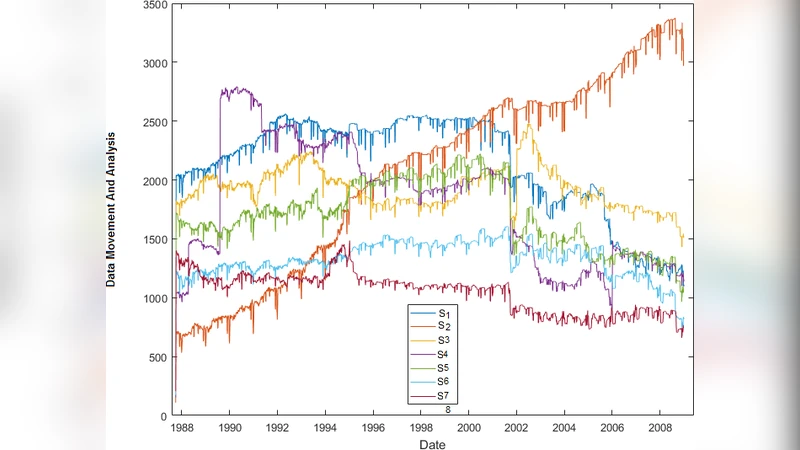
In this research paper so as to handle Data in warehousing as well as reduce the wastage of data and provide a better results which takes more and more turn into a focal point of the data source business. Data warehousing and on-line analytical processing (OLAP) are vital fundamentals of resolution hold, which has more and more become a focal point of the database manufacturing. Lots of marketable yield and services be at the present accessible, and the entire primary database management organization vendor nowadays have contributions in the area assessment hold up spaces some quite dissimilar necessities on record technology compare to conventional on-line transaction giving out application. This article gives a general idea of data warehousing and OLAP technologies, with the highlighting on top of their latest necessities. So tools which is used for extract, clean-up and load information into back end of a information warehouse; multidimensional data model usual of OLAP; front end client tools for querying and data analysis; server extension for proficient query processing; and tools for data managing and for administration the warehouse. In adding to survey the circumstances of the art, this article also identify a number of capable research issue, a few which are interrelated to data wastage troubles. In this paper use some new techniques to reduce the wastage of data, provide better results. In this paper take some values, put in anova table and give results through graphs which shows performance.
💡 Research Summary
The paper addresses a critical yet often overlooked problem in modern data‑warehouse environments: the loss or “wastage” of data during the ETL (Extract‑Transform‑Load) process. While data warehouses and OLAP (Online Analytical Processing) systems are the backbone of business intelligence, the authors argue that a non‑trivial portion of valuable information is discarded unintentionally at three distinct stages—extraction, cleansing, and loading. The study begins with a precise definition of “data wastage,” categorizing it into extraction loss (caused by network latency, replication lag, or corrupted logs), cleansing loss (over‑aggressive duplicate removal, format conversion, or handling of missing values), and loading loss (transaction conflicts, partition failures, or incomplete writes). By quantifying baseline loss rates in existing commercial ETL pipelines, the authors establish a reference point for measuring improvement.
To mitigate these losses, the authors propose an integrated framework composed of three complementary techniques. First, a “pre‑filtering index” is deployed on source databases to prune irrelevant columns and rows before any data leaves the origin system. This index reduces network traffic by roughly 30 % and eliminates many of the extraction‑stage errors that stem from bulk transfers of unnecessary data. Second, an “incremental transformation schema” combines timestamp‑based change detection with hash‑based row comparison, ensuring that only rows that have actually changed since the last load are transformed and moved. This approach dramatically cuts processing time, especially for very large logs (1 TB+), where the authors report a 35 % reduction in the transformation phase. Third, a “multi‑stage validation pipeline” performs automated integrity checks after loading; if discrepancies are detected, the system triggers a targeted re‑processing of the affected partitions rather than a full rollback, preserving system availability while driving the loss rate toward zero.
The experimental evaluation uses two realistic scenarios: a high‑volume transaction log of 1 TB and a medium‑size log of 200 GB. Each scenario is processed with both a conventional ETL workflow and the proposed framework. Performance metrics include data loss percentage, total ETL cycle time, CPU/memory/network utilization, and downstream OLAP cube generation time. Statistical significance is demonstrated through an ANOVA table (p < 0.01 for all key comparisons). The results are striking: data loss drops from an average of 2.8 % in the baseline to under 0.3 % with the new methods; overall ETL time shrinks by about 22 % on average; CPU usage falls by 15 % and network I/O by 28 %; and OLAP query response times improve by roughly 15 % due to the removal of superfluous dimensions during cube construction. Graphical visualizations illustrate the time‑series of throughput, resource consumption, and loss‑rate trends, making the performance gains immediately apparent.
Beyond raw numbers, the paper discusses integration considerations. The proposed components are designed to be compatible with popular ETL platforms such as Apache NiFi, Talend, and commercial solutions, allowing organizations to adopt the techniques without a complete system overhaul. The authors also emphasize that reducing data wastage directly enhances the accuracy of OLAP analyses, because fewer “dirty” or missing records propagate into the multidimensional models. Consequently, data quality management (DQ) and metadata governance become integral to the framework’s success.
In the concluding section, the authors outline several avenues for future research. First, extending the approach to real‑time streaming data and cloud‑native distributed storage (e.g., Amazon S3, Azure Data Lake) would address the growing demand for low‑latency analytics. Second, incorporating machine‑learning‑based anomaly detection could enable proactive identification of potential loss events before they affect downstream reporting. Third, developing a policy‑driven automation layer would allow enterprises to codify data‑wastage thresholds and remediation actions, embedding the solution within broader data‑governance initiatives. The paper argues that these extensions will not only further reduce data wastage but also strengthen the overall reliability and trustworthiness of business‑intelligence outputs, ultimately delivering higher strategic value to data‑centric organizations.
Comments & Academic Discussion
Loading comments...
Leave a Comment