What Separable Frobenius Monoidal Functors Preserve
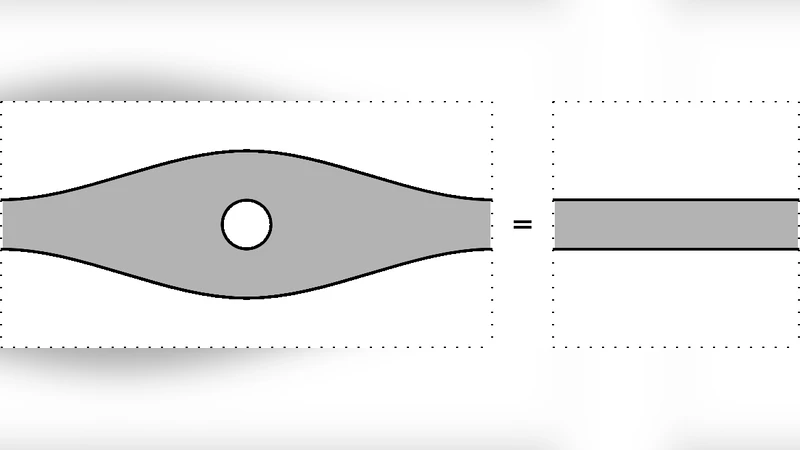
Separable Frobenius monoidal functors were defined and studied under that name by Szlachanyi and by Day and Pastro, and in a more general context by Cockett and Seely. Our purpose here is to develop their theory in a very precise sense. We determine what kinds of equations in monoidal categories they preserve. For example we show they preserve lax (meaning not necessarily invertible) Yang-Baxter operators, weak Yang-Baxter operators in the sense of Alonso Alvarez et al., and (in the braided case) weak bimonoids in the sense of Pastro and Street. In fact, we characterize which monoidal expressions are preserved (or rather, are stable under conjugation in a well-defined sense). We show that every weak Yang-Baxter operator is the image of a genuine Yang-Baxter operator under a separable Frobenius monoidal functor. Prebimonoidal functors are also defined and discussed.
💡 Research Summary
The paper develops a precise theory of separable Frobenius monoidal functors, a class of monoidal functors first introduced by Szlachányi and by Day and Pastro, and later generalized by Cockett and Seely. A separable Frobenius monoidal functor is simultaneously monoidal (preserving the tensor product) and comonoidal (preserving the cotensor), with the additional property that the monoidal and comonoidal structures satisfy the Frobenius condition and are separable, i.e., the multiplication and comultiplication split each other. The authors ask a fundamental question: which monoidal equations or algebraic structures are invariant under such functors? To answer this, they introduce the notion of “conjugation stability”: a monoidal expression is said to be stable under a functor F if applying F and then its (formal) inverse leaves the expression unchanged up to the canonical isomorphisms supplied by the monoidal structure.
The main technical contributions are fourfold. First, the authors prove that any lax Yang‑Baxter operator—an endomorphism R : X⊗Y → Y⊗X satisfying the Yang‑Baxter equation without requiring invertibility—is preserved by any separable Frobenius monoidal functor. In other words, if R satisfies the lax YB equation in the source category, then F(R) satisfies the same equation in the target. Second, they treat weak Yang‑Baxter operators in the sense of Alonso‑Alvarez, Gómez‑Torrecillas, and others. Such operators come equipped with auxiliary morphisms that weaken the usual invertibility requirement. The paper shows that every weak Yang‑Baxter operator is the image under a separable Frobenius monoidal functor of a genuine (invertible) Yang‑Baxter operator. This establishes a representation theorem: weak solutions are precisely the functorial shadows of strong solutions.
Third, in the braided setting, the authors examine weak bimonoids as defined by Pastro and Street. A weak bimonoid is an object equipped with a multiplication μ and a comultiplication δ that satisfy weakened compatibility axioms (the usual bimonoid axioms hold only up to certain idempotents). The paper demonstrates that separable Frobenius monoidal functors preserve these weak bimonoid structures; the images of μ and δ continue to satisfy the weakened compatibility conditions. This result is significant for quantum group theory and topological quantum field theory, where weak bimonoids model non‑semisimple or “logarithmic” phenomena.
Finally, the authors introduce the notion of prebimonoidal functors. These are functors that, unlike ordinary bimonoidal functors, do not require a strict interchange law between the monoidal and comonoidal structures; instead, they rely on the separable Frobenius condition to guarantee a weaker form of compatibility. The paper explores basic properties of prebimonoidal functors and situates them within the broader landscape of monoidal functoriality.
Throughout, the authors provide a characterization theorem: a monoidal expression is preserved (or, more precisely, is conjugation‑stable) by all separable Frobenius monoidal functors if and only if it can be built from the tensor product, unit, associator, braiding (when present), and the Frobenius and separability equations. This gives a clean syntactic description of the “invariant language” of such functors.
The paper concludes by discussing potential applications. Since many structures arising in low‑dimensional topology, quantum algebra, and categorical quantum mechanics can be expressed as weak Yang‑Baxter operators or weak bimonoids, the results imply that these structures can be transferred across different categorical contexts via separable Frobenius monoidal functors without loss of essential algebraic content. Moreover, the representation theorem for weak Yang‑Baxter operators suggests a new method for constructing weak solutions by first finding a strong solution in a convenient category and then applying an appropriate separable Frobenius functor.
In summary, the work offers a comprehensive analysis of what separable Frobenius monoidal functors preserve, establishes preservation results for lax and weak Yang‑Baxter operators as well as weak bimonoids, introduces prebimonoidal functors, and provides a syntactic characterization of the invariant monoidal language. These contributions deepen our understanding of functorial transport of algebraic structures in monoidal categories and open avenues for further research in quantum algebra, categorical topology, and related fields.
Comments & Academic Discussion
Loading comments...
Leave a Comment