Comments on Improving Transferability Between Different Engineering Stages in the Development of Automated Material Flow Modules
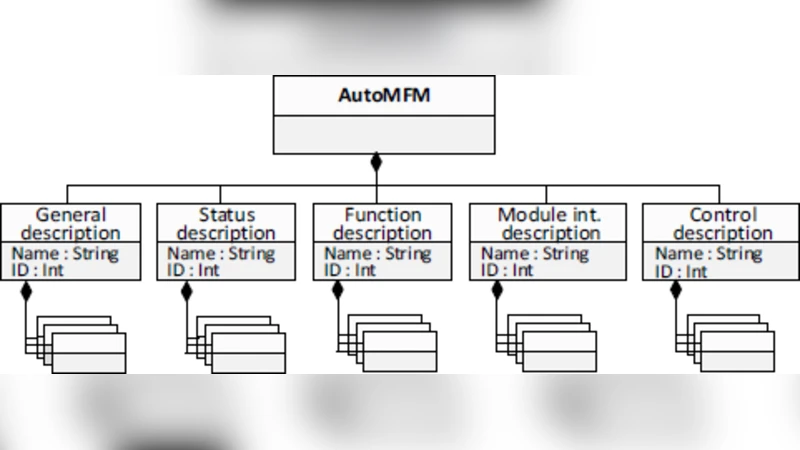
In the paper by D. Regulin et al. (IEEE Trans. On Automation Science and Engineering, vol. 13, no. 4, 1422-1432, October 2016) authors claim that they present a meta-model for the modeling of the Automated Material Flow Module (aMFM) and a model-driven design approach for aMFMs. In this letter we comment on the presented meta-model and the proposed model-driven approach regarding their potential for exploitation. We present specific arguments and make cases that call the authors design decision into question.
💡 Research Summary
The letter critically examines the meta‑model and model‑driven design methodology for Automated Material Flow Modules (aMFMs) presented by Regulin et al. (IEEE Trans. on Automation Science and Engineering, 2016). While the original authors claim that their meta‑model provides a unified representation across the engineering lifecycle—conceptual design, implementation, simulation, and verification—the commentary identifies several substantive shortcomings that limit its practical exploitation.
First, the meta‑model abstracts domain concepts to a degree that obscures the semantic link between high‑level functional requirements and low‑level physical constraints. Elements such as “conveyor segment” are defined without explicit parameters for drive type, load capacity, or safety features, making automatic model‑to‑code transformations ambiguous and forcing engineers to intervene manually.
Second, the proposed workflow assumes a smooth “model → code → simulation → validation → model regeneration” loop. In real material‑flow environments, design changes are frequent, and constraints such as space, regulatory compliance, and power availability often emerge only during implementation. The meta‑model lacks mechanisms for incremental extension (e.g., plug‑in architecture, versioned metadata), so discrepancies between the model and the built system accumulate over successive iterations.
Third, the meta‑model treats “workflow” and “material path” as independent constructs. In complex scenarios involving multiple parallel lines, simultaneous inbound and outbound operations, or dynamic routing, the inter‑dependencies between process steps and physical paths are not captured. This separation hampers consistency checks in simulation tools, leading to undetected bottlenecks or path conflicts that increase verification effort.
Fourth, the authors’ strategy for improving transferability focuses mainly on custom transformation scripts rather than on establishing standardized tool interfaces or a robust metadata governance framework. Consequently, organizations that adopt the meta‑model but employ different CAD/CAE platforms, PLC programming environments, or data formats must invest additional integration work, contradicting the claimed benefits of cross‑stage transferability.
Fifth, the validation evidence presented in the original paper is limited to a single‑line conveyor and a simple picking robot. No empirical data are provided for more demanding configurations such as multi‑level automation cells, high‑speed sorting systems, or human‑robot collaborative stations. This narrow case base raises doubts about the meta‑model’s scalability and generalizability across the diverse landscape of modern material‑handling systems.
Finally, the meta‑model relies on a fixed domain vocabulary that the authors present as “standardized.” In practice, industry vocabularies evolve rapidly with emerging technologies like autonomous mobile robots, AI‑driven scheduling, and IoT‑enabled sensors. A static vocabulary forces costly re‑engineering of the meta‑model whenever new concepts arise, undermining long‑term maintainability.
In summary, while Regulin et al. make a commendable effort to unify the engineering stages of aMFM development, the commentary argues that the proposed meta‑model falls short in addressing the flexibility, extensibility, standardization, and verification requirements essential for real‑world deployment. Future work should explore hierarchical extensions, standardized interface definitions, and extensive empirical validation across heterogeneous material‑flow scenarios to truly enhance transferability between engineering stages.
Comments & Academic Discussion
Loading comments...
Leave a Comment