MHD simulations of the magnetorotational instability in a shearing box with zero net flux: the case Pm=4
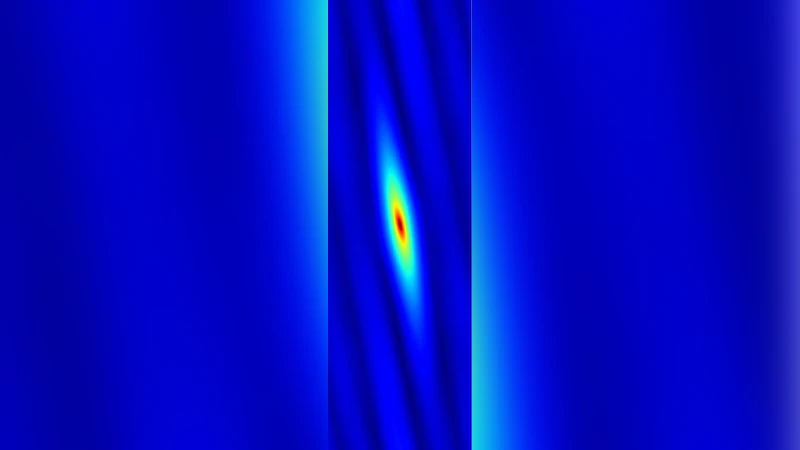
This letter investigates the transport properties of MHD turbulence induced by the magnetorotational instability at large Reynolds numbers Re when the magnetic Prandtl number Pm is larger than unity. Three MHD simulations of the magnetorotational instability (MRI) in the unstratified shearing box with zero net flux are presented. These simulations are performed with the code Zeus and consider the evolution of the rate of angular momentum transport as Re is gradually increased from 3125 to 12500 while simultaneously keeping Pm=4. To ensure that the small scale features of the flow are well resolved, the resolution varies from 128 cells per disk scaleheight to 512 cells per scaleheight. The latter constitutes the highest resolution of an MRI turbulence simulation to date. The rate of angular momentum transport, measured using the alpha parameter, depends only very weakly on the Reynolds number: alpha is found to be about 0.007 with variations around this mean value bounded by 15% in all simulations. There is no systematic evolution with Re. For the best resolved model, the kinetic energy power spectrum tentatively displays a power-law range with an exponent -3/2, while the magnetic energy is found to shift to smaller and smaller scales as the magnetic Reynolds number increases. A couple of different diagnostics both suggest a well-defined injection length of a fraction of a scaleheight. The results presented in this letter are consistent with the MRI being able to transport angular momentum efficiently at large Reynolds numbers when Pm=4 in unstratified zero net flux shearing boxes.
💡 Research Summary
This paper presents a systematic numerical investigation of magnetorotational instability (MRI)–driven turbulence in an unstratified shearing‑box model with zero net magnetic flux, focusing on the regime where the magnetic Prandtl number (Pm) is greater than unity. Specifically, the authors fix Pm = 4 and increase the Reynolds number (Re) from 3 125 to 12 500 while simultaneously raising the magnetic Reynolds number (Rm) to maintain the prescribed Pm. Three simulations are carried out with the ZEUS MHD code at progressively higher resolutions: 128, 256, and 512 grid cells per disk scale height (H). The 512 cells/H run represents the highest‑resolution MRI turbulence calculation published to date, ensuring that the smallest dynamically relevant scales are well resolved and that numerical dissipation does not dominate the physical cascade.
The principal diagnostic is the Shakura–Sunyaev α parameter, which quantifies the efficiency of angular‑momentum transport via the sum of Maxwell and Reynolds stresses. Across all runs, α remains remarkably constant at ≈ 0.007, with fluctuations of less than 15 % despite a four‑fold increase in Re. No systematic trend with Re is observed, indicating that, for Pm = 4, the turbulent transport is essentially independent of the hydrodynamic Reynolds number once the flow is sufficiently resolved.
Spectral analysis reveals that the kinetic‑energy power spectrum develops a tentative inertial range with a slope close to –3/2, reminiscent of the Iroshnikov‑Kraichnan phenomenology for MHD turbulence rather than the Kolmogorov –5/3 law. In contrast, the magnetic‑energy spectrum shifts progressively toward higher wavenumbers as Rm grows, suggesting that magnetic structures become increasingly fine‑scaled while the kinetic cascade retains a broader range. Two independent diagnostics—the location of the spectral peak and a second‑order structure‑function analysis—both point to an energy‑injection scale that is a fraction (≈ 0.2–0.3) of the scale height H. This implies that MRI injects turbulent energy not at the largest box scale but at an intermediate scale set by the balance of shear, rotation, and magnetic tension.
The convergence study, comparing the three resolutions, shows that the α value, stress ratios, and spectral shapes converge as the grid is refined, confirming that the 512 cells/H simulation is numerically robust. The authors argue that the weak Re‑dependence of α at Pm = 4 resolves a long‑standing puzzle: while low‑Pm simulations often exhibit a steep decline of transport with increasing Re, high‑Pm flows appear to sustain efficient angular‑momentum transport even in the asymptotic, high‑Re limit.
In the broader astrophysical context, many accretion disks (e.g., protoplanetary disks at certain radii, hot inner regions of X‑ray binaries) are expected to have Pm > 1. The present results therefore support the notion that MRI can remain an effective mechanism for driving accretion in such environments, even when the hydrodynamic Reynolds number is extremely large. The identified injection scale of ≈ 0.2 H also provides a concrete physical scale that can be incorporated into sub‑grid models for global disk simulations.
The paper concludes by emphasizing that the combination of high Pm and adequate numerical resolution yields a robust, Re‑independent turbulent stress. Future work is suggested to explore stratified boxes, a broader range of Pm values, and global disk geometries to test the universality of these findings.
Comments & Academic Discussion
Loading comments...
Leave a Comment