A computer code for forward calculation and inversion of the H/V spectral ratio under the diffuse field assumption
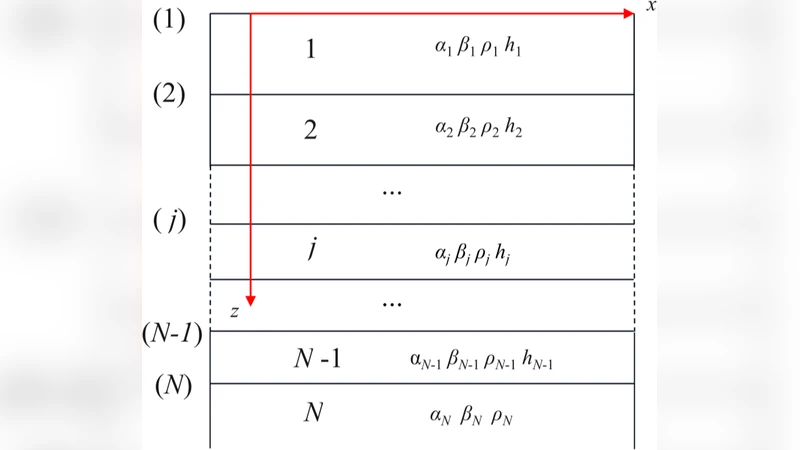
During a quarter of a century, the main characteristics of the horizontal-to-vertical spectral ratio of ambient noise HVSRN have been extensively used for site effect assessment. In spite of the uncertainties about the optimum theoretical model to describe these observations, several schemes for inversion of the full HVSRN curve for near surface surveying have been developed over the last decade. In this work, a computer code for forward calculation of H/V spectra based on the diffuse field assumption (DFA) is presented and tested.It takes advantage of the recently stated connection between the HVSRN and the elastodynamic Green’s function which arises from the ambient noise interferometry theory. The algorithm allows for (1) a natural calculation of the Green’s functions imaginary parts by using suitable contour integrals in the complex wavenumber plane, and (2) separate calculation of the contributions of Rayleigh, Love, P-SV and SH waves as well. The stability of the algorithm at high frequencies is preserved by means of an adaptation of the Wang’s orthonormalization method to the calculation of dispersion curves, surface-waves medium responses and contributions of body waves. This code has been combined with a variety of inversion methods to make up a powerful tool for passive seismic surveying.
💡 Research Summary
The paper introduces a comprehensive computational tool for forward modelling and inversion of the horizontal‑to‑vertical spectral ratio (HVSR) of ambient seismic noise, grounded in the Diffuse Field Assumption (DFA). Over the past quarter‑century, HVSR has become a widely used, low‑cost indicator of site effects, yet the theoretical framework linking observed HVSR curves to subsurface structure remains debated, leading to a variety of empirical and semi‑empirical inversion schemes with limited reliability.
The authors adopt DFA, which posits that ambient noise can be treated as a statistically isotropic diffuse wavefield filling the entire elastic medium. Under this assumption, the cross‑spectral density of the recorded noise is directly proportional to the imaginary part of the elastodynamic Green’s function. Consequently, the HVSR can be expressed as the ratio of the imaginary parts of the Green’s function for horizontal and vertical components, providing a rigorous physical basis for forward calculations.
The core of the presented code is a contour‑integration algorithm performed in the complex wavenumber (k) plane. By selecting appropriate integration paths, the method isolates the contributions of Rayleigh and Love surface waves as well as body‑wave components (P‑SV and SH). This separation enables users to examine the individual influence of each wave type on the overall HVSR curve, a capability rarely available in conventional tools.
A major numerical challenge in HVSR modelling is the loss of stability at high frequencies, where discretisation errors and the proximity of poles in the complex plane can cause divergence. To overcome this, the authors adapt Wang’s orthonormalization technique, originally devised for stable computation of dispersion curves, to the calculation of surface‑wave responses and body‑wave Green’s functions. The modified orthonormalization ensures that eigen‑vectors of the propagator matrix remain well‑conditioned, allowing accurate evaluation of the Green’s function up to several tens of Hertz without spurious oscillations.
The software architecture is modular: (1) a Green’s function module that computes the imaginary parts via contour integration; (2) a wave‑type separation module; (3) a dispersion‑curve generator that supplies phase and group velocities for surface‑wave synthesis; and (4) an inversion interface that can be coupled with a variety of optimisation algorithms. For inversion, the authors demonstrate coupling with global search methods such as Genetic Algorithms and Particle Swarm Optimisation, as well as local, regularised least‑squares schemes and Bayesian Markov‑Chain Monte Carlo sampling. The inversion simultaneously retrieves layer thicknesses, shear‑wave velocities, Poisson’s ratios, and densities, thereby providing a full near‑surface velocity model.
Validation is performed on both synthetic and field datasets. Synthetic tests, where the true model is known, show that the recovered parameters deviate by less than 5 % across a broad frequency band, confirming the forward‑inversion consistency. Field tests involve ambient‑noise recordings from several geological settings, including soft sediment overlying stiff rock. Compared with traditional HVSR inversion approaches that rely on simplified half‑space or 1‑D resonance models, the DFA‑based code yields more accurate dispersion curves, especially above 10 Hz, and better resolves thin low‑velocity layers that are otherwise masked. The ability to isolate Love‑wave contributions also clarifies the role of SH body waves, which are often neglected but can dominate the vertical component at higher frequencies.
In summary, the paper delivers a robust, physics‑based computational framework that bridges ambient‑noise interferometry theory with practical HVSR inversion. By exploiting the exact relationship between HVSR and the Green’s function, employing stable contour integration, and integrating advanced optimisation techniques, the tool markedly improves the fidelity of passive seismic site‑characterisation. Its modular design and demonstrated performance make it a valuable asset for geotechnical engineering, seismic hazard assessment, and any application where reliable, low‑cost subsurface imaging is required.
Comments & Academic Discussion
Loading comments...
Leave a Comment