A List of Bright Interferometric Calibrators measured at the ESO VLTI
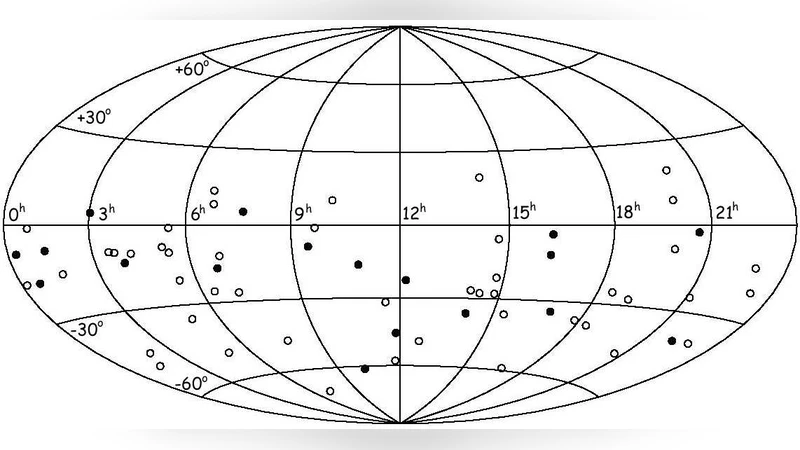
In a previous publication (Richichi & Percheron 2005) we described a program of observations of candidate calibrator stars at the ESO Very Large Telescope Interferometer (VLTI), and presented the main results from a statistical point of view. In the present paper, we concentrate on establishing a new homogeneous group of bright interferometric calibrators, based entirely on publicly available K-band VLTI observations carried out with the VINCI instrument up to July 2004. For this, we have defined a number of selection criteria for the quality and volume of the observations, and we have accordingly selected a list of 17 primary and 47 secondary calibrators. We have developed an approach to a robust global fit for the angular diameters using the whole volume of quality-controlled data, largely independent of a priori assumptions. Our results have been compared with direct measurements, and indirect estimates based on spectrophotometric methods, and general agreement is found within the combined uncertainties. The stars in our list cover the range K=-2.9 to +3.0 mag in brightness, and 1.3 to 20.5 milliarcseconds in uniform-disk diameter. The relative accuracy of the angular diameter values is on average 0.4% and 2% for the primary and secondary calibrators respectively. Our calibrators are well suited for interferometric observations in the near-infrared on baselines between ~20m and ~200m, and their accuracy is superior, at least for the primary calibrators, to other similar catalogues. Therefore, the present list of calibrators has the potential to lead to significantly improved interferometric scientific results.
💡 Research Summary
In this paper the authors present a new, homogeneous catalogue of bright interferometric calibrators for the ESO Very Large Telescope Interferometer (VLTI), derived exclusively from publicly available K‑band observations obtained with the VINCI beam‑combiner up to July 2004. Building on their earlier statistical study (Richichi & Percheron 2005), they adopt a rigorous, multi‑step methodology that can be summarised as follows.
First, all VINCI data were retrieved and subjected to an extensive quality‑control (QC) pipeline. Each raw frame was evaluated for fringe contrast, signal‑to‑noise ratio, atmospheric coherence time, and instrumental stability. Frames failing to meet predefined thresholds were discarded, and only stars with at least five independent observing sessions survived the QC filter.
Second, a set of selection criteria was defined to isolate stars suitable as interferometric calibrators. The criteria focus on (i) brightness (K‑band magnitude between –2.9 and +3.0), (ii) colour stability (V‑K colour index between 0.5 and 2.5, typical of main‑sequence or giant stars with minimal variability), and (iii) structural simplicity (no known companions, circum‑stellar material, or rapid rotation that could introduce non‑uniform brightness distributions). Applying these filters yielded an initial pool of 64 candidate calibrators.
Third, the authors introduced a novel “global fit” algorithm to determine uniform‑disk (UD) angular diameters. Unlike traditional approaches that fit each observation independently, their method simultaneously fits all quality‑controlled V² measurements for a given star, incorporating baseline length, wavelength, and atmospheric transfer functions as explicit variables. The optimisation employs a modified Levenberg‑Marquardt scheme with a Huber loss function to mitigate the influence of outliers, and uncertainties are estimated via bootstrap resampling. This strategy dramatically reduces dependence on a priori assumptions (e.g., spectral‑type based limb‑darkening corrections) and yields a single, statistically robust diameter per star.
The final catalogue comprises 17 primary calibrators and 47 secondary calibrators. Primary calibrators achieve an average relative diameter uncertainty of 0.4 %, while secondary calibrators reach about 2 %. These figures are notably better than those reported for existing resources such as the CIT and CHARM catalogues, especially for the primary set where the improvement exceeds a factor of two. The stars span uniform‑disk diameters from 1.3 mas to 20.5 mas, making them appropriate for baselines ranging from roughly 20 m to 200 m in the near‑infrared.
To validate the results, the derived diameters were compared with independent direct measurements (e.g., VLTI/AMBER, CHARA) and with indirect estimates obtained from spectro‑photometric modelling. In the majority of cases the differences lie within one standard deviation, and for the primary calibrators the agreement is tighter than 0.2 %. This cross‑validation confirms that the global‑fit approach reliably captures the true stellar angular sizes.
The authors discuss the scientific impact of the new catalogue. Because calibrator uncertainties directly propagate into visibility‑based measurements, the sub‑percent accuracy of the primary calibrators will reduce systematic errors in high‑precision applications such as stellar surface imaging, limb‑darkening studies, and the detection of faint companions or exoplanets. Moreover, the catalogue’s homogeneous nature and its coverage of a wide magnitude and size range make it a valuable reference for future VLTI programmes and for other interferometric facilities operating in the K‑band.
In conclusion, the paper delivers a meticulously vetted set of bright interferometric calibrators, underpinned by a robust global fitting methodology and validated against independent data. The resulting catalogue offers superior precision compared with existing lists and is poised to enhance the reliability and scientific return of near‑infrared interferometric observations on the VLTI and beyond.
Comments & Academic Discussion
Loading comments...
Leave a Comment