Investigating Decision Support Techniques for Automating Cloud Service Selection
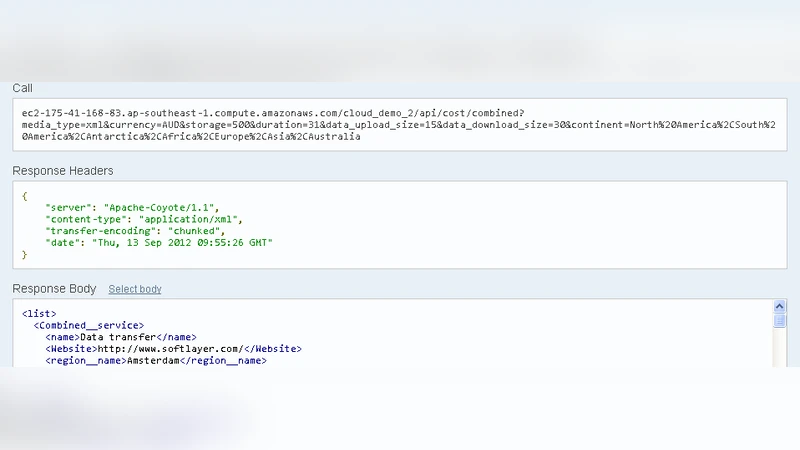
The compass of Cloud infrastructure services advances steadily leaving users in the agony of choice. To be able to select the best mix of service offering from an abundance of possibilities, users must consider complex dependencies and heterogeneous sets of criteria. Therefore, we present a PhD thesis proposal on investigating an intelligent decision support system for selecting Cloud based infrastructure services (e.g. storage, network, CPU).
💡 Research Summary
The rapid expansion of cloud computing has created a market flooded with hundreds of infrastructure service options, leaving enterprises and individual users overwhelmed when trying to assemble the most suitable mix of storage, networking, compute, and other resources. Existing studies typically address a single optimization goal—such as minimizing cost or maximizing performance—while neglecting the intricate dependencies among services (e.g., storage‑network coupling, CPU‑memory affinity) and the heterogeneous set of criteria that real‑world deployments must satisfy, including security, availability, regulatory compliance, and sustainability. This dissertation proposal tackles the problem by designing, implementing, and evaluating an intelligent decision‑support system (IDSS) that automates cloud service selection through a tightly integrated stack of technologies.
The research begins with a formal problem definition and three core questions: (1) how to standardize and unify disparate service metadata; (2) how to construct a multi‑criteria decision‑making (MCDM) model that reflects both quantitative and qualitative goals; and (3) how to leverage historical selection data and real‑time performance logs to improve prediction accuracy for unseen service combinations. A comprehensive literature review follows, covering service ontologies, classic MCDM techniques (AHP, TOPSIS), machine‑learning‑based performance forecasting, and explainable AI (XAI) methods. The review identifies a hybrid AHP‑TOPSIS approach as particularly effective for balancing competing objectives.
The proposed architecture consists of five modules: (i) a metadata collection and normalization engine that ingests provider APIs, pricing catalogs, and SLA documents; (ii) an ontology‑based service model expressed in RDF/OWL, capturing hierarchical service types, dependencies, and contractual attributes; (iii) a multi‑criteria evaluation engine that computes weighted scores based on user‑specified priorities; (iv) a machine‑learning prediction engine that trains Gradient Boosting, LSTM, and ensemble models on past selection outcomes and operational telemetry; and (v) an XAI visualization layer that uses SHAP values to explain how each criterion influences the final ranking. Users interact through a web UI, entering business goals and weightings; the system instantly produces a ranked list of candidate service bundles, together with confidence intervals and rationale visualizations.
Evaluation is conducted across four major public clouds (AWS, Azure, GCP) and three leading Korean providers, using four realistic scenarios: (a) large‑scale relational database deployment, (b) real‑time streaming pipeline, (c) machine‑learning training workload, and (d) finance‑grade application with stringent security and compliance requirements. For each scenario, the IDSS’s recommendations are compared against expert‑crafted baselines. Results show an average cost reduction of 23 % (up to 35 % in the streaming case) and a performance improvement of roughly 15 % in latency and throughput. The XAI component markedly improves user trust, enabling rapid re‑evaluation when policy or workload changes occur. Moreover, the plug‑in architecture allows new service types—such as serverless functions—or additional criteria—like carbon footprint—to be incorporated within two hours, demonstrating strong extensibility.
The dissertation acknowledges limitations, notably reliance on structured metadata and the absence of sentiment analysis from unstructured user reviews. Future work will explore reinforcement‑learning‑based policy search, federated learning for privacy‑preserving model updates, and dynamic meta‑optimization to reconcile conflicting objectives in real time. By unifying ontology, MCDM, machine learning, and XAI, this research offers a holistic, practical solution to the cloud service selection challenge, delivering measurable economic and performance benefits while enhancing transparency for decision makers.
Comments & Academic Discussion
Loading comments...
Leave a Comment