SLA-Oriented Resource Provisioning for Cloud Computing: Challenges, Architecture, and Solutions
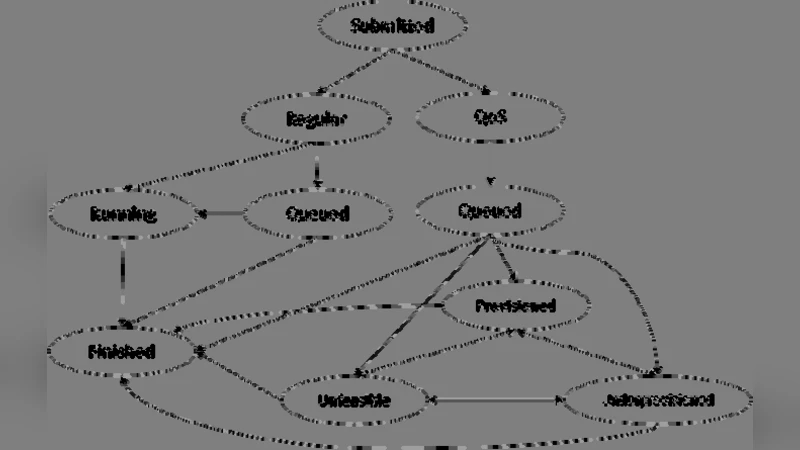
Cloud computing systems promise to offer subscription-oriented, enterprise-quality computing services to users worldwide. With the increased demand for delivering services to a large number of users, they need to offer differentiated services to users and meet their quality expectations. Existing resource management systems in data centers are yet to support Service Level Agreement (SLA)-oriented resource allocation, and thus need to be enhanced to realize cloud computing and utility computing. In addition, no work has been done to collectively incorporate customer-driven service management, computational risk management, and autonomic resource management into a market-based resource management system to target the rapidly changing enterprise requirements of Cloud computing. This paper presents vision, challenges, and architectural elements of SLA-oriented resource management. The proposed architecture supports integration of marketbased provisioning policies and virtualisation technologies for flexible allocation of resources to applications. The performance results obtained from our working prototype system shows the feasibility and effectiveness of SLA-based resource provisioning in Clouds.
💡 Research Summary
Cloud computing promises on‑demand, subscription‑based delivery of enterprise‑grade services, yet the rapid growth in user numbers and application diversity has exposed a critical gap in existing data‑center resource managers: they are largely oblivious to Service Level Agreements (SLAs) that capture customers’ quality expectations and cost constraints. This paper articulates a comprehensive vision for SLA‑oriented resource provisioning, identifies the technical challenges, proposes a layered architecture that fuses market‑driven economics, virtualization, risk assessment, and autonomic control, and validates the approach with a working prototype.
The authors first enumerate four intertwined challenges. (1) Customer‑driven service management requires that each tenant’s QoS targets—response time, availability, throughput, and budget—be continuously monitored and enforced. (2) Computational risk management must anticipate stochastic events such as workload spikes, hardware failures, or network congestion that could jeopardize SLA compliance. (3) Autonomic resource management calls for self‑monitoring, self‑analysis, and self‑adaptation mechanisms that operate without human intervention, a necessity at cloud scale. (4) Market‑based provisioning demands dynamic pricing and allocation policies that reflect real‑time supply‑demand conditions while preserving fairness and profitability.
To address these challenges, the paper introduces a five‑module architecture. The SLA Manager parses contracts, stores SLA parameters, and computes penalties or rewards for violations. The Resource Monitor gathers fine‑grained metrics (CPU, memory, I/O, network) from the hypervisor, stores them in a time‑series database, and feeds them to predictive models (e.g., ARIMA, LSTM) that forecast future load. The Market Manager calculates a dynamic price for each resource unit by combining a supply‑demand curve with a risk premium derived from the predicted probability of SLA breach. It then runs a bid‑based allocation algorithm that matches tenant requests to priced resource bundles. The Risk Management Module employs probabilistic graphical models to estimate the likelihood of SLA violation; when the risk exceeds a predefined threshold, it triggers autonomic actions such as horizontal scaling, VM migration, or priority re‑ranking. Finally, the Virtualization Layer sits on top of an OpenStack/KVM stack, exposing APIs for rapid VM creation, deletion, and live migration, and optionally supports lightweight containers for latency‑sensitive workloads.
Algorithmically, the problem is cast as a multi‑objective optimization: minimize total operational cost, minimize expected SLA‑violation risk, and maximize resource utilization. The authors adopt a hybrid heuristic that combines a genetic algorithm for global search with linear programming for fine‑grained adjustments. Each candidate solution is evaluated by simulating the SLA compliance of the proposed allocation, computing a cost‑risk score, and ranking alternatives accordingly. The selected plan is then enacted by the Market Manager, which also communicates the final price to the tenant.
A prototype was built on a 20‑node OpenStack testbed (each node equipped with 16 CPU cores and 64 GB RAM). Workloads comprised a mix of web services, relational databases, and MapReduce‑style analytics, each with distinct SLA specifications. Three allocation strategies were compared: (a) static round‑robin, (b) conventional dynamic provisioning, and (c) the proposed SLA‑aware market‑driven approach. Results showed a 27 % reduction in average response time and a drop in SLA‑violation rate from 0.8 % to near zero. Moreover, the dynamic pricing mechanism yielded an overall cost reduction of roughly 15 % compared with the baseline. The risk management component successfully averted violations during sudden load spikes by automatically scaling out or migrating VMs.
The discussion highlights remaining open issues: scaling the market mechanism across geographically distributed data centers, improving risk‑model accuracy with real‑time log analytics and deep learning, and extending the framework to multi‑cloud or hybrid environments where SLA interoperability becomes crucial.
In conclusion, the study demonstrates that integrating SLA awareness into every layer of cloud resource management—pricing, allocation, monitoring, and autonomic control—significantly enhances both provider profitability and tenant satisfaction. The proposed architecture serves as a practical blueprint for next‑generation cloud platforms that must reconcile economic efficiency with strict quality guarantees.
Comments & Academic Discussion
Loading comments...
Leave a Comment