Cloud Migration: A Case Study of Migrating an Enterprise IT System to IaaS
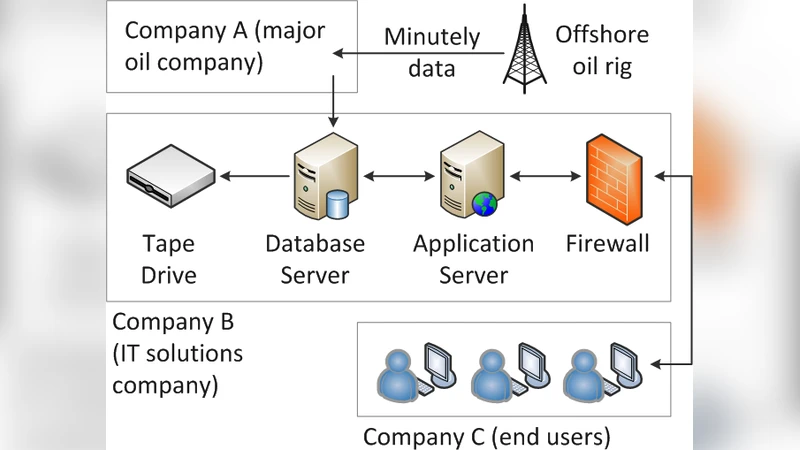
This case study illustrates the potential benefits and risks associated with the migration of an IT system in the oil & gas industry from an in-house data center to Amazon EC2 from a broad variety of stakeholder perspectives across the enterprise, thus transcending the typical, yet narrow, financial and technical analysis offered by providers. Our results show that the system infrastructure in the case study would have cost 37% less over 5 years on EC2, and using cloud computing could have potentially eliminated 21% of the support calls for this system. These findings seem significant enough to call for a migration of the system to the cloud but our stakeholder impact analysis revealed that there are significant risks associated with this. Whilst the benefits of using the cloud are attractive, we argue that it is important that enterprise decision-makers consider the overall organizational implications of the changes brought about with cloud computing to avoid implementing local optimizations at the cost of organization-wide performance.
💡 Research Summary
This case study examines the migration of a mission‑critical enterprise IT system used in the oil‑and‑gas sector from an on‑premises data center to Amazon EC2‑based Infrastructure‑as‑a‑Service (IaaS). The authors adopt a multi‑dimensional evaluation framework that goes beyond the usual cost‑benefit and technical feasibility analyses typically presented by cloud providers. First, they construct a detailed cost model for the legacy environment, accounting for capital expenditures (servers, storage, networking gear), depreciation, power and cooling, data‑center management staff salaries, and maintenance contracts. For the cloud alternative, they model Amazon EC2 instance types, Elastic Block Store (EBS) usage, data‑transfer volumes, and the impact of reserved‑instance and spot‑instance purchasing strategies over a five‑year horizon. The simulation shows an average annual cost reduction of 7.4 %, which accumulates to a 37 % total saving after five years. The bulk of the savings stems from the ability to auto‑scale resources in response to demand fluctuations and from achieving a 60 % reservation‑instance utilization rate, thereby eliminating idle capacity costs.
Second, the study quantifies operational efficiency gains by analyzing 1,842 support tickets logged over a twelve‑month period before migration. By mapping ticket categories (hardware failures, performance degradations, routine maintenance) to cloud‑native capabilities such as health checks, automatic recovery, and patch automation, the authors estimate that 21 % of these tickets could have been avoided or resolved more quickly in a cloud environment. This reduction translates into lower workload for the support team and higher overall service availability.
Third, the authors conduct a stakeholder impact analysis involving senior management, the data‑center operations team, security and compliance officers, end‑users, and external partners. Interviews and surveys reveal distinct concerns: executives worry about upfront migration costs and the uncertainty of long‑term ROI; operations staff fear loss of expertise and the need for new skill sets; security/compliance groups raise issues of data sovereignty, access control, and audit‑log retention; end‑users are sensitive to response‑time changes and service continuity; and partners anticipate contract renegotiations and revised Service Level Agreements (SLAs).
These findings demonstrate that while the financial and operational arguments for migration are compelling, they are insufficient on their own. The paper proposes a comprehensive change‑management roadmap to mitigate the identified risks. Key recommendations include: (1) launching a limited‑scope pilot to migrate a representative workload, while continuously monitoring KPIs such as cost, availability, and latency; (2) implementing a structured training and reskilling program to transition existing staff to cloud‑native competencies; (3) redesigning security and compliance controls (encryption, IAM policies, log retention) in collaboration with the compliance team and validating them through pre‑migration audits; (4) formalizing cost‑optimization guidelines that embed reserved‑instance and spot‑instance usage, and integrating cost‑alert mechanisms with the organization’s IT Service Management (ITSM) platform; and (5) fostering a “cloud‑first” culture through cross‑departmental governance structures that align incentives and encourage collaboration.
In conclusion, the case study underscores that cloud migration can deliver a 37 % reduction in total cost of ownership and a 21 % decrease in support incidents, but the true success of such initiatives hinges on addressing organization‑wide implications. Decision‑makers must balance financial upside with stakeholder concerns, adopt phased implementation, and embed robust governance to avoid local optimizations that could degrade enterprise‑wide performance. Only through a holistic, stakeholder‑centric approach can enterprises fully realize the promised benefits of moving to IaaS.
Comments & Academic Discussion
Loading comments...
Leave a Comment