Replacing ANSI C with other modern programming languages
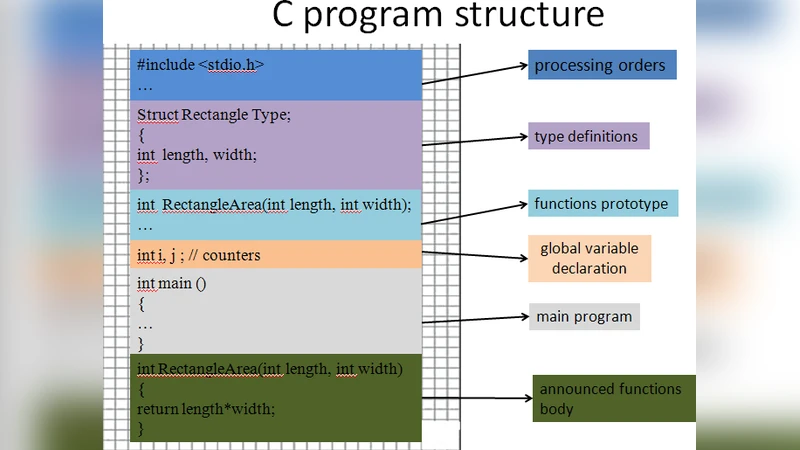
Replacing ANSI C language with other modern programming languages such as Python or Java may be an actual debate topic in technical universities. Researchers whose primary interests are not in programming area seem to prefer modern and higher level languages. Keeping standard language ANSI C as a primary tool for engineers and for microcontrollers programming, robotics and data acquisition courses is another strong different opinion trend. Function oriented versus object oriented languages may be another highlighted topic in actual debates.
💡 Research Summary
The paper examines the ongoing debate in technical universities about whether to replace the traditional ANSI C language with more modern, higher‑level languages such as Python or Java. It begins by outlining the historical dominance of C in low‑level programming domains—microcontroller firmware, robotics control, and data‑acquisition systems—where direct hardware access, deterministic execution time, and minimal runtime overhead are essential. The authors then contrast these requirements with the advantages offered by contemporary languages: Python’s interpreted, dynamically typed environment promotes rapid prototyping, readability, and a rich ecosystem of scientific libraries; Java’s statically typed, object‑oriented model provides strong abstraction, platform independence via the JVM, and extensive tooling for large‑scale software engineering.
Through a literature review and a series of surveys conducted across several engineering faculties, the study identifies two primary stakeholder groups. The first consists of non‑programming specialists and early‑year students who favor Python for its low entry barrier and immediate feedback, especially in courses focused on data analysis, algorithmic thinking, and rapid development of user interfaces. The second group comprises senior engineering students and faculty members who stress the necessity of mastering C to understand memory layout, pointer arithmetic, and real‑time interrupt handling—skills that remain indispensable for embedded system design and performance‑critical applications.
The paper further presents case studies from two universities that have adopted a hybrid curriculum. In University A, the first semester of the electrical engineering program uses C to teach microcontroller basics, while subsequent semesters shift to Python for sensor data acquisition, signal processing, and visualization. In University B’s robotics track, low‑level motion control algorithms are initially implemented in C, after which Java and Python are introduced for high‑level behavior planning, simulation, and graphical user interface development. These mixed‑approach models allow students to experience the trade‑offs between low‑level efficiency and high‑level productivity, thereby producing graduates who are comfortable navigating both procedural and object‑oriented paradigms.
The authors conclude that a wholesale replacement of ANSI C is neither practical nor pedagogically optimal. Instead, they advocate a complementary strategy: retain C for courses that require deterministic performance and direct hardware manipulation, while integrating Python and Java to enhance code readability, development speed, and object‑oriented design skills. This balanced approach aligns with industry expectations, where engineers must often prototype quickly in high‑level languages before optimizing critical sections in C. The paper calls for longitudinal studies to track learning curves, job placement outcomes, and evolving industry demands, suggesting that future research should quantify the long‑term impact of such hybrid curricula on professional competence and innovation.
Comments & Academic Discussion
Loading comments...
Leave a Comment