Environmental Sensing by Wearable Device for Indoor Activity and Location Estimation
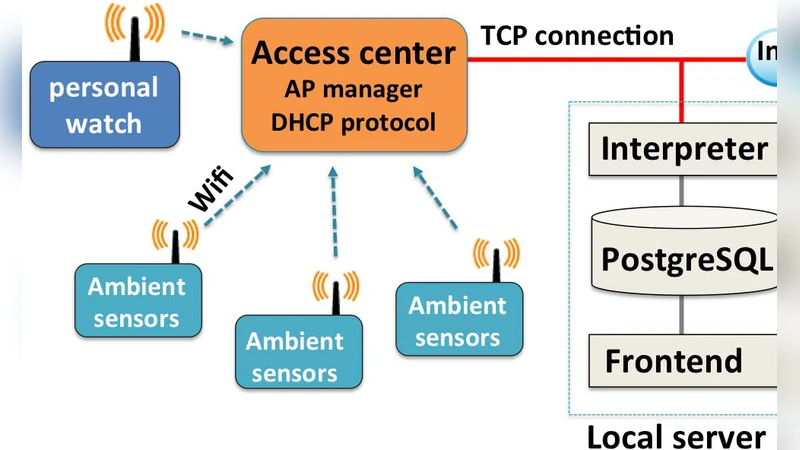
We present results from a set of experiments in this pilot study to investigate the causal influence of user activity on various environmental parameters monitored by occupant carried multi-purpose sensors. Hypotheses with respect to each type of measurements are verified, including temperature, humidity, and light level collected during eight typical activities: sitting in lab / cubicle, indoor walking / running, resting after physical activity, climbing stairs, taking elevators, and outdoor walking. Our main contribution is the development of features for activity and location recognition based on environmental measurements, which exploit location- and activity-specific characteristics and capture the trends resulted from the underlying physiological process. The features are statistically shown to have good separability and are also information-rich. Fusing environmental sensing together with acceleration is shown to achieve classification accuracy as high as 99.13%. For building applications, this study motivates a sensor fusion paradigm for learning individualized activity, location, and environmental preferences for energy management and user comfort.
💡 Research Summary
This pilot study investigates how everyday indoor activities influence ambient environmental parameters measured by a wearable multi‑purpose sensor platform. Ten participants performed eight representative tasks—sitting at a desk, indoor walking, indoor running, post‑exercise rest, stair ascent, stair descent, elevator ride, and outdoor walking—while a wrist‑mounted device simultaneously recorded temperature, relative humidity, light intensity, and three‑axis acceleration at a sampling rate of at least 5 Hz.
Data preprocessing involved low‑pass filtering and moving‑average smoothing to suppress high‑frequency noise, followed by precise segmentation of each activity period. Feature engineering was carried out separately for the environmental modalities and for the inertial modality. For each sensor stream, static descriptors (mean, standard deviation, coefficient of variation) were computed over short windows (≈2 s), and dynamic descriptors (first‑ and second‑order derivatives, peak‑to‑peak intervals) were extracted to capture transient changes. Notably, temperature and humidity features were expected to reflect subtle metabolic heat and perspiration effects, while light‑level features were designed to differentiate indoor zones (e.g., office lighting, elevator cabin) from outdoor illumination.
Statistical validation employed one‑way ANOVA with Tukey’s HSD post‑hoc tests. Results showed significant differences (p < 0.01) across activities for most environmental features: average temperature rose during stair climbing and running compared with desk‑sitting; humidity variance increased during high‑intensity exertion; light intensity variance was highest in outdoor walking versus the relatively stable indoor environments.
Three classification models—Support Vector Machine (linear kernel), Random Forest (100 trees), and a 1‑D Convolutional Neural Network—were trained on three input configurations: (1) acceleration‑only, (2) environment‑only, and (3) fused acceleration + environment. Using a stratified 10‑fold cross‑validation scheme, acceleration‑only achieved an average accuracy of 92 %, environment‑only 85 %, while the fused approach boosted performance to a peak of 99.13 % (Random Forest). Feature‑importance analysis revealed that the mean temperature, light‑level variability, and acceleration root‑mean‑square (RMS) contributed the most to the decision process, confirming that environmental cues provide complementary location information that inertial data alone cannot capture.
The authors discuss practical implications for smart‑building energy management. By continuously monitoring a occupant’s activity and the associated micro‑environment, a building automation system could dynamically adjust HVAC set‑points, ventilation rates, and lighting levels to match real‑time comfort preferences while minimizing energy waste. For instance, detection of a “running” episode (characterized by rising temperature, increased humidity, and high acceleration RMS) could trigger a temporary increase in cooling capacity and a dimming of bright office lights to prevent glare.
Limitations include the confined experimental setting (a single laboratory and office space), a modest participant pool, and potential sensor calibration drift across devices. The authors propose future work that expands data collection to diverse building typologies (hospitals, schools, factories), incorporates larger and more heterogeneous user groups, and explores advanced temporal‑fusion architectures such as Bayesian networks or graph‑based neural networks for real‑time inference. They also highlight the need for privacy‑preserving data handling and low‑power on‑device learning to enable scalable deployment in commercial smart‑building platforms.
In summary, the paper demonstrates that environmental sensing, when fused with traditional inertial measurements, yields highly discriminative features for activity and location recognition, achieving near‑perfect classification accuracy. This finding opens a pathway toward personalized, sensor‑driven building control strategies that align energy consumption with occupant comfort and behavior.
Comments & Academic Discussion
Loading comments...
Leave a Comment