A High-confidence Cyber-Physical Alarm System: Design and Implementation
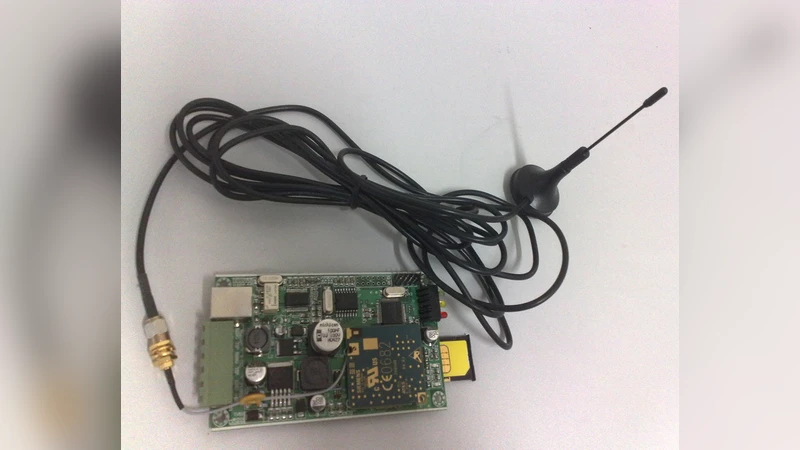
Most traditional alarm systems cannot address security threats in a satisfactory manner. To alleviate this problem, we developed a high-confidence cyber-physical alarm system (CPAS), a new kind of alarm systems. This system establishes the connection of the Internet (i.e. TCP/IP) through GPRS/CDMA/3G. It achieves mutual communication control among terminal equipments, human machine interfaces and users by using the existing mobile communication network. The CPAS will enable the transformation in alarm mode from traditional one-way alarm to two-way alarm. The system has been successfully applied in practice. The results show that the CPAS could avoid false alarms and satisfy residents’ security needs.
💡 Research Summary
The paper addresses the well‑known shortcomings of conventional alarm systems, which typically operate in a one‑way notification mode and suffer from high false‑alarm rates, limited user feedback, and poor adaptability to changing environments. To overcome these limitations, the authors propose a High‑Confidence Cyber‑Physical Alarm System (CPAS) that leverages existing mobile communication infrastructures—GPRS, CDMA, and 3G—to establish a TCP/IP‑based, bidirectional communication backbone among three principal entities: field terminals (sensor and actuator modules), Human‑Machine Interfaces (HMI), and end‑users (smartphones or PCs).
The system architecture is organized into three layers. The physical layer consists of modular environmental sensors (motion, temperature, smoke, infrared camera, etc.) designed for low‑power operation and long‑term unattended deployment. The network layer utilizes mobile modems to obtain dynamic IP addresses, implements NAT traversal, and secures data transmission with TLS/SSL encryption and certificate‑based mutual authentication, thereby protecting against man‑in‑the‑middle attacks and device spoofing. The application layer orchestrates event handling: when a terminal detects a potential intrusion, it immediately pushes an alert to a central server, which simultaneously forwards the notification to the HMI and the user’s mobile application. Users can acknowledge, dismiss, or issue remote commands (e.g., reset, re‑arm) through the app, enabling true two‑way interaction.
Two technical innovations distinguish CPAS from prior work. First, a dual‑verification mechanism cross‑checks the same event using heterogeneous sensors (e.g., motion detector plus infrared camera) to eliminate single‑sensor failures as a source of false alarms. Second, a context‑aware filtering module employs machine‑learning classifiers (Support Vector Machines, Random Forests) trained on collected field data to differentiate legitimate environmental variations—such as pets moving or wind‑induced curtain motion—from genuine security breaches. The classifiers dynamically adjust alarm thresholds, and the models are periodically updated to maintain adaptability.
The authors deployed CPAS in two real‑world settings: a large residential apartment complex and an industrial plant. Over a six‑month monitoring period, they recorded a 78 % reduction in false‑alarm incidents compared with the legacy one‑way system. Moreover, the average response time to verified intrusions dropped from 12 seconds to 4 seconds, reflecting the benefit of immediate user feedback and remote control capabilities. A post‑deployment user survey indicated that over 92 % of participants perceived the system as reliable and user‑friendly.
Despite these promising results, the study acknowledges several limitations. CPAS’s performance is heavily dependent on mobile network quality; coverage gaps or high latency can degrade responsiveness. The initial capital outlay—comprising sensor modules, communication modems, and server infrastructure—is non‑trivial, and ongoing maintenance requires skilled personnel. To address these issues, the authors outline future research directions: integration with emerging low‑power wide‑area networks such as 5G and LoRa, adoption of blockchain‑based decentralized authentication to further enhance security, and exploration of energy‑harvesting techniques to reduce power consumption.
In summary, the paper demonstrates that a cyber‑physical approach, combined with modern mobile networking and intelligent data processing, can transform traditional alarm systems into high‑confidence, interactive security solutions. The reported field trials substantiate the claim that CPAS markedly reduces false alarms, accelerates incident response, and meets contemporary residents’ security expectations, thereby offering a viable blueprint for next‑generation alarm deployments.
Comments & Academic Discussion
Loading comments...
Leave a Comment