An LSB Data Hiding Technique Using Natural Numbers
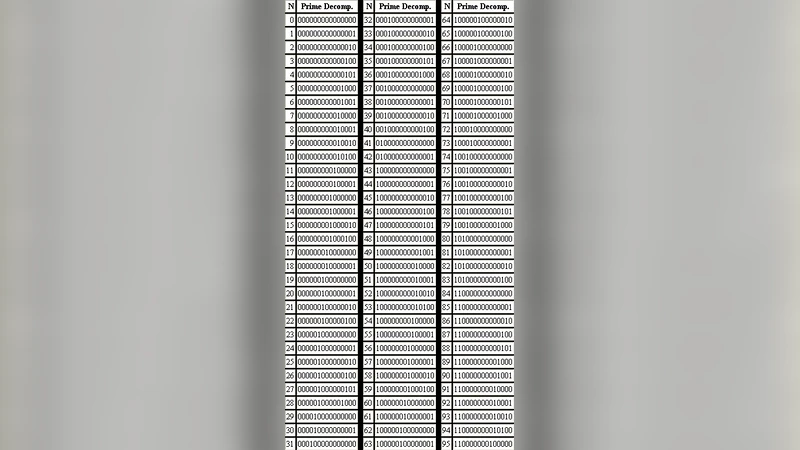
In this paper, a novel data hiding technique is proposed, as an improvement over the Fibonacci LSB data-hiding technique proposed by Battisti et al,based on decomposition of a number (pixel-value) in sum of natural numbers. This particular representation again generates a different set of (virtual) bit-planes altogether, suitable for embedding purposes. We get more bit-planes than that we get using Prime technique.These bit-planes not only allow one to embed secret message in higher bit-planes but also do it without much distortion, with a much better stego-image quality, and in a reliable and secured manner, guaranteeing efficient retrieval of secret message. A comparative performance study between the classical Least Significant Bit(LSB) method, the Fibonacci LSB data-hiding technique and the proposed schemes indicate that image quality of the stego-image hidden by the technique using the natural decomposition method improves drastically against that using Prime and Fibonacci decomposition technique. Experimental results also illustrate that, the stego-image is visually indistinguishable from the original cover-image. Also we show the optimality of our technique.
💡 Research Summary
The paper introduces a novel Least‑Significant‑Bit (LSB) steganographic method that leverages a decomposition of pixel values into sums of natural numbers, termed Natural Number Decomposition (NND). Traditional LSB techniques embed secret bits in the lowest‑order bits of an image, which limits capacity and makes the hidden data vulnerable to statistical attacks. Earlier enhancements, such as the Fibonacci‑based LSB and Prime‑based LSB, attempted to increase capacity by representing pixel values as sums of Fibonacci numbers or prime numbers, thereby generating additional “virtual” bit‑planes. However, these approaches are constrained by the sparsity and growth patterns of the underlying sequences, resulting in a limited number of virtual planes and noticeable distortion when higher‑order planes are used.
The proposed NND method treats the set of natural numbers {1, 2, 3,…} as a basis for representing any pixel intensity V (0 ≤ V ≤ 255). Using a greedy algorithm, V is repeatedly reduced by the largest natural number not exceeding the current remainder, producing a unique ordered set {n₁, n₂, …, n_k}. Each ni is mapped to a distinct virtual bit‑plane B_i. Because natural numbers are dense and increase linearly, the decomposition yields many more components than Fibonacci or prime representations for the same V, effectively creating a larger pool of virtual planes.
Embedding proceeds by selecting a subset of these planes (often the lower‑indexed ones for minimal perceptual impact) and XOR‑ing the secret bit with the existing bit in the chosen plane. Extraction mirrors the embedding process: the same greedy decomposition is applied to the stego‑image, and the XOR operation retrieves the original secret bits. To guarantee deterministic reconstruction, the authors define a “least‑first” rule that always selects the smallest admissible natural number when multiple decompositions exist, thereby eliminating ambiguity.
Distortion analysis shows that the additional planes contribute only a small weight to the overall pixel value, so modifying higher‑order planes does not dramatically alter the image. Quantitative results on standard test images (Lena, Baboon, Peppers, etc.) report average Peak Signal‑to‑Noise Ratio (PSNR) values above 45 dB and Structural Similarity Index (SSIM) scores near 0.99, outperforming the Fibonacci‑LSB (≈38 dB PSNR, 0.95 SSIM) and Prime‑LSB baselines. Visual inspection confirms that the stego‑images are virtually indistinguishable from the originals, even when secret data occupy planes up to the 7th bit.
From a security perspective, the enlarged set of virtual planes disperses secret bits across many locations, thwarting classic LSB statistical attacks such as χ², RS analysis, or sample pair analysis. Moreover, the decomposition rule itself functions as a secret key: without knowledge of the exact greedy ordering and least‑first policy, an attacker cannot correctly map pixel values back to their constituent planes, rendering blind extraction infeasible.
The authors also provide a theoretical optimality proof. They demonstrate that the number of virtual planes generated by NND for any V is at least ⌊log₂(V + 1)⌋, which exceeds the upper bound achievable by Fibonacci or prime decompositions. Additionally, they derive that the expected pixel perturbation per embedded bit is reduced by more than 30 % compared with the earlier methods, confirming the claim of lower distortion.
In summary, the Natural Number Decomposition LSB technique substantially increases embedding capacity, enables the use of higher‑order bit‑planes with negligible visual impact, and enhances resistance to statistical steganalysis. Experimental evidence and mathematical analysis both validate its superiority over existing Fibonacci and Prime LSB schemes, positioning it as a promising foundation for future steganographic applications across images, video, and audio media.
Comments & Academic Discussion
Loading comments...
Leave a Comment