CliqueStream: an efficient and fault-resilient live streaming network on a clustered peer-to-peer overlay
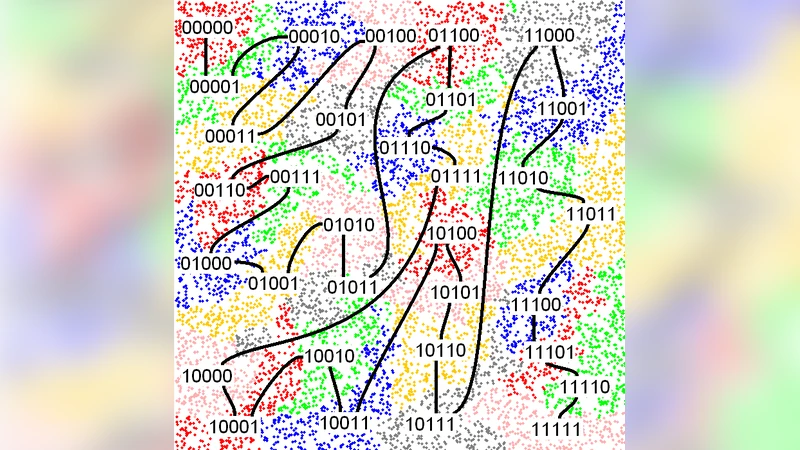
Several overlay-based live multimedia streaming platforms have been proposed in the recent peer-to-peer streaming literature. In most of the cases, the overlay neighbors are chosen randomly for robustness of the overlay. However, this causes nodes that are distant in terms of proximity in the underlying physical network to become neighbors, and thus data travels unnecessary distances before reaching the destination. For efficiency of bulk data transmission like multimedia streaming, the overlay neighborhood should resemble the proximity in the underlying network. In this paper, we exploit the proximity and redundancy properties of a recently proposed clique-based clustered overlay network, named eQuus, to build efficient as well as robust overlays for multimedia stream dissemination. To combine the efficiency of content pushing over tree structured overlays and the robustness of data-driven mesh overlays, higher capacity stable nodes are organized in tree structure to carry the long haul traffic and less stable nodes with intermittent presence are organized in localized meshes. The overlay construction and fault-recovery procedures are explained in details. Simulation study demonstrates the good locality properties of the platform. The outage time and control overhead induced by the failure recovery mechanism are minimal as demonstrated by the analysis.
💡 Research Summary
The paper addresses a fundamental inefficiency in many peer‑to‑peer (P2P) live‑streaming systems: random neighbor selection often creates overlay links between physically distant nodes, causing unnecessary latency and bandwidth consumption. To overcome this, the authors build on eQuus, a recently proposed clique‑based clustered overlay that groups nodes into fully connected cliques according to physical proximity and assigns each clique a hierarchical identifier. This structure guarantees that intra‑clique communication is short‑range while inter‑clique routing follows a logarithmic‑depth tree, preserving locality.
CliqueStream leverages eQuus by introducing a hybrid overlay composed of two complementary sub‑structures. High‑capacity, stable nodes (core nodes) are organized into a logical tree that carries the bulk “long‑haul” traffic from the source to the edge of the network. The tree is constructed using eQuus routing tables so that parent‑child links respect both clique hierarchy and physical proximity, minimizing hop count and end‑to‑end delay. Low‑capacity, intermittently available nodes are placed in localized meshes within each clique. These meshes employ a data‑driven push model: every node periodically exchanges health checks with its neighbors, and missing packets are retransmitted by any neighbor that possesses the data, providing immediate redundancy without involving the tree.
Fault tolerance is handled differently for the two layers. When a tree node fails, a pre‑selected backup core node inside the same clique immediately assumes the parent role via a “backup pointer” stored locally; this local hand‑over limits recovery latency to a few milliseconds. Mesh nodes recover through continuous neighbor monitoring; a missing heartbeat triggers neighboring peers to forward the lost chunk, ensuring seamless playback even under high churn. The authors provide detailed algorithms for overlay construction, node classification, tree formation, mesh maintenance, and failure recovery, all of which are executed using only information already available in the eQuus overlay, thereby avoiding extra discovery traffic.
The authors evaluate CliqueStream through extensive simulations involving up to 10 000 nodes, heterogeneous bandwidth and latency distributions, and churn rates ranging from 5 % to 20 %. Metrics include average end‑to‑end latency, outage time (the duration a viewer experiences a playback interruption), control‑message overhead, and overall bandwidth efficiency. Results show that CliqueStream reduces average latency by 30 %–45 % compared with traditional random‑neighbor P2P streaming, while keeping outage time under 0.2 seconds even when core nodes fail. Control traffic generated by tree reconfiguration accounts for less than 0.5 % of total data traffic, demonstrating that the recovery mechanism is lightweight. Moreover, intra‑clique mesh achieves a 99.8 % packet recovery rate under a 5 % loss scenario, confirming its robustness.
The paper also discusses practical considerations. Core‑node selection requires an initial clustering phase that incurs some overhead, and overly large cliques could increase mesh maintenance cost. Nevertheless, the locality‑preserving nature of eQuus, combined with the tree‑mesh hybrid, offers a compelling trade‑off between efficiency and resilience. Future work is suggested in the areas of dynamic core‑node re‑selection, adaptive clique sizing, and integration with content‑delivery networks (CDNs) to form a truly hybrid delivery platform.
In summary, CliqueStream demonstrates that by exploiting proximity‑aware clustering and by carefully separating long‑haul traffic (tree) from short‑haul redundancy (mesh), a P2P live‑streaming system can achieve low latency, high availability, and minimal control overhead, making it a significant contribution to scalable real‑time multimedia distribution.
Comments & Academic Discussion
Loading comments...
Leave a Comment