Polish grid infrastructure for science and research
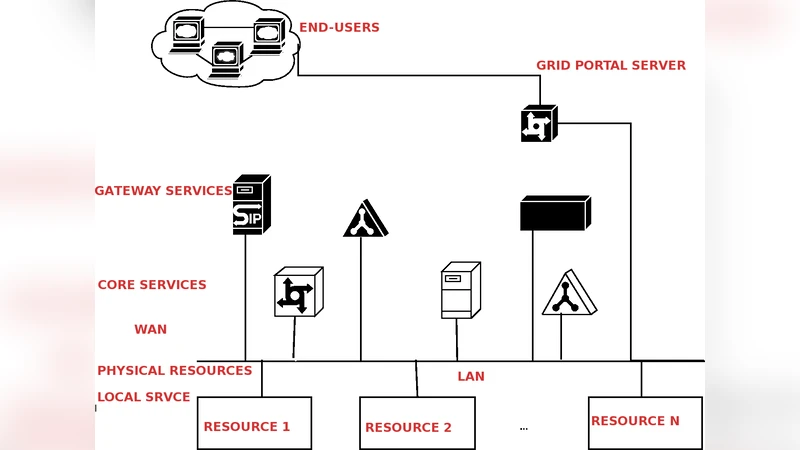
Structure, functionality, parameters and organization of the computing Grid in Poland is described, mainly from the perspective of high-energy particle physics community, currently its largest consumer and developer. It represents distributed Tier-2 in the worldwide Grid infrastructure. It also provides services and resources for data-intensive applications in other sciences.
💡 Research Summary
The paper provides a comprehensive overview of Poland’s national grid infrastructure, emphasizing its role as a Tier‑2 site within the worldwide Grid used by the high‑energy physics (HEP) community. It begins by contextualizing the need for distributed computing in modern science, especially for the massive data volumes generated by the Large Hadron Collider (LHC). Poland’s participation in the Worldwide LHC Computing Grid (WLCG) is described as a strategic national investment that aligns with broader European research initiatives.
The hardware backbone consists of four major data centres located at Warsaw, Kraków, Poznań and Wrocław. Each centre hosts on the order of 2 kCPU cores and 5 PB of storage, employing a mix of Intel and AMD servers together with NVMe‑based disk arrays. Redundant power, cooling and physical security systems ensure high availability.
On the software side, the grid runs a hybrid middleware stack based on gLite and ARC. Workload management is handled by the WMS, HTCondor, and experiment‑specific schedulers such as PanDA for ATLAS and CRAB for CMS. Data management relies on dCache, StoRM and EOS for hierarchical storage, while file transfers are coordinated by the File Transfer Service (FTS) and the Rucio metadata catalogue, guaranteeing consistent replication across Tier‑1 and Tier‑2 sites worldwide. The network layer leverages dedicated 10 Gbps links through GÉANT and the Polish national backbone (PIONIER), with Software‑Defined Networking (SDN) techniques used to optimise traffic flows and minimise latency.
Security is enforced through X.509 certificates and the Virtual Organization Membership Service (VOMS), providing fine‑grained authentication and authorization. Regular vulnerability scans and an intrusion detection system (IDS) protect the infrastructure from external threats. Monitoring combines Nagios, Grafana and the ELK stack to deliver real‑time dashboards of CPU, memory, storage and network utilisation, while automated alerts and predefined recovery procedures keep downtime to a minimum.
Governance is a joint effort between the Polish Computing Science Services (PCSS) and national research funding agencies. A steering committee oversees policy, while dedicated technical support teams manage day‑to‑day operations and user training. The grid’s primary workload originates from the four LHC experiments, where it processes simulated events, performs data re‑reconstruction and supports user analysis.
Beyond HEP, the Polish grid serves other data‑intensive domains. It provides computational resources for genomics projects in collaboration with the European ELIXIR infrastructure, supports high‑resolution climate‑model ensembles, and enables large‑scale molecular dynamics simulations for materials science. These cross‑disciplinary applications demonstrate the grid’s flexibility and its contribution to the national research ecosystem.
Current challenges include hardware lifecycle management, fluctuating budget allocations, and the integration of emerging cloud‑native and containerised workloads. To address these, the authors outline a roadmap that includes deploying an OpenStack‑based hybrid cloud, adopting Kubernetes for container orchestration, and incorporating Apache Spark for real‑time analytics. Strengthening ties with the European Grid Infrastructure (EGI) is also planned to improve resource sharing and interoperability.
In conclusion, the Polish Tier‑2 grid is a mature, reliable component of the global LHC computing fabric, while simultaneously acting as a national platform for a broad spectrum of scientific research. Future developments aim at greater automation, AI‑driven job scheduling, and sustainable operation models, ensuring that Poland remains a vital contributor to the worldwide distributed computing community.
Comments & Academic Discussion
Loading comments...
Leave a Comment