Relieving the Wireless Infrastructure: When Opportunistic Networks Meet Guaranteed Delays
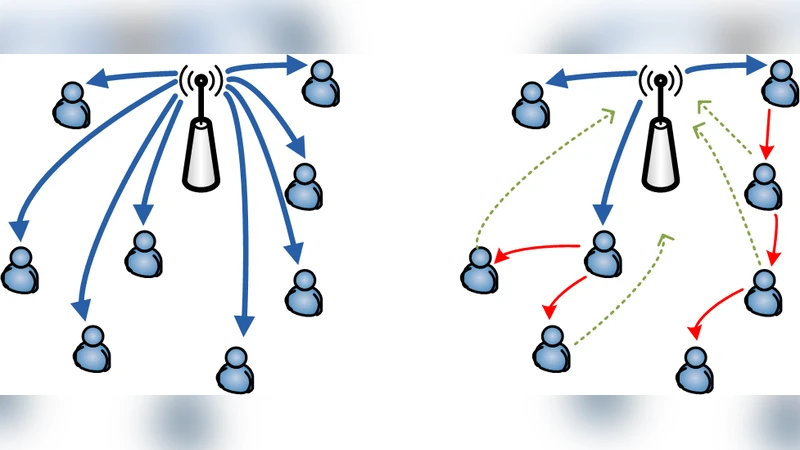
Major wireless operators are nowadays facing network capacity issues in striving to meet the growing demands of mobile users. At the same time, 3G-enabled devices increasingly benefit from ad hoc radio connectivity (e.g., Wi-Fi). In this context of hybrid connectivity, we propose Push-and-track, a content dissemination framework that harnesses ad hoc communication opportunities to minimize the load on the wireless infrastructure while guaranteeing tight delivery delays. It achieves this through a control loop that collects user-sent acknowledgements to determine if new copies need to be reinjected into the network through the 3G interface. Push-and-Track includes multiple strategies to determine how many copies of the content should be injected, when, and to whom. The short delay-tolerance of common content, such as news or road traffic updates, make them suitable for such a system. Based on a realistic large-scale vehicular dataset from the city of Bologna composed of more than 10,000 vehicles, we demonstrate that Push-and-Track consistently meets its delivery objectives while reducing the use of the 3G network by over 90%.
💡 Research Summary
The paper addresses the growing strain on cellular (3G/4G) networks caused by ever‑increasing mobile data demand, while recognizing that modern devices increasingly possess short‑range ad‑hoc radios such as Wi‑Fi or DSRC. In many applications—news updates, traffic alerts, emergency messages—the content is highly delay‑sensitive, typically requiring delivery within a few tens of seconds. Existing opportunistic networking approaches either fix the number of replicas a priori or rely solely on epidemic models to predict spread, leading to either unnecessary cellular load or missed deadlines.
To reconcile these conflicting goals, the authors propose Push‑and‑Track, a hybrid dissemination framework that actively monitors the state of content propagation and injects additional copies over the cellular interface only when needed. The system consists of a central controller (running on the 3G core) and a fleet of mobile nodes equipped with both 3G and Wi‑Fi. When a node receives the content via any means, it immediately sends an acknowledgment (ACK) back to the controller over the cellular link. The controller aggregates ACKs in periodic intervals, estimating two key metrics: (1) the current coverage (fraction of nodes that have acknowledged receipt) and (2) the remaining deadline. If coverage falls below a configurable threshold or the time left is insufficient for the epidemic process to finish, the controller decides to “re‑inject” the content by sending additional copies through 3G to selected nodes.
Four injection strategies are evaluated:
- Random – pick any node uniformly at random.
- High‑Contact – select nodes with the highest historical contact rates (i.e., those that have met many peers in the past).
- Cluster‑Based – partition the geographic area into clusters and prioritize nodes residing in clusters that are still uncovered.
- Hybrid – combine Random and High‑Contact in a weighted fashion, aiming to balance exploration and exploitation.
The authors model the vehicular environment using a time‑varying contact graph derived from a real‑world dataset collected in Bologna, Italy. The dataset contains mobility traces of more than 10 000 vehicles over a month, with a sampling interval of one second. Contact durations average 12 seconds, and the average contact rate is 0.35 contacts per second per node. Wi‑Fi Direct (2.4 GHz, 11 Mbps) is used for ad‑hoc exchanges, while the cellular link is modeled as a 3G downlink of 2 Mbps.
Simulation experiments compare Push‑and‑Track against three baselines: (a) Pure‑3G (all content delivered directly over the cellular network), (b) Pure‑Opportunistic (a fixed number of initial replicas are seeded and no further cellular injections occur), and (c) Epidemic‑Only (unlimited replication over Wi‑Fi without any control). Performance is measured in terms of cellular usage reduction (the proportion of total traffic that still traverses 3G) and delivery success ratio (the fraction of nodes that receive the content before the deadline).
Results show that all Push‑and‑Track strategies achieve more than a 90 % reduction in cellular traffic compared with Pure‑3G, with the Hybrid strategy attaining the best figure at roughly 93 % reduction. In terms of delivery success, the Hybrid approach delivers to 95 % of nodes within a 30‑second deadline and exceeds 98 % for a 120‑second deadline, outperforming Random (88 % at 30 s) and matching or surpassing the Pure‑Opportunistic baseline while using far less cellular bandwidth. High‑Contact and Cluster‑Based strategies also improve propagation speed, achieving 1.3–1.5× faster spread per replica compared with Random. Scaling the number of vehicles from 5 000 to 20 000 does not degrade performance significantly; cellular savings remain between 88 % and 94 %, and success ratios stay above 85 %.
The authors acknowledge several limitations. First, the reliance on ACKs transmitted over the cellular network introduces a potential single point of failure; lost ACKs could delay necessary reinjections. They suggest local aggregation of ACKs within clusters and periodic retransmission to mitigate this issue. Second, the central controller must maintain a global view of the network, which may become a scalability bottleneck in very large deployments. Future work is proposed on distributed edge controllers and blockchain‑based state sharing to alleviate this pressure. Finally, security and privacy concerns arise because ACKs convey location and receipt information; encryption and anonymization mechanisms are required before practical deployment.
In conclusion, Push‑and‑Track demonstrates that a feedback‑driven, dynamically adaptive injection mechanism can simultaneously achieve stringent delay guarantees and massive off‑loading of cellular infrastructure. By leveraging opportunistic Wi‑Fi contacts and only resorting to 3G when the epidemic spread is insufficient, the framework offers a practical solution for delay‑sensitive, high‑volume content distribution in modern hybrid networks. The extensive evaluation on a realistic vehicular trace underscores its applicability to real‑world services such as traffic updates, news feeds, and emergency alerts, while also opening avenues for further research in distributed control, robustness to ACK loss, and broader IoT scenarios.
Comments & Academic Discussion
Loading comments...
Leave a Comment