Improving controllability of complex networks by rewiring links regularly
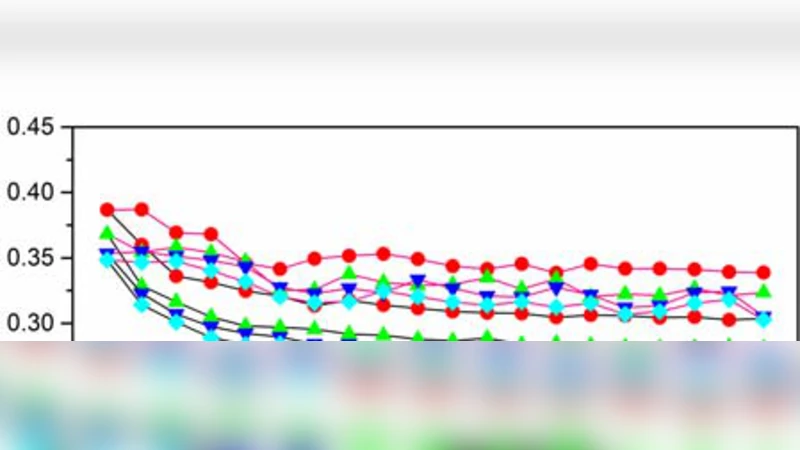
Network science have constantly been in the focus of research for the last decade, with considerable advances in the controllability of their structural. However, much less effort has been devoted to study that how to improve the controllability of complex networks. In this paper, a new algorithm is proposed to improve the controllability of complex networks by rewiring links regularly which transforms the network structure. Then it is demonstrated that our algorithm is very effective after numerical simulation experiment on typical network models (Erd"os-R'enyi and scale-free network). We find that our algorithm is mainly determined by the average degree and positive correlation of in-degree and out-degree of network and it has nothing to do with the network size. Furthermore, we analyze and discuss the correlation between controllability of complex networks and degree distribution index: power-law exponent and heterogeneity
💡 Research Summary
The paper addresses a gap in the literature on complex‑network controllability: while structural controllability theory has identified the minimum number of driver nodes (the size of a minimum input set, MIS) required to control a network, few studies have examined how to deliberately reshape a network to reduce this number. To fill this void, the authors propose a “regular link rewiring” algorithm that modifies the topology while preserving the total number of edges and each node’s in‑ and out‑degree. The procedure selects two directed edges (u→v and x→y), removes them, and inserts the crossed edges u→y and x→v. This operation keeps the degree sequence unchanged but tends to increase the Pearson correlation between in‑degree and out‑degree (ρ), effectively concentrating high‑degree nodes as hubs with both strong inbound and outbound connectivity.
The theoretical motivation rests on the maximum‑matching formulation of structural controllability (Liu, Slotine & Barabási, 2011). In a directed graph, each matched edge reduces the number of unmatched nodes, which become driver nodes. By increasing ρ, the rewiring creates more opportunities for edges to be part of a maximum matching, thereby shrinking the MIS.
The authors evaluate the algorithm on two canonical network families: Erdős‑Rényi (ER) random graphs and scale‑free (SF) networks generated by the Barabási‑Albert preferential‑attachment mechanism. For ER graphs, they vary the average degree ⟨k⟩ from 2 to 8; for SF graphs, they vary the power‑law exponent γ (2.1–3.0) and the heterogeneity index H. In each case, they compare the driver‑node fraction D/N before and after rewiring, and also benchmark against a naïve random rewiring that preserves the degree sequence but does not target ρ.
Key findings are:
-
Average degree dependence – The reduction in driver nodes grows monotonically with ⟨k⟩. When ⟨k⟩≈4–6, the regular rewiring cuts D/N by more than 30 % relative to the original network. This reflects the well‑known fact that denser graphs admit larger matchings, and the algorithm amplifies this effect.
-
In‑out degree correlation – Positive ρ is the primary determinant of success. Networks with ρ≈0.4–0.6 experience the largest MIS shrinkage. The rewiring explicitly raises ρ by aligning high‑in‑degree nodes with high‑out‑degree nodes, turning them into “control hubs.”
-
Size independence – Simulations with N ranging from 1 000 to 10 000 show virtually identical relative reductions in D/N, indicating that the algorithm’s efficacy does not deteriorate with scale.
-
Impact of degree distribution – In SF networks, smaller γ (more heavy‑tailed degree distribution) and larger heterogeneity H amplify the benefit. When γ≈2.1, a few ultra‑high‑degree nodes dominate, and the rewiring dramatically boosts ρ, yielding up to a 45 % drop in driver nodes. Conversely, for γ≈3.0 (near‑uniform degree), the effect is modest.
-
Comparison with random rewiring – For identical edge‑count changes, the regular rewiring outperforms random rewiring by roughly 1.5× in reducing D/N, confirming that targeting degree‑correlation, not merely edge shuffling, is essential.
The paper concludes that controllability can be substantially improved through inexpensive topological adjustments that preserve local degree statistics while enhancing global in‑out degree alignment. This insight has practical relevance for engineered systems such as power grids, traffic networks, and synthetic biological circuits, where adding or moving a limited number of links may lower the number of actuators needed for full control. The authors suggest future work on (i) cost‑aware rewiring where each edge addition/removal carries a physical expense, (ii) dynamic networks where edges appear/disappear over time, and (iii) analytical bounds linking ρ, ⟨k⟩, and the minimum driver‑node fraction. Overall, the study provides a clear, algorithmic pathway from abstract controllability theory to actionable network design.
Comments & Academic Discussion
Loading comments...
Leave a Comment