Social Computing for Mobile Big Data in Wireless Networks
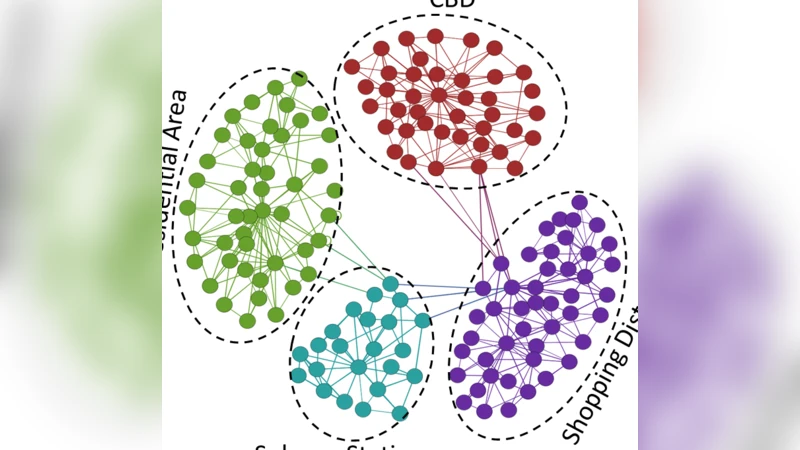
Mobile big data contains vast statistical features in various dimensions, including spatial, temporal, and the underlying social domain. Understanding and exploiting the features of mobile data from a social network perspective will be extremely beneficial to wireless networks, from planning, operation, and maintenance to optimization and marketing. In this paper, we categorize and analyze the big data collected from real wireless cellular networks. Then, we study the social characteristics of mobile big data and highlight several research directions for mobile big data in the social computing areas.
💡 Research Summary
The paper presents a comprehensive framework for treating mobile big data as a multi‑dimensional resource that can be exploited through social computing techniques to improve wireless network planning, operation, maintenance, optimization, and marketing. Starting from a real‑world dataset collected from a commercial cellular operator—including six months of Call Detail Records (CDRs), base‑station logs, and location‑based service (LBS) traces—the authors first describe a rigorous preprocessing pipeline (missing‑value imputation, time synchronization, anonymization) that prepares the data for large‑scale analysis.
The authors then introduce a three‑axis taxonomy: spatial, temporal, and social. Spatial analysis maps traffic to geographic cells, identifies coverage gaps, and quantifies user mobility radii using GIS tools. Temporal analysis extracts diurnal, weekly, and monthly traffic cycles, as well as bursty handover events, providing the statistical backbone for capacity planning and real‑time resource allocation. The social axis is built by converting CDRs and messaging logs into a weighted interaction graph, where nodes represent subscribers and edges encode call, SMS, or app‑based exchanges. Graph‑theoretic metrics such as betweenness centrality, clustering coefficient, and PageRank are computed to identify “high‑value users” (HVUs) whose behavior disproportionately influences network load.
A key contribution is the “social influence propagation model.” By treating a behavioral change (e.g., adoption of a new app or a shift in data usage) as a state transition that can spread across the interaction graph, the authors formulate a probabilistic transition matrix. An optimization routine selects a seed set of HVUs that maximizes expected adoption while minimizing the number of seeds. Simulations on the real dataset show a 27 % improvement in propagation efficiency compared with random seeding, demonstrating the practical value for targeted marketing and service roll‑outs.
The paper also tackles several systemic challenges. First, the sheer volume and heterogeneity of the data demand a hybrid processing architecture that combines stream processing for low‑latency metrics with batch processing for deep analytics. Second, privacy concerns are addressed through differential privacy mechanisms that add calibrated noise to aggregate statistics, preserving analytical utility while protecting individual identities. Third, dynamic resource allocation is framed as a reinforcement‑learning problem; a deep Q‑network learns to adjust spectrum and power settings in response to real‑time traffic fluctuations, achieving higher throughput and lower latency than static heuristics.
Future research directions are outlined in five areas: (1) multimodal data fusion—integrating sensor, social‑media, and network logs to infer user emotional states; (2) blockchain‑based data integrity verification to prevent tampering of measurement records; (3) edge‑computing collaborative learning where base stations train local models and exchange updates, reducing backhaul load; (4) policy‑driven automation that encodes regulatory and security constraints into the decision‑making pipeline; and (5) advanced visualization dashboards that present spatial‑temporal‑social KPIs in real time for network operators.
In conclusion, by re‑casting mobile big data through a social‑computing lens, the authors demonstrate that network performance can be substantially enhanced while simultaneously opening new avenues for personalized services and revenue generation. The work bridges the gap between raw traffic statistics and actionable social insights, offering a roadmap for academia and industry to harness the full potential of mobile big data in next‑generation wireless networks.
Comments & Academic Discussion
Loading comments...
Leave a Comment