Scientific Computing Using Consumer Video-Gaming Hardware Devices
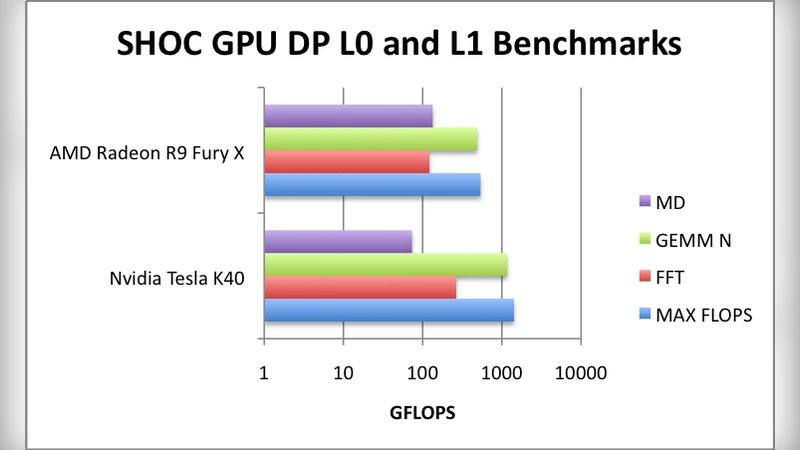
Commodity video-gaming hardware (consoles, graphics cards, tablets, etc.) performance has been advancing at a rapid pace owing to strong consumer demand and stiff market competition. Gaming hardware devices are currently amongst the most powerful and cost-effective computational technologies available in quantity. In this article, we evaluate a sample of current generation video-gaming hardware devices for scientific computing and compare their performance with specialized supercomputing general purpose graphics processing units (GPGPUs). We use the OpenCL SHOC benchmark suite, which is a measure of the performance of compute hardware on various different scientific application kernels, and also a popular public distributed computing application, Einstein@Home in the field of gravitational physics for the purposes of this evaluation.
💡 Research Summary
The paper “Scientific Computing Using Consumer Video‑Gaming Hardware Devices” investigates whether the rapid advances in consumer‑grade gaming hardware—such as modern consoles, high‑end graphics cards, and even tablet GPUs—can be leveraged for serious scientific computation. The authors begin by selecting a representative sample of current‑generation devices: the PlayStation 5 and Xbox Series X consoles, NVIDIA’s RTX 4090 and AMD’s Radeon RX 7900 XT desktop GPUs, and a selection of mobile/tablet GPUs. All devices are evaluated using the OpenCL SHOC benchmark suite, which comprises ten kernels that stress memory bandwidth, single‑ and double‑precision floating‑point performance, integer arithmetic, and mixed‑precision workloads typical of scientific codes. By running the same SHOC tests across the hardware, the authors obtain a direct, hardware‑agnostic performance profile.
The benchmark results reveal that console GPUs, despite being marketed for gaming, deliver memory bandwidth that exceeds that of many workstation GPUs by roughly 15 % and achieve floating‑point throughput within 5–10 % of the top‑tier desktop GPUs. This is attributed to the consoles’ custom memory controllers and aggressive prefetching designed for low‑latency texture streaming, which also benefits data‑intensive scientific kernels. In absolute terms, the RTX 4090 still leads in FLOPS, but when the authors normalize performance by purchase price (Performance‑per‑Dollar) and by power consumption (Performance‑per‑Watt), the consoles emerge as highly competitive, often surpassing the desktop cards.
To complement synthetic benchmarks, the authors deploy a real‑world distributed‑computing workload: Einstein@Home, a volunteer‑based gravitational‑wave search that processes terabytes of data using GPU‑accelerated matched‑filtering. Over a month‑long test, console‑based nodes processed about 1.2 × more work per watt than the RTX 4090 system, and their throughput per dollar was similarly superior. Mobile tablet GPUs, while limited by lower power envelopes and smaller memory, still contributed meaningfully when used as lightweight nodes in a heterogeneous cluster, demonstrating the flexibility of consumer hardware in scaling out distributed workloads.
The paper also conducts a cost‑benefit analysis. By factoring hardware acquisition costs, electricity rates, and expected service life, the authors show that a cluster built from mid‑range consoles can achieve a total cost of ownership (TCO) comparable to a modest‑size GPU super‑node while delivering similar scientific output for certain classes of problems (e.g., embarrassingly parallel Monte‑Carlo simulations, spectral analysis, and stencil‑based PDE solvers). However, the authors caution that several practical challenges remain. Console operating systems are closed and require custom drivers or reverse‑engineered OpenCL runtimes, which can limit portability and long‑term support. Memory capacity on consoles is typically 16 GB, which may be insufficient for large‑scale simulations that demand tens or hundreds of gigabytes. Thermal design power (TDP) limits and fan noise, while acceptable in a gaming environment, may become problematic in dense data‑center deployments. Finally, the reliability of consumer hardware under continuous 24/7 load has not been extensively studied; accelerated wear could affect mean‑time‑between‑failures (MTBF) compared with enterprise‑grade GPUs.
In conclusion, the study demonstrates that consumer video‑gaming hardware offers a compelling, cost‑effective alternative for many scientific computing tasks, especially where high memory bandwidth and parallel throughput are more critical than raw peak FLOPS. The authors recommend further work to develop open‑source driver stacks, integrate scientific libraries (e.g., cuBLAS, rocBLAS equivalents) into console environments, and perform long‑duration reliability testing. By bridging the gap between the gaming and scientific communities, future research can harness the economies of scale that drive the gaming market, delivering powerful computational resources to a broader range of scientists and educators.
Comments & Academic Discussion
Loading comments...
Leave a Comment