Classical Scaling Symmetry Implies Useful Nonconservation Laws
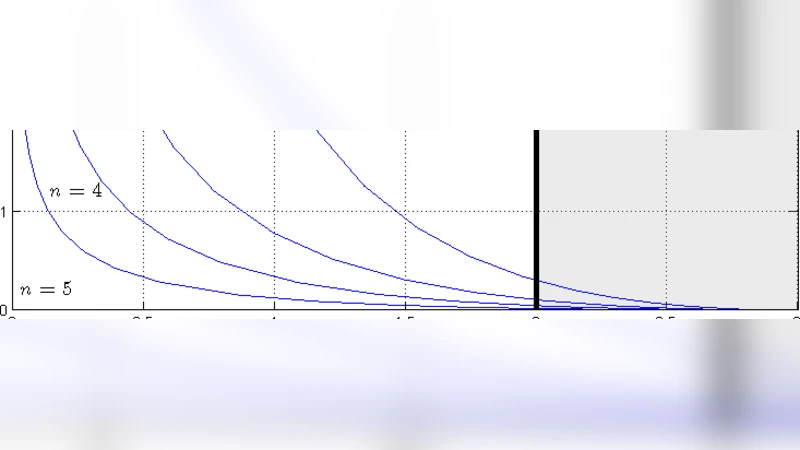
Scaling symmetries of the Euler-Lagrange equations are generally not variational symmetries of the action and do not lead to conservation laws. Nevertheless, by an extension of Noether’s theorem, scaling symmetries lead to useful {\em nonconservation} laws, which still reduce the Euler-Lagrange equations to first order in terms of scale invariants. We illustrate scaling symmetry dynamically and statically. Applied dynamically to systems of bodies interacting via central forces, the nonconservation law is Lagrange’s identity, leading to generalized virial laws. Applied to self-gravitating spheres in hydrostatic equilibrium, the nonconservation law leads to well-known properties of polytropes describing degenerate stars and chemically homogeneous nondegenerate stellar cores.
💡 Research Summary
The paper investigates a class of symmetries—scale (or dilation) transformations—that leave the Euler‑Lagrange equations invariant but do not constitute variational symmetries of the action. Because Noether’s original theorem links only variational symmetries to conserved quantities, a pure scaling symmetry does not generate a conventional conservation law such as energy or momentum. The authors show, however, that by extending Noether’s argument one can still derive a useful “non‑conservation law’’ of the form
\
Comments & Academic Discussion
Loading comments...
Leave a Comment