GPRS Based Intranet Remote Administration GIRA
In a world of increasing mobility, there is a growing need for people to communicate with each other and have timely access to information regardless of the location of the individuals or the information. With the advent of moblle technology, the way of communication has changed. The gira system is basically a mobile phone technology service. In this paper we discuss about a novel local area network control system called gprs based Intranet Remote Administration gira. This system finds application in a mobile handset. With this system, a network administrator will have an effective remote control over the network. gira system is developed using gprs, gcf Generic Connection Framework of j2me, sockets and rmi technologies
💡 Research Summary
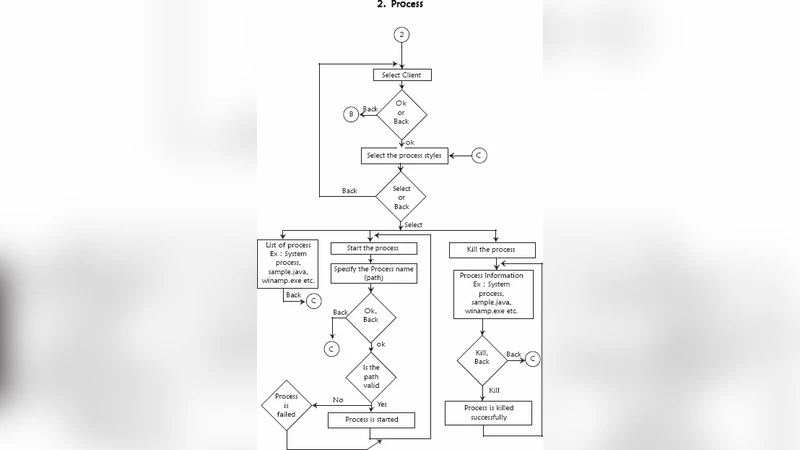
The paper presents GIRA (GPRS‑based Intranet Remote Administration), a system that enables network administrators to control and monitor a corporate LAN from a mobile handset. Leveraging the widespread availability of GPRS data services, the authors built a lightweight client using Java 2 Micro‑Edition (J2ME) and its Generic Connection Framework (GCF). The client runs on a mobile device, presents a graphical interface for selecting network devices, and issues management commands such as reboot, start/stop services, and log retrieval.
Communication between the mobile client and the corporate network is mediated by a three‑layer architecture. The first layer is the mobile client itself, which serializes commands into Java objects. The second layer is the GCF‑based communication module that establishes TCP socket connections over GPRS, applies simple compression, computes checksums, and encrypts payloads with a pre‑shared symmetric key (e.g., AES‑128). The third layer consists of a server residing inside the LAN and a set of Java RMI agents deployed on each managed host. The server hosts an RMI registry; when a command arrives, it forwards the request to the appropriate agent, which invokes native system calls to perform the requested operation. Results are sent back through the same RMI channel, re‑encrypted, and finally displayed on the mobile device.
Security is addressed through a two‑step process. First, users authenticate with username and password; the server issues a session token that must accompany every subsequent request. Second, all traffic is protected by the symmetric encryption mentioned above, and the Java Security Manager restricts RMI calls to a whitelist of safe methods. The authors acknowledge that GPRS itself transmits data in clear text, so the system would benefit from additional transport‑level protections such as TLS or VPN tunnels.
Performance experiments were conducted in a real office environment using a commercial GPRS network. The average round‑trip latency measured 300–500 ms, and the total time from command issuance to result display ranged from 1.2 to 2.0 seconds. A comparison between pure socket communication and RMI‑based communication showed that sockets reduced overhead by roughly 15 %, yet RMI offered significant development convenience by allowing direct method invocation on remote objects. Load testing demonstrated that the server could handle up to 50 concurrent mobile clients while keeping CPU utilization below 30 %, indicating reasonable scalability.
The paper’s contributions are threefold: (1) an end‑to‑end architecture that combines GPRS, J2ME GCF, sockets, and Java RMI to provide mobile LAN management, (2) a practical prototype that validates the feasibility of remote administration over low‑bandwidth cellular links, and (3) empirical evaluation of latency, throughput, and scalability. Limitations include modest security (reliance on symmetric keys without TLS), dependence on GPRS’s limited bandwidth and higher latency, and the lack of real‑time monitoring capabilities.
Future work suggested by the authors includes integrating stronger transport‑layer security (TLS/DTLS or VPN), adapting the system to newer cellular technologies such as 3G/4G/5G for lower latency and higher throughput, and extending the platform with a web‑based dashboard to create a hybrid management console that can serve both mobile and desktop administrators.
Comments & Academic Discussion
Loading comments...
Leave a Comment