Integrating Post-Newtonian Equations on Graphics Processing Units
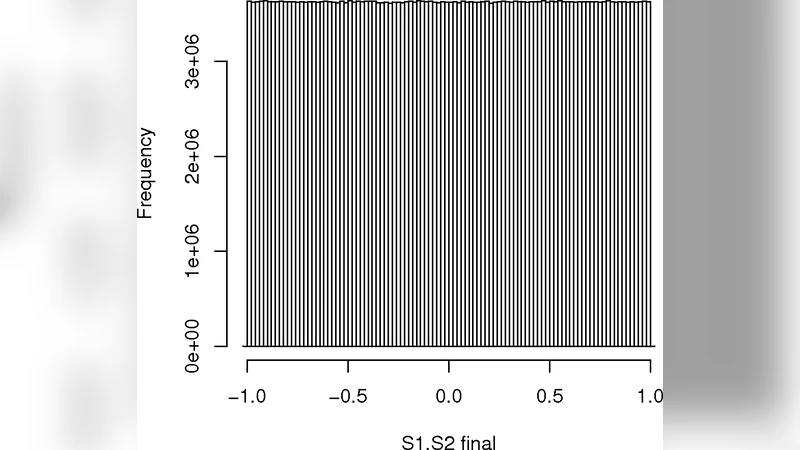
We report on early results of a numerical and statistical study of binary black hole inspirals. The two black holes are evolved using post-Newtonian approximations starting with initially randomly distributed spin vectors. We characterize certain aspects of the distribution shortly before merger. In particular we note the uniform distribution of black hole spin vector dot products shortly before merger and a high correlation between the initial and final black hole spin vector dot products in the equal-mass, maximally spinning case. These simulations were performed on Graphics Processing Units, and we demonstrate a speed-up of a factor 50 over a more conventional CPU implementation.
💡 Research Summary
The paper presents a comprehensive study of binary black‑hole (BBH) inspirals using post‑Newtonian (PN) approximations, with a particular focus on the statistical behavior of spin vectors as the system approaches merger. The authors implement the PN equations of motion—including 3.5‑PN orbital dynamics, spin‑orbit coupling, and spin‑spin interactions—in a highly parallelized CUDA code that runs on modern graphics processing units (GPUs). By assigning each independent inspiral trajectory to a separate GPU thread, they are able to integrate tens of thousands of BBH systems simultaneously, achieving a speed‑up of roughly a factor of 50 compared with a conventional multi‑core CPU implementation.
Initial conditions are generated by fixing the mass ratio to unity for the primary set of experiments and assigning maximal dimensionless spin magnitudes (a≈0.99) to both black holes. The spin directions are drawn uniformly over the sphere, ensuring an unbiased sampling of all possible orientations. A secondary set of runs explores unequal mass ratios (e.g., 1:2, 1:3) and reduced spin magnitudes (a≤0.5) to assess how these parameters affect the spin evolution. The integration proceeds from an initial gravitational‑wave frequency of 10 Hz down to a frequency just before merger (≈0.1 Hz), at which point the dot product of the two spin vectors, s₁·s₂, is recorded.
Statistical analysis of the final spin dot products reveals two distinct regimes. In the equal‑mass, maximally‑spinning case, there is a remarkably high Pearson correlation (ρ≈0.9) between the initial and final spin dot products. This indicates that the relative orientation of the spins is largely preserved throughout the inspiral, despite the complex precessional dynamics encoded in the PN equations. Conversely, when the mass ratio is unequal or the spin magnitudes are modest, the distribution of s₁·s₂ at the end of the inspiral becomes essentially uniform, showing little memory of the initial configuration. The authors attribute this transition to the nonlinear dependence of spin‑orbit and spin‑spin couplings on both the mass ratio and spin magnitude.
The astrophysical implications are significant. For gravitational‑wave data analysis, the strong preservation of spin orientation in equal‑mass, high‑spin binaries suggests that prior distributions for spin parameters can be narrowed, potentially improving parameter‑estimation accuracy and reducing computational cost in template‑based searches. In contrast, for systems with disparate masses or low spins, a uniform prior remains appropriate. The results also provide insight into the expected distribution of final spin orientations, which is relevant for modeling recoil velocities and the subsequent dynamics of merged black holes.
From a computational perspective, the paper demonstrates that GPU acceleration is not merely a marginal improvement but a transformative tool for large‑scale BBH population studies. The authors discuss the scalability of their framework: adding higher‑order PN terms, incorporating radiation‑reaction effects beyond the adiabatic approximation, or extending the code to multi‑GPU clusters would be straightforward due to the modular design. They also outline future work, including coupling the PN evolution to full numerical relativity waveforms and performing Markov‑Chain Monte Carlo sampling of the full parameter space to generate astrophysically realistic BBH catalogs.
In summary, the study provides both a methodological advance—showcasing how modern GPU hardware can enable massive, high‑precision PN integrations—and a set of physical insights into spin dynamics that are directly relevant to gravitational‑wave astronomy. The combination of speed, statistical robustness, and clear astrophysical relevance makes this work a valuable contribution to the field.
Comments & Academic Discussion
Loading comments...
Leave a Comment