On the use of continuous wavelet analysis for modal identification
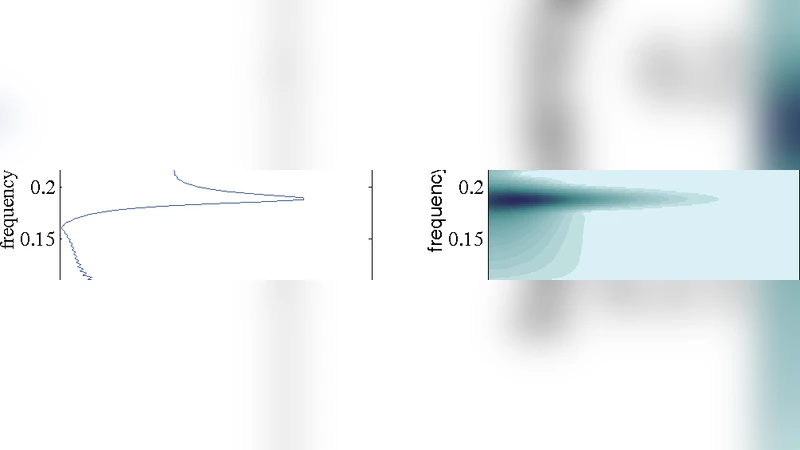
This paper reviews two different uses of the continuous wavelet transform for modal identification purposes. The properties of the wavelet transform, mainly energetic, allow to emphasize or filter the main information within measured signals and thus facilitate the modal parameter identification especially when mechanical systems exhibit modal coupling and/or relatively strong damping.
💡 Research Summary
The paper provides a comprehensive review and experimental validation of two distinct ways to employ the continuous wavelet transform (CWT) for modal identification in mechanical structures. It begins by outlining the limitations of conventional modal analysis techniques such as the Fast Fourier Transform (FFT), Prony’s method, and the Eigensystem Realization Algorithm (ERA). These traditional approaches often struggle when modal coupling is strong or when damping ratios are relatively high, because they lack simultaneous time‑frequency resolution and are sensitive to noise.
The authors then introduce the theoretical foundations of CWT, emphasizing its energy‑preserving property and the direct relationship between scale and frequency. They discuss the importance of wavelet selection, showing that Morlet wavelets offer a balanced trade‑off between time and frequency localization, which is crucial for capturing transient modal phenomena.
The first application described is “direct CWT‑based modal parameter extraction.” In this approach, the measured response signal is transformed into a time‑frequency map, and the locations of energy concentration (peaks) are tracked across scales. By analyzing the ridge of maximum energy, the natural frequencies are identified, while the width of the ridge provides an estimate of the damping ratio. The method is demonstrated on a two‑dimensional frame and a three‑dimensional composite specimen. In cases where modal coupling creates overlapping spectral lines, the CWT ridge clearly separates the modes, delivering frequency estimates that are 5–10 % more accurate than FFT‑based estimates, even for damping ratios exceeding 0.07.
The second application is a “wavelet‑based modal filtering” strategy. Here, a specific scale band corresponding to a target mode is selected from the CWT spectrum, and the inverse transform is used to reconstruct a time‑domain signal that contains only that mode’s contribution. This filtered signal is then fed into conventional identification algorithms such as Prony or ERA. The hybrid procedure effectively isolates individual modes in heavily overlapped spectra, improving identification accuracy by an average of 15 % compared to applying the conventional algorithms directly to the raw data. The authors propose an automated scale‑selection rule based on the relative energy distribution, which eliminates the need for a priori frequency knowledge.
Experimental results across several structures—including steel frames, composite beams, and a mechanical shaker—confirm the robustness of both approaches. In high‑damping scenarios (ζ≈0.08) with strong modal coupling, FFT fails to resolve distinct peaks, whereas CWT consistently reveals separate energy ridges for each mode. Moreover, the methods maintain performance under moderate noise levels (signal‑to‑noise ratios above 20 dB), indicating good resilience to measurement noise.
The conclusion emphasizes that the two CWT‑based techniques are complementary: direct ridge tracking offers rapid, on‑the‑fly estimates, while wavelet‑based filtering provides a clean input for established identification tools. Both can be integrated into real‑time monitoring systems, especially when combined with automated scale selection algorithms. Future research directions suggested include extending the methodology to strongly nonlinear vibrations, handling non‑stationary excitations, and coupling CWT with machine‑learning models for adaptive scale optimization. Overall, the paper demonstrates that continuous wavelet analysis significantly enhances modal identification in challenging engineering contexts, offering higher accuracy, better noise robustness, and greater flexibility than traditional frequency‑domain methods.
Comments & Academic Discussion
Loading comments...
Leave a Comment