Marginalization and Conditioning for LWF Chain Graphs
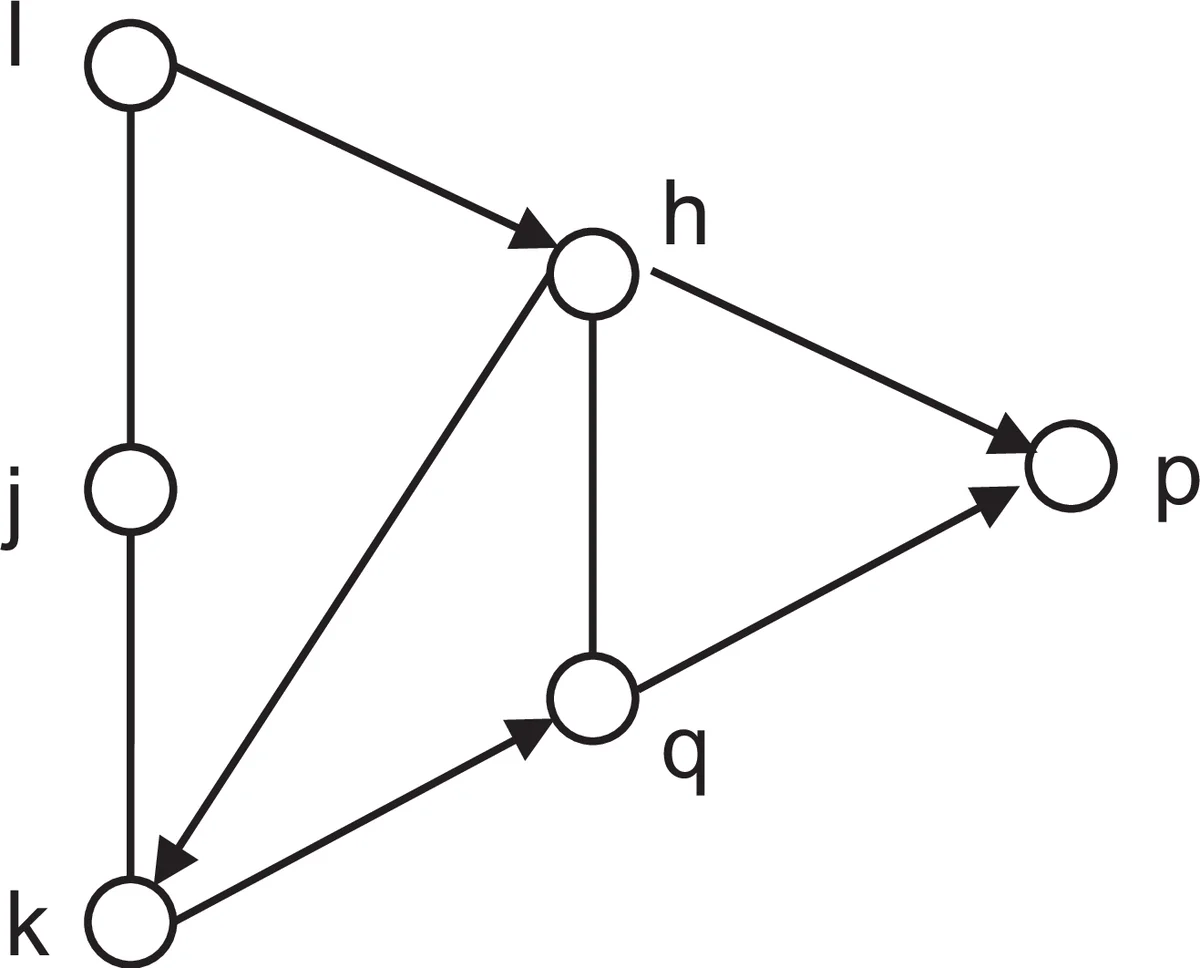
In this paper, we deal with the problem of marginalization over and conditioning on two disjoint subsets of the node set of chain graphs (CGs) with the LWF Markov property. For this purpose, we define the class of chain mixed graphs (CMGs) with three types of edges and, for this class, provide a separation criterion under which the class of CMGs is stable under marginalization and conditioning and contains the class of LWF CGs as its subclass. We provide a method for generating such graphs after marginalization and conditioning for a given CMG or a given LWF CG. We then define and study the class of anterial graphs, which is also stable under marginalization and conditioning and contains LWF CGs, but has a simpler structure than CMGs.
💡 Research Summary
This paper addresses a fundamental problem in graphical models based on chain graphs (CGs) with the Lauritzen-Wermuth-Frydenberg (LWF) Markov property: how to represent the conditional independence structure that remains after marginalizing over or conditioning on a subset of variables. The authors identify that while LWF CGs are stable under conditioning (i.e., the resulting model can be represented by another LWF CG), they are not stable under marginalization. To solve this, the paper introduces and rigorously studies two new, more expressive classes of mixed graphs.
The first major contribution is the definition of the class of Chain Mixed Graphs (CMGs). CMGs extend LWF CGs by allowing three types of edges: directed edges (arrows), undirected edges (lines), and bi-directed edges (arcs). The authors define a new separation criterion, called m-separation, for this class. They prove that the class of CMGs is stable under both marginalization and conditioning. This means that for any CMG (or LWF CG, which is a subclass), applying marginalization and/or conditioning to a set of nodes results in an independence model that can be exactly represented by another CMG. The paper provides explicit and constructive algorithms to generate this resulting CMG from the original graph.
The second significant contribution is the introduction and analysis of the Anterial Graphs class. This is a subclass of CMGs with a simpler structure (e.g., it forbids directed cycles consisting only of arcs). Anterial graphs are also proven to be stable under marginalization and conditioning and contain LWF CGs. Their simpler form makes them potentially more interpretable. Specific algorithms for transforming an anterial graph after marginalization or conditioning are also provided.
The paper is structured as follows: It begins with an introduction motivating the need for these richer graph classes, especially for modeling latent variables (via marginalization). Background on graph theory and mixed graphs is provided. The LWF Markov property for CGs is reviewed using two equivalent separation criteria (moralization and c-separation). The core of the paper then details the definition, properties (especially stability), and transformation algorithms for CMGs, first for marginalization, then for conditioning, and finally for their combination. Subsequently, the anterial graph class is defined and its analogous properties and algorithms are presented. The final discussion section explores implications for probabilistic models faithful to these graphs and suggests directions for extending existing parameterizations to these new classes.
In summary, this work provides a comprehensive graphical framework for handling marginalization and conditioning in models originally described by LWF chain graphs. By defining the CMG and Anterial Graph classes with their m-separation criterion and transformation algorithms, it offers a complete and practical solution for representing the altered independence structures, thereby enhancing the toolbox for analysis involving latent variables or conditioned observations in complex statistical models.
Comments & Academic Discussion
Loading comments...
Leave a Comment