Can Gravity Distinguish between Dirac and Majorana Neutrinos?
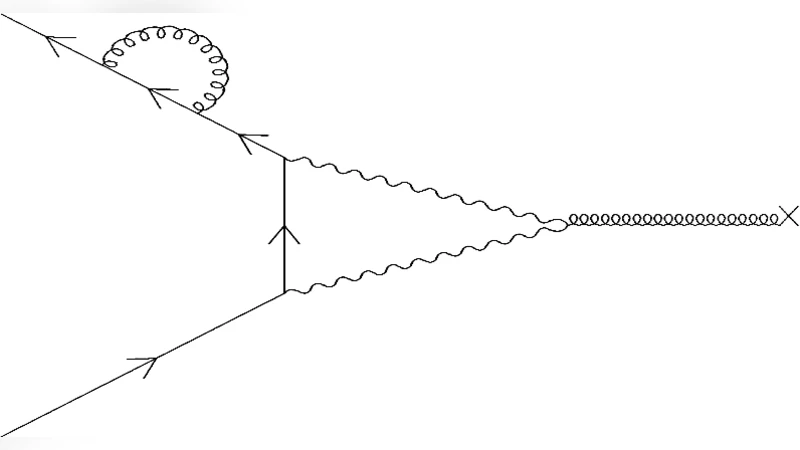
The interaction of neutrinos with gravitational fields in the weak field regime at one loop to the leading order has been studied by Menon and Thalappilil. They deduced some theoretical differences between the Majorana and Dirac neutrinos. Then they proved that, in spite of these theoretical differences, as far as experiments are concerned, they would be virtually indistinguishable. We study the interaction of neutrinos with weak gravitational fields to the second order (at two loops). We show that there appear new neutrino gravitational form factors which were absent in the first-order calculations, so from a theoretical point of view there are more differences between the two kinds of neutrinos than in the first order, but we show that likewise they are indistinguishable experimentally.
💡 Research Summary
The paper investigates whether gravity can be used to distinguish Dirac from Majorana neutrinos by extending previous one‑loop analyses to the two‑loop level in the weak‑field regime. Using the background‑field method, the authors expand the metric as η_{μν}+h_{μν} and treat h_{μν} as a perturbation. Neutrinos are described by the Standard Model Lagrangian with both left‑ and right‑handed components and a small mass term. The interaction with gravity is mediated by the energy‑momentum tensor, and the authors compute the neutrino‑graviton vertex function up to second order in the loop expansion, employing dimensional regularisation to handle divergences while preserving diffeomorphism invariance.
At one loop, the vertex is characterised by four form factors (F₁, F₂, G₁, G₂). These correspond to mass‑gravity coupling, spin‑gravity coupling, and anapole‑like structures. The Dirac and Majorana cases differ only by sign in the axial‑type form factors, a difference that cancels in any observable cross‑section or phase shift, confirming earlier results that the two types are experimentally indistinguishable at this order.
The novelty of the present work lies in the two‑loop calculation. New tensorial structures appear: a rank‑4 “quadrupole‑like” form factor H_{μνρσ} and a mixed scalar‑tensor form factor K_{μν}. Because a Majorana neutrino is its own antiparticle, certain antisymmetric components of H survive, whereas they vanish for a Dirac neutrino. Similarly, K_{μν} acquires a contribution proportional to the neutrino mass that is absent in the Dirac case. These additional form factors represent genuine theoretical differences between the two neutrino natures.
However, the magnitude of the two‑loop contributions is heavily suppressed. Each loop brings a factor of (G_F/16π²) and the weak‑field expansion introduces an additional (E/M_P)², where E is the neutrino energy (MeV–GeV) and M_P is the Planck mass. Consequently the new terms are of order 10⁻⁴⁰–10⁻⁴⁶ relative to leading‑order amplitudes. The authors perform realistic estimates for possible experimental settings—neutrino scattering off massive bodies, gravitational lensing of neutrino beams, and neutrino propagation near neutron stars—and find that the predicted differences are many orders of magnitude below detector sensitivities and background fluctuations.
The conclusion is twofold. First, from a theoretical standpoint, gravity does generate extra form factors at two loops that differentiate Dirac and Majorana neutrinos, enriching the structure of the neutrino‑graviton vertex. Second, these differences remain far beyond experimental reach, reinforcing the notion that gravity, even when quantum corrections are taken to higher order, cannot be used to tell Dirac from Majorana neutrinos. This outcome supports the robustness of the equivalence principle and CPT symmetry in the presence of quantum gravitational corrections, and it extends the earlier one‑loop findings of Menon and Thalappilil to a more complete perturbative order.