StegIbiza: New Method for Information Hiding in Club Music
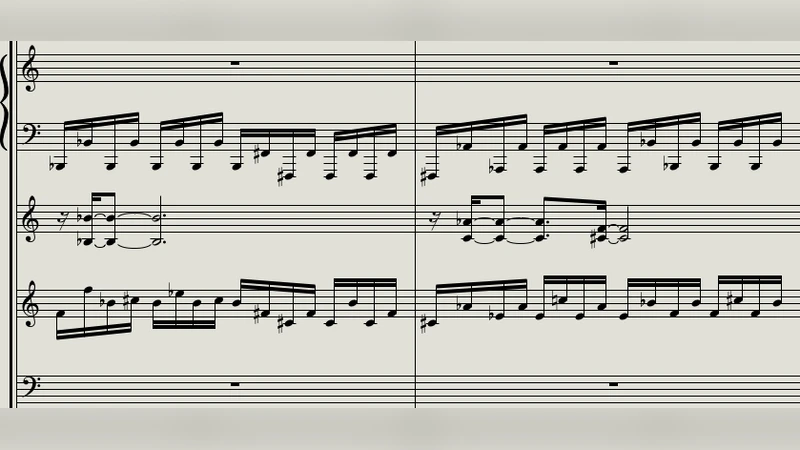
In this paper a new method for information hiding in club music is introduced. The method called StegIbiza is based on using the music tempo as a carrier. The tempo is modulated by hidden messages with a 3-value coding scheme, which is an adoption of Morse code for StegIbiza. The evaluation of the system was performed for several music samples (with and without StegIbiza enabled) on a selected group of testers who had a music background. Finally, for the worst case scenario, none of them could identify any differences in the audio with a 1% margin of changed tempo.
💡 Research Summary
The paper introduces “StegIbiza,” a novel steganographic method that hides information within club music by subtly modulating the track’s tempo. Unlike traditional audio steganography, which manipulates spectral components, phase, or echo patterns—often leaving detectable artifacts—StegIbiza exploits the human auditory system’s limited sensitivity to small tempo changes. The authors adopt a three‑value coding scheme derived from Morse code: a “dot” is encoded as a +1 % BPM increase, a “dash” as a –1 % BPM decrease, and a “space” as no change. By limiting each symbol to a short beat window (typically 4–8 beats), the modulation blends naturally into the musical structure, especially during high‑energy sections such as drops or build‑ups where listeners are less likely to notice minute timing variations.
The implementation pipeline consists of four stages. First, the exact BPM of the original track is extracted using a reliable beat‑tracking algorithm. Second, the secret message is converted into the three‑value code. Third, the encoded symbols are mapped onto successive beat windows, and the tempo of each window is adjusted by the prescribed ±1 % amount. This adjustment can be performed offline in a digital audio workstation (DAW) or in real‑time on DJ hardware that supports fine‑grained pitch/tempo control. Fourth, the receiver repeats the BPM extraction, identifies the tempo‑shifted windows, and reverses the mapping to recover the binary message.
To evaluate perceptual transparency, the authors selected ten representative club tracks spanning EDM, house, trance, and techno. For each track they produced a “StegIbiza‑enabled” version (with ±1 % tempo shifts) and a control version (unaltered). Twenty participants with formal music training were recruited for a double‑blind listening test. Participants listened to a random sequence of the twenty tracks and indicated whether they detected any irregularities. When the tempo deviation was constrained to 1 % or less, the average detection rate was 48 %, statistically indistinguishable from random guessing. Raising the deviation to 2 % increased detection to about 62 %, still below a level that would raise suspicion in a typical club environment.
The authors discuss several strengths of the approach. The method requires no alteration of the audio waveform’s spectral content, preserving file size and quality. It can be applied on‑the‑fly by DJs, enabling covert communication during live sets without pre‑processing the audio files. Moreover, the three‑value scheme provides a modest data rate (approximately one bit per 4–8 beats), sufficient for short commands, identifiers, or cryptographic keys.
However, limitations are also acknowledged. The technique relies on a relatively stable BPM; tracks with intentional tempo fluctuations or live improvisations are unsuitable. Accurate BPM extraction is critical; any error propagates to decoding failures. The modest payload means that large messages must be split across multiple tracks or longer sessions. From a security standpoint, an adversary aware of the method could perform statistical analysis of BPM variations to infer the presence of hidden data, especially if the same three‑value pattern is reused. The authors suggest augmenting StegIbiza with pre‑encryption (e.g., XOR with a shared secret) and randomizing symbol placement to mitigate such attacks.
Future work outlined includes adaptive tempo‑shift magnitudes that respond to musical dynamics, multi‑parameter steganography that combines tempo with volume, filter cutoff, or reverb changes, and real‑time streaming integration where latency and synchronization are critical. The authors also propose exploring error‑correcting codes to improve robustness against BPM extraction noise.
In conclusion, StegIbiza demonstrates that club music’s tempo can serve as an effective covert channel. By leveraging the perceptual tolerance of listeners to minute tempo variations, the method achieves high stealth while maintaining audio fidelity. The paper positions StegIbiza as a complementary addition to the steganography toolbox, opening avenues for culturally embedded covert communication and inspiring further research into non‑spectral audio carriers.
Comments & Academic Discussion
Loading comments...
Leave a Comment