Polarization from the oscillating magnetized accretion torus
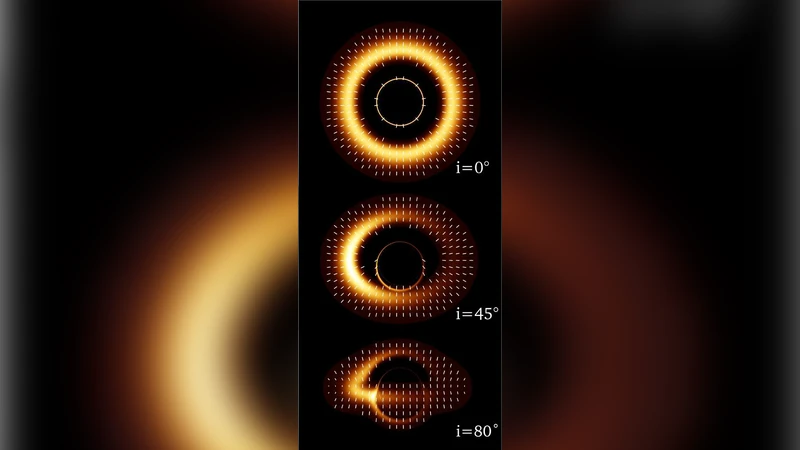
We study oscillations of accretion torus with azimuthal magnetic field. For several lowest-order modes we calculate eigenfrequencies and eigenfunctions and calculate corresponding intensity and polarization light curves using advanced ray-tracing methods.
💡 Research Summary
The paper investigates the dynamical and polarimetric signatures of a magnetized accretion torus orbiting a Kerr black hole. The authors construct a thin, compressible torus model in which the magnetic field is purely azimuthal (Bφ) and the fluid obeys a polytropic equation of state. By solving the relativistic magnetohydrodynamic (MHD) equilibrium equations in the Kerr metric, they obtain a family of stationary torus configurations characterized by the torus radius, thickness, and magnetic field strength.
Linear perturbation theory is then applied to explore the lowest‑order oscillation modes of the torus. Perturbations of density, pressure, velocity, and magnetic field are expanded as exp(iωt) and decomposed into azimuthal harmonics with integer m. The resulting eigenvalue problem is solved numerically for the axisymmetric (m = 0) and first non‑axisymmetric (m = 1) modes. The eigenfrequencies ω depend sensitively on the torus geometry and magnetic field: stronger azimuthal fields raise the mode frequencies, while a thicker torus lowers them. Corresponding eigenfunctions reveal where the fluid and magnetic perturbations are concentrated, typically near the pressure maximum and the inner edge of the torus.
To translate these dynamical results into observable quantities, the authors develop an advanced ray‑tracing code that integrates both the null geodesic equations and the full Stokes‑parameter transport equations in the Kerr spacetime. The code incorporates Doppler boosting, gravitational redshift, light‑bending, and Faraday rotation. Emission from the torus surface is modeled as locally blackbody radiation with Thomson scattering–induced linear polarization. By feeding the time‑dependent eigenfunctions into the ray‑tracer, they generate synthetic light curves for total intensity (I) and linear polarization (Q, U) as seen by a distant observer at various inclination angles.
The simulated light curves display clear periodic modulations. For the m = 0 mode, the intensity oscillates sinusoidally while the polarization degree varies strongly but the polarization angle remains nearly constant. This behavior reflects a symmetric expansion and contraction of the torus that changes the projected emitting area without rotating the polarization plane. In contrast, the m = 1 mode produces more complex intensity patterns and a clear phase shift between intensity and polarization angle, indicating a non‑axisymmetric “sloshing” of the torus material. The polarization degree reaches its maximum when the observer’s line of sight is orthogonal to the torus plane and the magnetic field is strongest, highlighting the role of the azimuthal field in shaping the polarized signal.
The authors argue that these distinctive polarimetric signatures can be used to diagnose the internal magnetic structure and oscillation mode of accretion tori around black holes. With the advent of X‑ray polarimetry missions such as IXPE and future optical/infrared polarimeters, the predicted periodic variations in both intensity and polarization could be measured, providing a novel probe of strong‑gravity MHD dynamics. The paper also acknowledges limitations: the model assumes a thin torus, purely azimuthal magnetic fields, and linear perturbations. Extensions to thicker disks, mixed poloidal‑toroidal fields, and fully non‑linear MHD simulations are suggested as future work. Overall, the study offers a comprehensive framework that bridges relativistic MHD theory, ray‑tracing techniques, and observational polarimetry, opening a new avenue for testing the physics of magnetized accretion flows in the strong‑field regime.
Comments & Academic Discussion
Loading comments...
Leave a Comment