Strong-gravity effects acting on polarization from orbiting spots
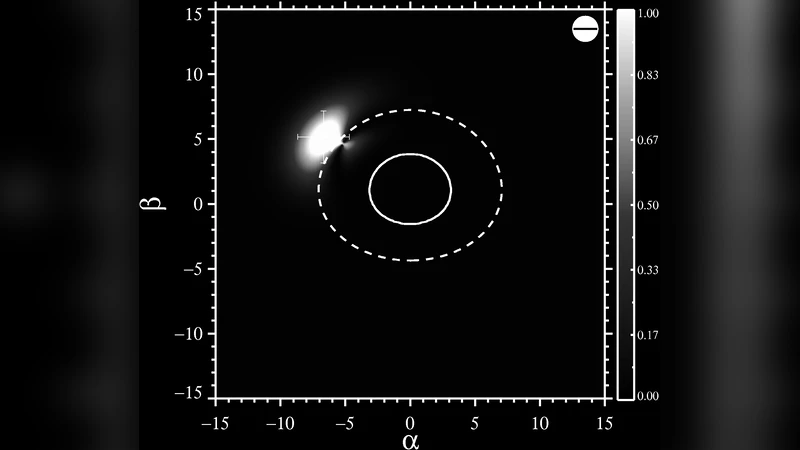
Accretion onto black holes often proceeds via an accretion disc or a temporary disc-like pattern. Variability features, observed in the light curves of such objects, and theoretical models of accretion flows suggest that accretion discs are inhomogeneous and non-axisymmetric. Fast orbital motion of the individual clumps can modulate the observed signal. If the emission from these clumps is partially polarized, which is likely the case, then rapid polarization changes of the observed signal are expected as a result of general relativity effects.
💡 Research Summary
The paper investigates how strong‑gravity effects influence the polarization of radiation emitted by compact, orbiting “spots” (or clumps) in the innermost regions of black‑hole accretion flows. The authors start from the premise that realistic accretion discs are not perfectly axisymmetric; instead, they contain localized over‑densities that can be treated as emitting regions moving on nearly Keplerian orbits. Because the emission is expected to be partially polarized—either due to synchrotron processes, Compton scattering, or thermal anisotropies—the time‑dependent polarization signal carries information about both the geometry of the spot and the space‑time around the black hole.
Using the Kerr metric to describe a rotating black hole, the authors solve the parallel‑transport equations for the electromagnetic field along null geodesics, employing the Newman‑Penrose formalism to follow the Stokes parameters (I, Q, U, V). They incorporate three relativistic effects: (1) gravitational lensing, which bends light rays and can bring photons from the far side of the black hole into view; (2) gravitational red‑/blue‑shift combined with Doppler boosting, which modulates the observed intensity and the degree of polarization; and (3) frame‑dragging, which rotates the polarization vector as it propagates through the rotating space‑time. The spot is modeled as a small, circular emitting region at a given radius rₛ and inclination θₛ, with an intrinsic linear polarization fraction of a few percent.
Monte‑Carlo ray‑tracing simulations produce light curves of the total flux and the full polarization state as a function of observer time. The results reveal several characteristic signatures. When the spot passes behind the black hole, lensing produces a sharp increase in the observed polarization degree (up to ~30 % of the intrinsic value) and a rapid swing in the polarization angle. As the spot approaches the observer, Doppler boosting enhances the flux, while frame‑dragging causes a systematic rotation of the Q and U Stokes components, leading to a quasi‑periodic modulation whose period matches the orbital period of the spot. The amplitude of this modulation grows with the black‑hole spin parameter a; for near‑extremal spins (a≈0.998 M) the polarization angle can rotate by more than 2π during a single orbit, a phenomenon the authors term “super‑rotation.” Circular polarization (Stokes V) remains negligible for pure synchrotron emission but can reach a few percent if the spot’s radiation includes a non‑thermal, scattering‑induced component.
The authors argue that these polarization signatures are observable with current and upcoming X‑ray polarimeters such as IXPE and eXTP, whose timing resolution (hundreds of seconds) and polarization sensitivity (∼1 % accuracy) are sufficient to detect the predicted swings for bright Galactic black‑hole binaries. In the optical/infrared, high‑cadence polarimetric campaigns could complement the X‑ray data, allowing multi‑wavelength reconstruction of the spot’s physical conditions (temperature, magnetic field orientation, electron distribution). By fitting the observed polarization light curves with the relativistic model, one can infer the spot’s orbital radius, the black‑hole spin, and the inclination of the accretion flow, thereby providing an independent probe of strong‑gravity effects.
In conclusion, the study demonstrates that rapid, relativistically modulated polarization variability is a powerful diagnostic of the innermost accretion flow. It extends traditional timing analyses by adding a vectorial observable that directly encodes the geometry of space‑time. Future work will incorporate fully three‑dimensional magnetohydrodynamic simulations to generate more realistic spot evolution, explore non‑circular or eccentric orbits, and compare model predictions with real polarimetric data from black‑hole X‑ray binaries and active galactic nuclei.
Comments & Academic Discussion
Loading comments...
Leave a Comment